Get your free personalized podcast brief
We scan new podcasts and send you the top 5 insights daily.
A core cultural tenet at NVIDIA is chasing the "speed of light"—pushing hardware to its absolute theoretical performance limit. This relentless focus on squeezing every ounce of capability out of their silicon is deeply ingrained in their engineering culture and is a key driver of their market leadership.
![Neil Movva - Making AI 10x Cheaper - [Invest Like the Best, EP.488] thumbnail](https://megaphone.imgix.net/podcasts/d56fad4c-876e-11f1-9151-5f1834daf707/image/de9954428adab72e672734106004bdcb.jpg?ixlib=rails-4.3.1&max-w=3000&max-h=3000&fit=crop&auto=format,compress)
Related Insights
Jensen Huang emphasizes that Moore's Law is dead as a primary performance driver. The 50x gain from Hopper to Blackwell came overwhelmingly from architecture and computer science breakthroughs, with raw transistor improvements providing only marginal benefit.

Nvidia dominates AI because its GPU architecture was perfect for the new, highly parallel workload of AI training. Market leadership isn't just about having the best chip, but about having the right architecture at the moment a new dominant computing task emerges.

Contrary to expectations, AI agents that auto-optimize low-level GPU code are making NVIDIA's dominance stronger. These agents rely on NVIDIA's mature ecosystem of profilers and drivers to get the feedback needed for self-improvement—a robust toolchain that competitors currently lack, widening the gap.

Beyond its CUDA software, NVIDIA's advantage lies in securing the supply of critical components. Analyst Tae Kim notes NVIDIA has locked up capacity for HBM memory, wafers, and optical components like lasers, making it the "only game in town" for companies needing to build AI infrastructure at scale.

Jensen's "Speed of Light" principle sets the only benchmark for project speed as the absolute theoretical maximum, constrained only by physics. Teams are judged against this ideal, not against their own past performance or competitors, forcing them to eliminate all delays and downtime.

Jensen Huang compares Nvidia's hardware to F1 cars: anyone can drive them, but only experts can race them. He claims Nvidia’s engineers consistently help top AI labs achieve 2-3x performance gains, a critical service that proves their deep architectural expertise is not easily replaced.
Jensen Huang demands to know the absolute fastest possible production timeline, the "speed of light," irrespective of the initial astronomical cost. This forces suppliers to reveal their true physical limits, providing a powerful strategic baseline for decision-making beyond conventional quotes.

The "SOL" framework at NVIDIA isn't just a top-down executive command to "get the bullshit out." It's a cultural tool used by frontline engineers to challenge assumptions and push for a root-cause, physics-based understanding of timelines and constraints on any project.
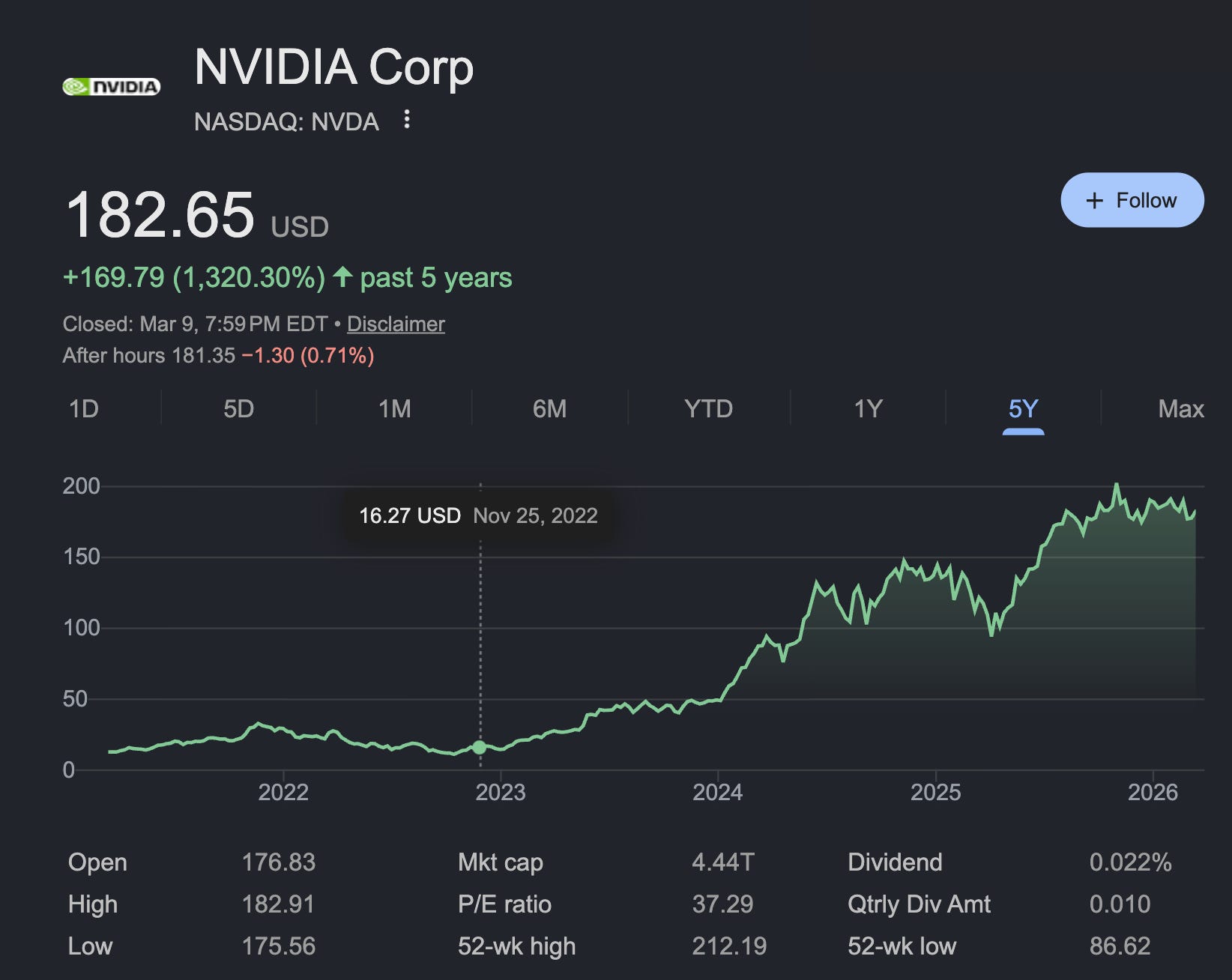
NVIDIA's dominance stems from its entire supply chain—networking, memory, process nodes, and negotiation power. A competitor can't just build a slightly better chip; they must achieve a massive, 5x performance leap on a specific workload to overcome NVIDIA's systemic advantages.

The difficulty of competing with NVIDIA isn't just the CUDA language. A larger barrier is their massive investment in specialized software libraries. NVIDIA's army of engineers constantly optimizes these for new hardware and applications, creating a performance moat that startups struggle to cross.