Get your free personalized podcast brief
We scan new podcasts and send you the top 5 insights daily.
The stock market is efficient enough that individual expertise is not required for average returns. Sophisticated institutional traders do the hard work of analysis, which sets an equilibrium stock price. This allows uninformed individuals to achieve market returns simply by buying broad index funds without any specialized knowledge.

Related Insights
While founders are wired to avoid being "average," investing in an S&P 500 index fund is not an average strategy. Over a 20-year period, this simple, low-fee approach places an investor in the top 8-10% of performers, beating the vast majority of actively managed funds.

Trying to beat the market by active trading is a losing game against professionals with vast resources. A simple, automated strategy of consistently investing in diversified ETFs or index funds mitigates risk and leverages long-term market growth without emotional decision-making.

The efficient market hypothesis states a stock's price reflects all available information, including future expectations. Believing a company will succeed isn't an edge; it's already priced in. This explains why consistently beating the market is nearly impossible.

Data over the last decade shows that 97% of professional stock pickers, despite their resources, fail to beat a basic market index. Ambitious individuals often fall into the trap of thinking they're the exception. The most reliable path to market wealth is patient, consistent investing in low-cost index funds.

Owning a broad, cap-weighted index fund eliminates the need to predict market winners. As dominant companies like Sears fade, they are replaced by innovators like Amazon. The index automatically adjusts, selling off losers and increasing holdings in rising stars, ensuring you always own the future.

Investors with a little knowledge often hurt themselves by trying to outsmart the market. In contrast, those who know just enough to buy and hold low-cost index funds consistently achieve better long-term results without the risk of overconfident mistakes.
Research by Bessenbinder shows that a tiny fraction of "superstar" companies drive all market gains. Since identifying these winners in advance is nearly impossible, indexing ensures you own them by default, capturing the market's overall growth without the risk of picking the wrong stocks.

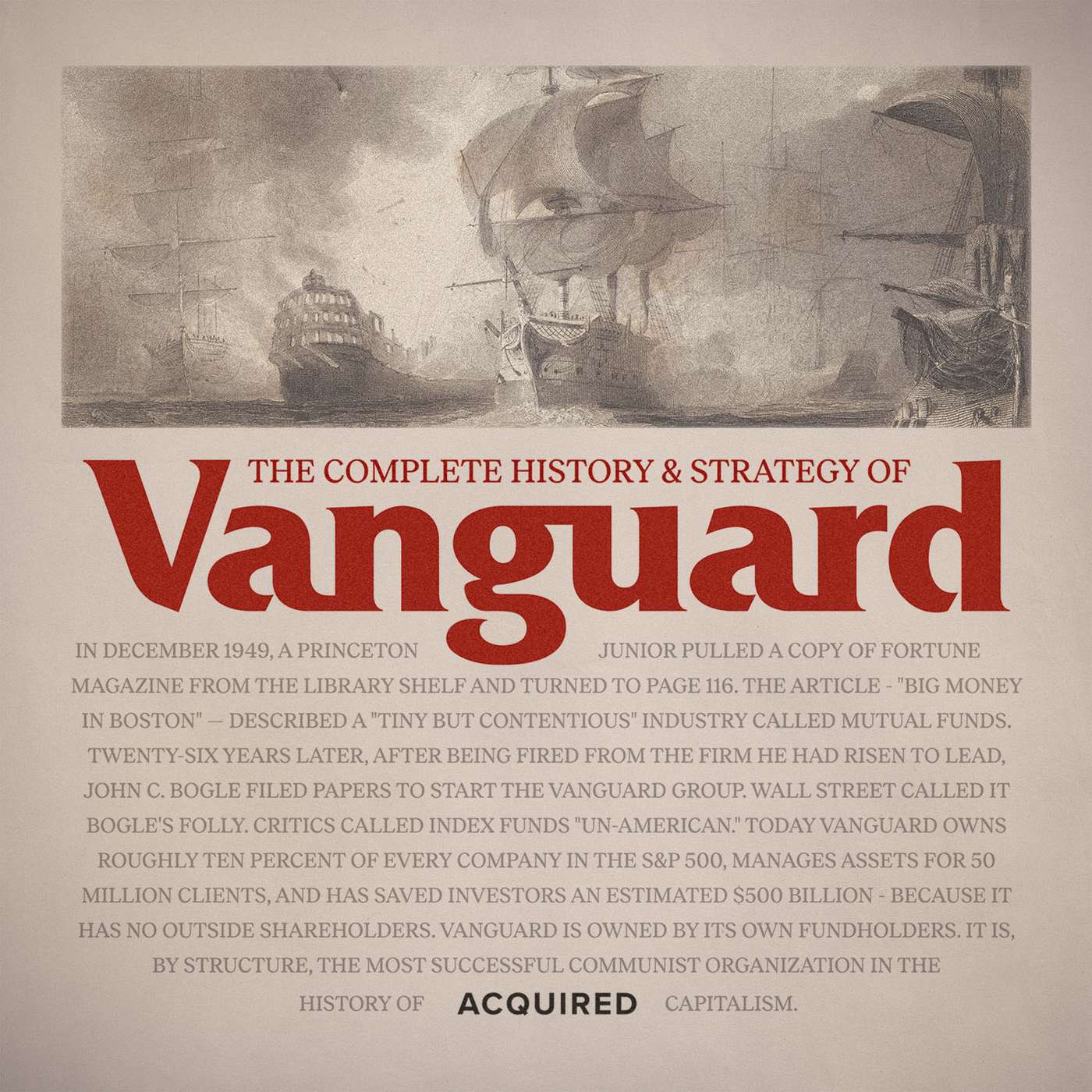
Jack Bogle's indexing assumed efficient markets where passive funds accept prices. Now, with passive strategies dominating capital flows, they collectively set prices. This ironically creates the market inefficiencies and price distortions that the original theory assumed didn't exist on such a large scale.

The stock market is like a casino rigged for savvy players. Instead of trying to beat them at individual games (stock picking), the average investor should "bet on the game itself" by consistently investing in broad market index funds. This long-term strategy of owning the whole "casino" effectively guarantees a win.

Counterintuitively, the case for indexing strengthened as markets became dominated by professionals. In the 1970s, active managers could easily beat unsophisticated retail investors. By the 1990s, with professionals on both sides of every trade, outperformance became much harder, making low-cost indexing superior.