Get your free personalized podcast brief
We scan new podcasts and send you the top 5 insights daily.
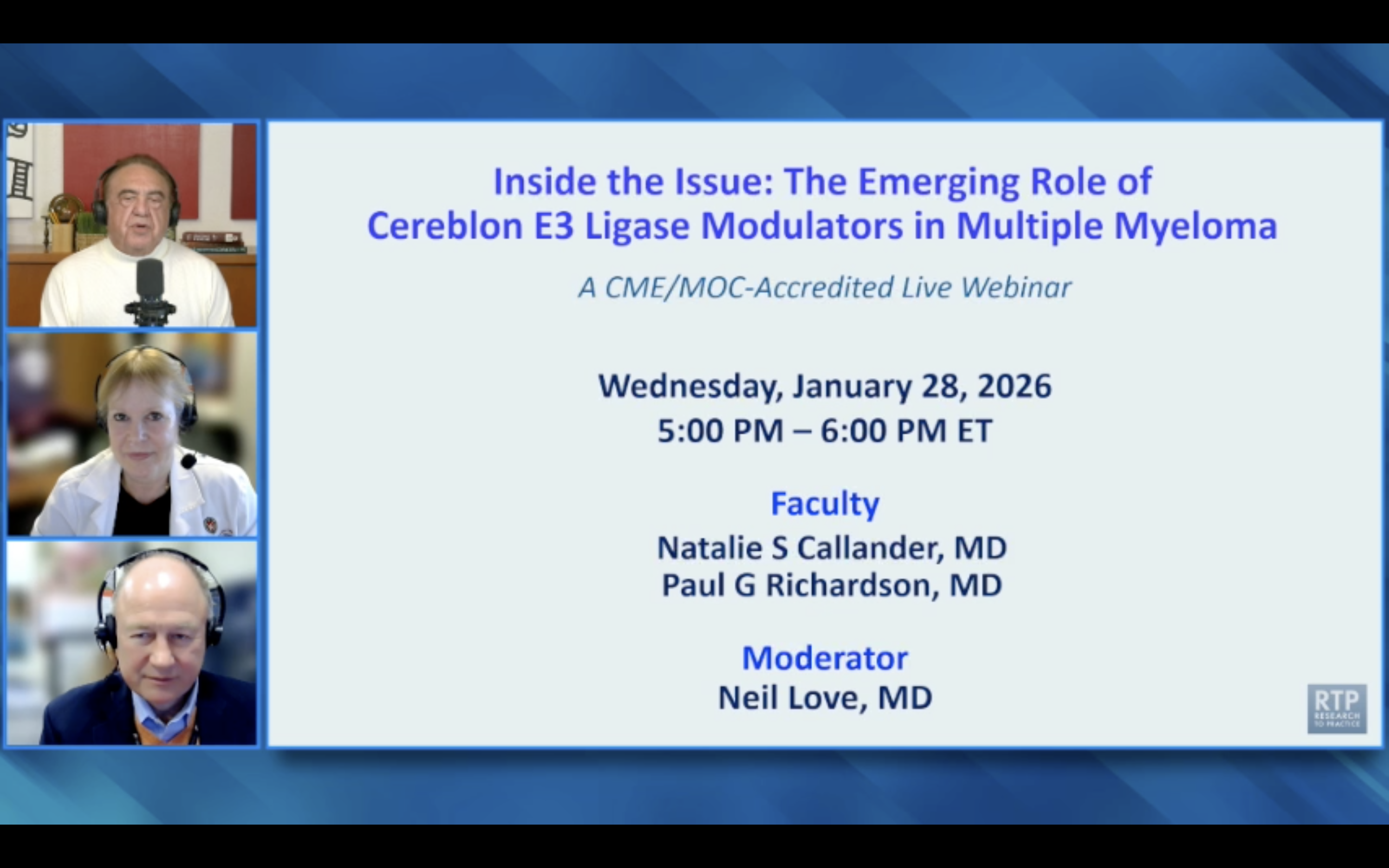
The Determination II trial chose isatuximab over daratumumab for its induction regimen based on two factors. First, it may have an edge in high-risk myeloma (1q amplified). Second, its less frequent dosing schedule (weekly for one month) reduces the myelosuppression seen when combining iberdomide with daratumumab.
Related Insights
The field of multiple myeloma has transformed from having few treatments to an abundance of effective drugs. The primary clinical challenge is no longer finding a therapy that works, but rather determining the optimal sequence and combination of available options, highlighting a unique form of market maturity.

Combining Bellemaf with VRd induction for newly diagnosed, transplant-ineligible myeloma yields 100% response rates. This potent efficacy is driving its adoption in earlier treatment lines, with the clinical focus shifting to proactively managing its known ocular toxicities through dose adjustments and holds.
An expert argues the path to curing metastatic cancer may mirror pediatric ALL's history: combining all highly active drugs upfront. Instead of sequencing treatments after failure, the focus should be on powerful initial regimens that eradicate cancer, even if it means higher initial toxicity.

When treating extramedullary disease (EMD), intravenous (IV) bortezomib should be used over the more common subcutaneous formulation. The higher peak drug concentration (Cmax) achieved with IV administration is critical for efficacy against these difficult-to-penetrate sanctuary sites.
Despite the individual high efficacy of both BCMA-directed therapies and anti-CD38 antibodies, there is significant clinical concern about combining them. The potential for compounded immunosuppression and severe infection risk is a major barrier shaping clinical trial design and favoring sequential use over concurrent combination.
The DREAM-7 trial showed a belantumab combination had an overall survival benefit versus a daratumumab regimen, a "premier drug" that previously changed the myeloma treatment landscape. This surprising result establishes a new, higher standard of care and positions belantumab as a top-tier therapy, not merely another option.
An expert who initially viewed CELMoDs as incremental improvements now considers them fundamentally different. The new litmus test for future myeloma trials will be tracking prior patient exposure to CELMoDs like iberdomide, just as they track prior IMiD exposure today, cementing their status as a distinct therapeutic category.

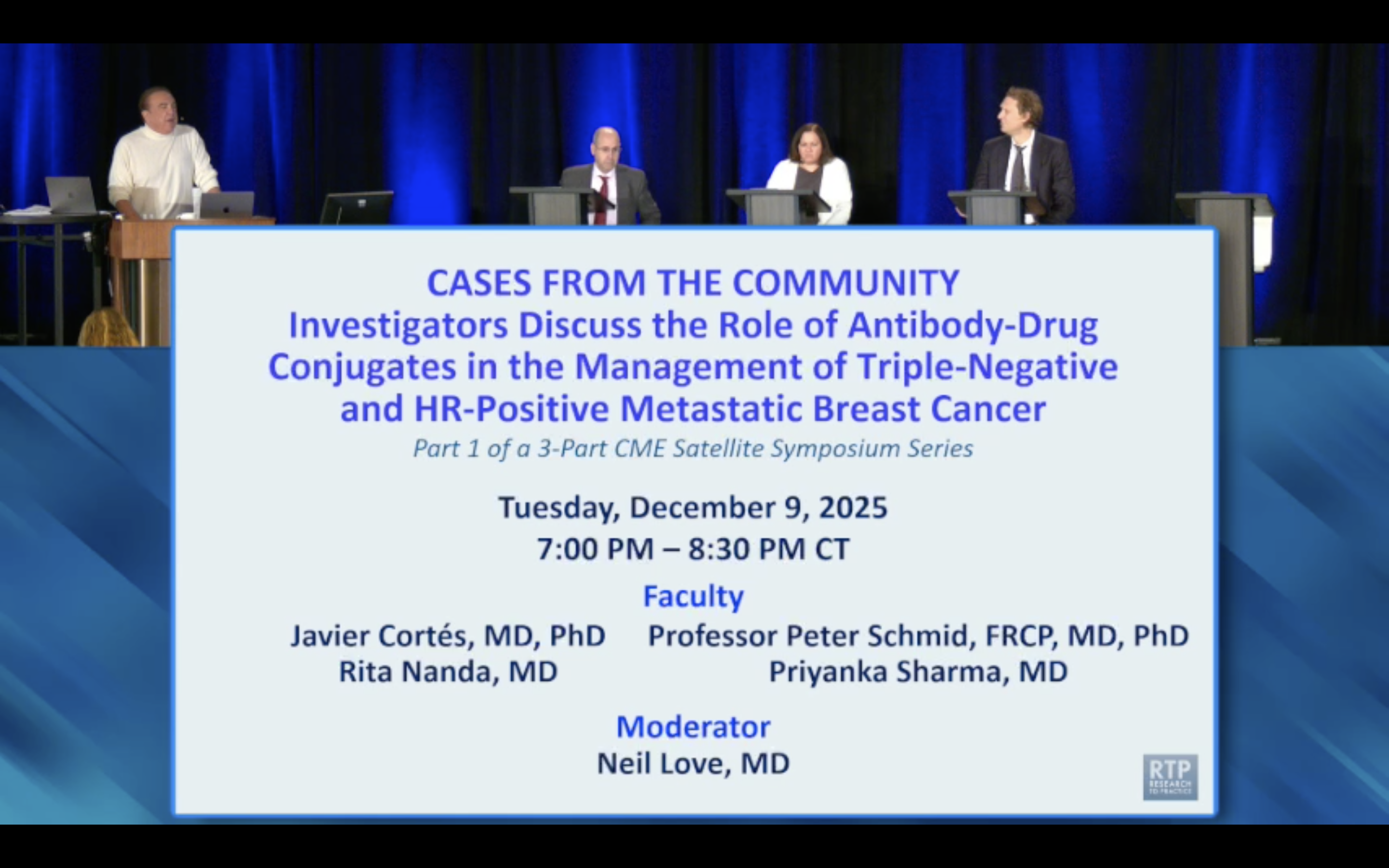
When efficacy and safety profiles are comparable between ADCs like sacituzumab and datopotamab, the final choice can be guided by patient logistics. Factors include infusion frequency (Day 1 & 8 vs. every 3 weeks) and total time spent at the infusion center.
In newly diagnosed, transplant-ineligible myeloma, an iberdomide-based triplet (Iber-Dara-Dex) achieved 64% MRD negativity. This result is described as "astounding" because achieving MRD negativity is not even a realistic goal for comparable IMiD-based triplets like Dara-Len-Dex (the MAYA regimen). This sets a dramatically higher efficacy bar for frontline treatments.
For multiple myeloma patients with the 11;14 translocation who respond poorly to initial induction, BCL-2 inhibition is becoming a crucial targeted strategy. New drug combinations are showing high efficacy, addressing a key unmet need and suggesting this approach will be central to improving outcomes for this specific genetic subset.