Get your free personalized podcast brief
We scan new podcasts and send you the top 5 insights daily.
A speaker invested $1.25 million into five stocks on a single day with no research, based purely on gut feeling and a friend's tip. This "shopping spree" approach, which included a bet on Eli Lilly after a conversation about their new weight-loss drug, resulted in a ~35% annual return.

Related Insights
Quoting Jeff Bezos, the speaker highlights that business outcomes have a 'long-tailed distribution.' While you will strike out often, a single successful venture can generate asymmetric returns that are orders of magnitude larger than the failures, making boldness a rational strategy.

Unlike surgery or engineering, success in finance depends more on behavior than intelligence. A disciplined amateur who controls greed and fear can outperform a PhD from MIT who makes poor behavioral decisions. This highlights that temperament is the most critical variable for long-term financial success.
![[REPLAY] Morgan Housel – The Psychology of Money (Capital Allocators, EP.155) thumbnail](https://static.libsyn.com/p/assets/f/b/7/6/fb76e1c8bfb69e8dd959afa2a1bf1c87/CA_Square_logo_light_background_6.26.24.jpg)
The stock market is a 'hyperobject'—a phenomenon too vast and complex to be fully understood through data alone. Top investors navigate it by blending analysis with deep intuition, honed by recognizing patterns from countless low-fidelity signals, similar to ancient Polynesian navigators.

Lynch's strategy for owning many stocks was a research process. He would buy all stocks in a promising industry to gain 'skin in the game,' forcing himself to learn the sector's rhythm. This allowed him to quickly identify the true winners and reallocate capital, rather than picking one from the start.
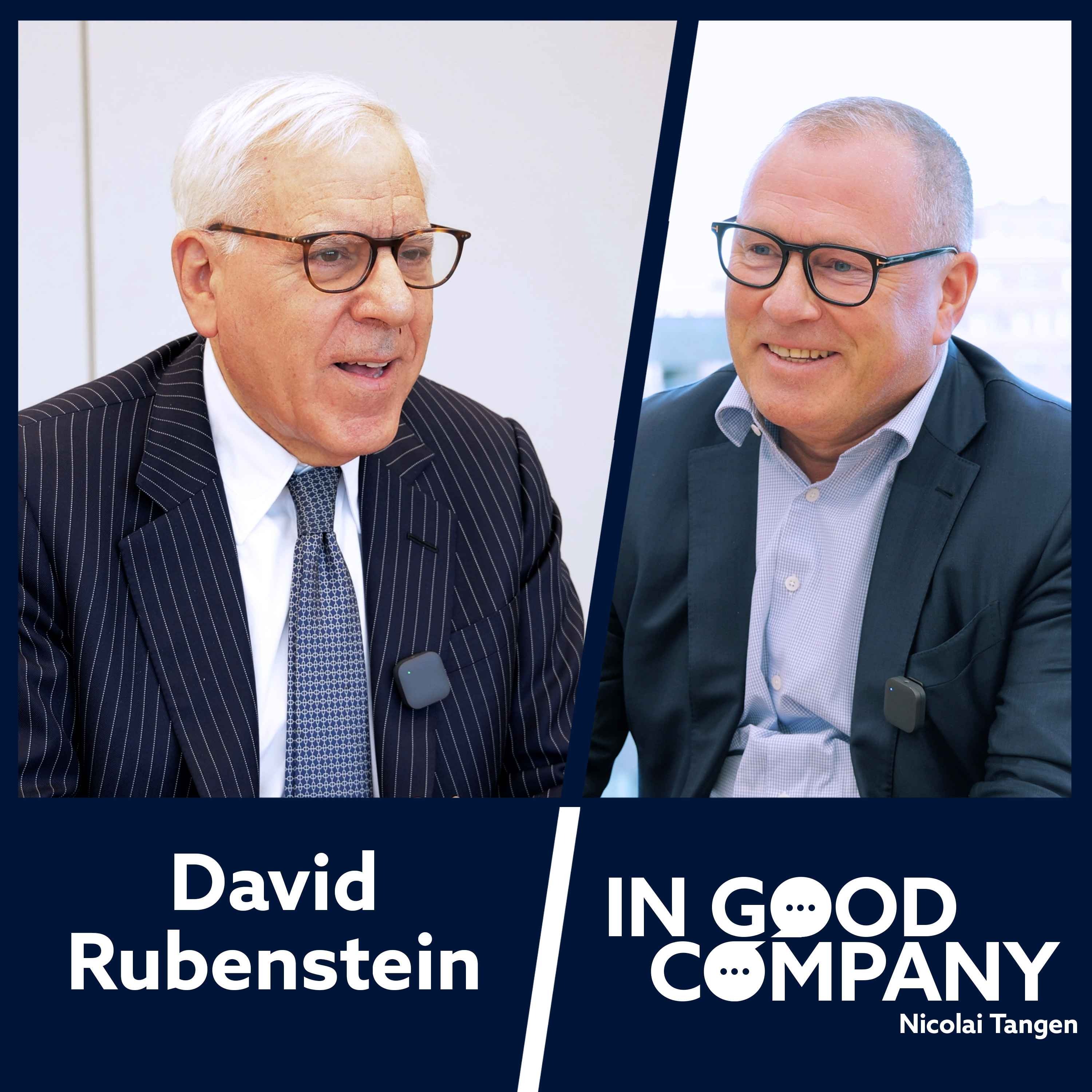
To achieve above-average investment returns, one cannot simply follow the crowd. True alpha comes from contrarian thinking—making investments that conventional wisdom deems wrong. Rubenstein notes the primary barrier is psychological: overcoming the innate human desire to be liked and the fear of being told you're 'stupid' by your peers.
Elite decision-making transcends pure analytics. The optimal process involves rigorously completing a checklist of objective criteria (the 'mind') and then closing your eyes to assess your intuitive feeling (the 'gut'). This 'educated intuition' framework balances systematic analysis with the nuanced pattern recognition of experience.
![Martín Escobari - Inside General Atlantic - [Invest Like the Best, EP.449] thumbnail](https://megaphone.imgix.net/podcasts/90e6e3e6-c984-11f0-ae5f-27bb851bdc56/image/608fac468f77cb3014e96336896d96de.jpg?ixlib=rails-4.3.1&max-w=3000&max-h=3000&fit=crop&auto=format,compress)
The legendary Fidelity manager argued that everyday people can spot high-growth companies before professionals by observing real-world trends. This reframes a lack of institutional access into a potential advantage based on practical, on-the-ground knowledge.

Departing from typical risk-averse advice, Jim Cramer insists that investors dedicate one of their five individual stock positions to speculation. This is designed to capture the potential of the 'next NVIDIA or Tesla.' He advises that the younger the investor, the more speculation is warranted, as they have a longer time horizon to recover from potential losses.

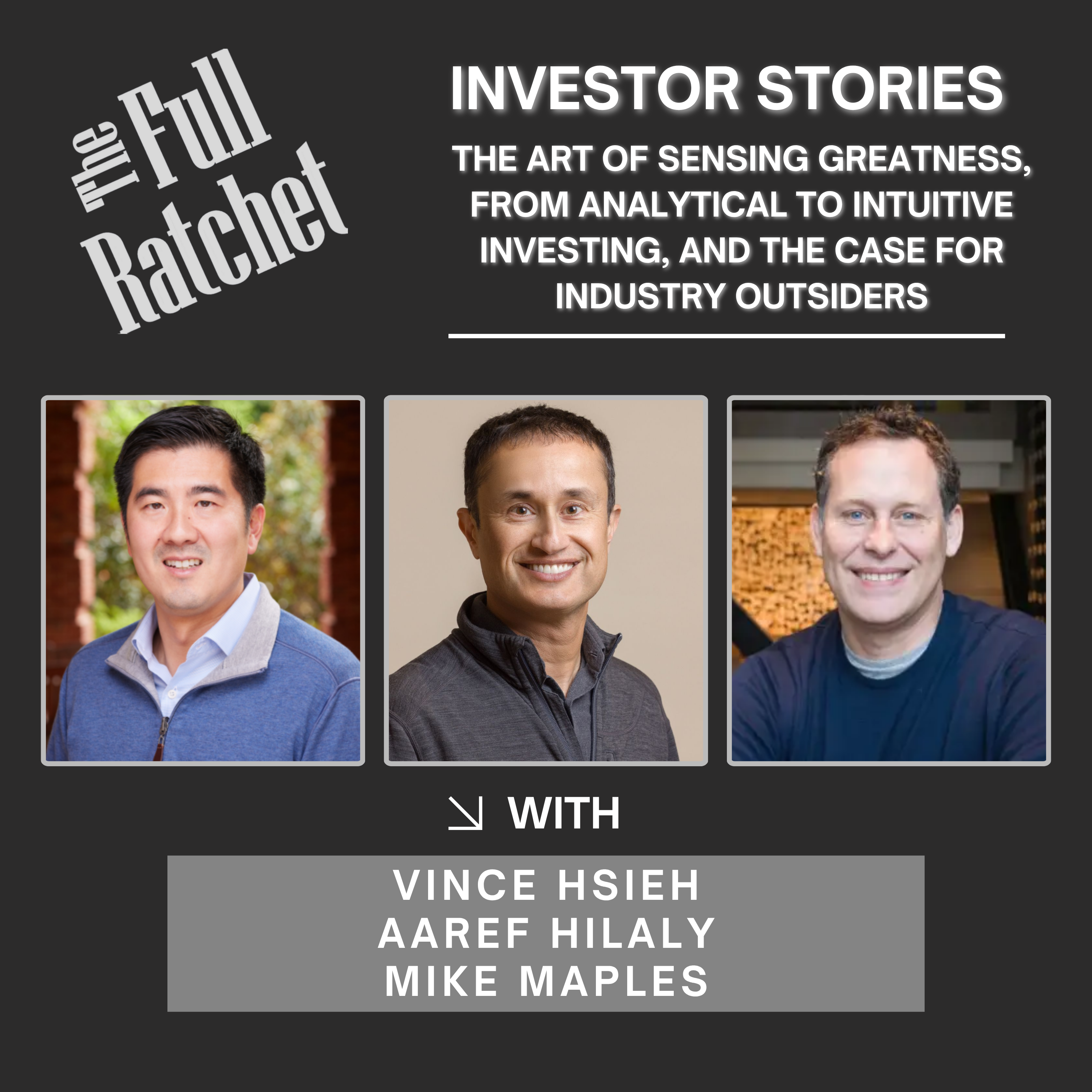
Experienced VCs may transition from rigid analytical frameworks to an intuitive search for outliers. Instead of asking if a business plan 'makes sense,' they look for unusual qualities that challenge their worldview and hint at massive potential.
According to Ken Griffin, legendary investors aren't just right more often. Their key trait is having deep clarity on their specific competitive advantage and the conviction to bet heavily on it. Equally important is the discipline to unemotionally cut losses when wrong and simply move on.