Get your free personalized podcast brief
We scan new podcasts and send you the top 5 insights daily.
An algorithm is merely an expression of a company's rules and processes. Therefore, auditing an algorithm effectively means reverse-engineering the entire bureaucracy it serves—analyzing how the complete system, not just the code, treats people and distributes power.

Related Insights
Many tasks branded as 'AI automated' secretly rely on human intervention. To reveal this dependency and identify the real accountability structure, simply ask who is responsible for errors produced by the system. This forces the organization to name the person still in the loop.

The biggest blind spot in AI governance isn't the model but human interaction. Even with a validated tool, systems break when users export data, manipulate it "off-platform," and re-import it. This unmonitored human intervention breaks the chain of traceability, making audit reconstruction impossible.

Just as GXP compliance doesn't require mapping a human's brain, AI governance shouldn't fixate on fully explaining a model's "black box." Instead, it should mimic human compliance by establishing robust frameworks around the model—controlling inputs, outputs, traceability, and guardrails—to ensure trustworthy outcomes.
To assess audit-readiness, pick an AI-driven decision from months ago and attempt to reconstruct every detail: data input, model version, validation status, and review trail. If you cannot gather all this information within 48 hours, your governance framework will fail a real-world audit.
Companies believe high-level AI policies and frameworks provide audit protection. However, auditors bypass these to demand granular proof for specific AI-assisted decisions, asking for data lineage, model versions, and human decision trails at a precise moment in time, which is where most governance systems fail.
The AI auditing field risks a race to the bottom, where firms offer cheap, superficial audits. To ensure accountability, legislation must require auditors to publicly post their methodologies and code, allowing the community to scrutinize their work and establish robust standards.
Based on Conway's Law, a company's internal structure and communication paths are mirrored in the architecture of the software it produces. This means human values flow from the organization to the product. To build aligned AI, you must first solve for human alignment within the company.

Official process documents are misleading. A crucial FDE task is observing employees to understand the complex, exception-filled reality of how work gets done. This undocumented knowledge, often in one person's head, is essential for building effective AI systems that don't break on edge cases.

Treat accountability as an engineering problem. Implement a system that logs every significant AI action, decision path, and triggering input. This creates an auditable, attributable record, ensuring that in the event of an incident, the 'why' can be traced without ambiguity, much like a flight recorder after a crash.

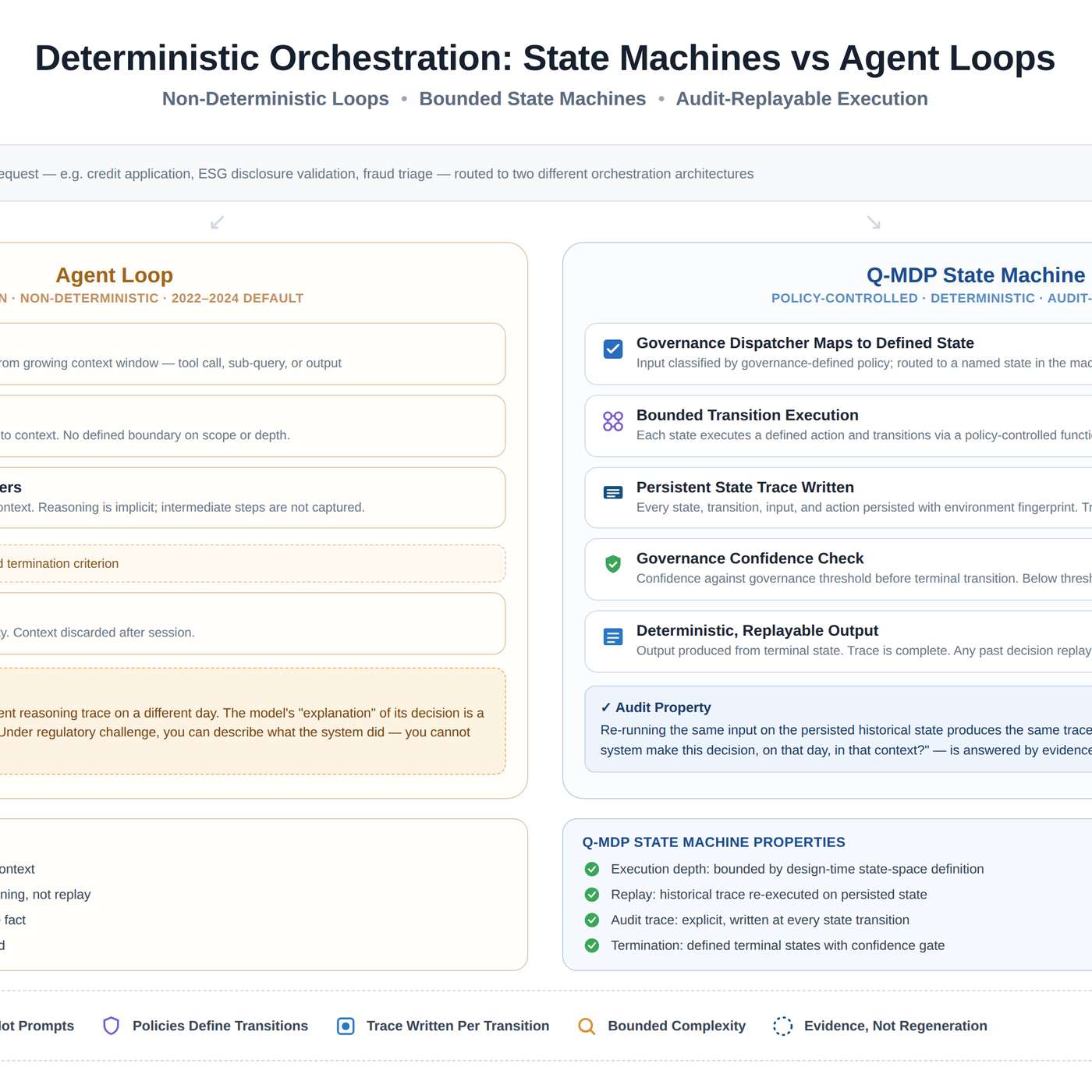
Building with deterministic state machines makes every decision inspectable and every trajectory reproducible. This provides a structural advantage, creating an audit defense capability from day one, which prevents costly retrofitting when regulatory pressure inevitably arrives.