Get your free personalized podcast brief
We scan new podcasts and send you the top 5 insights daily.
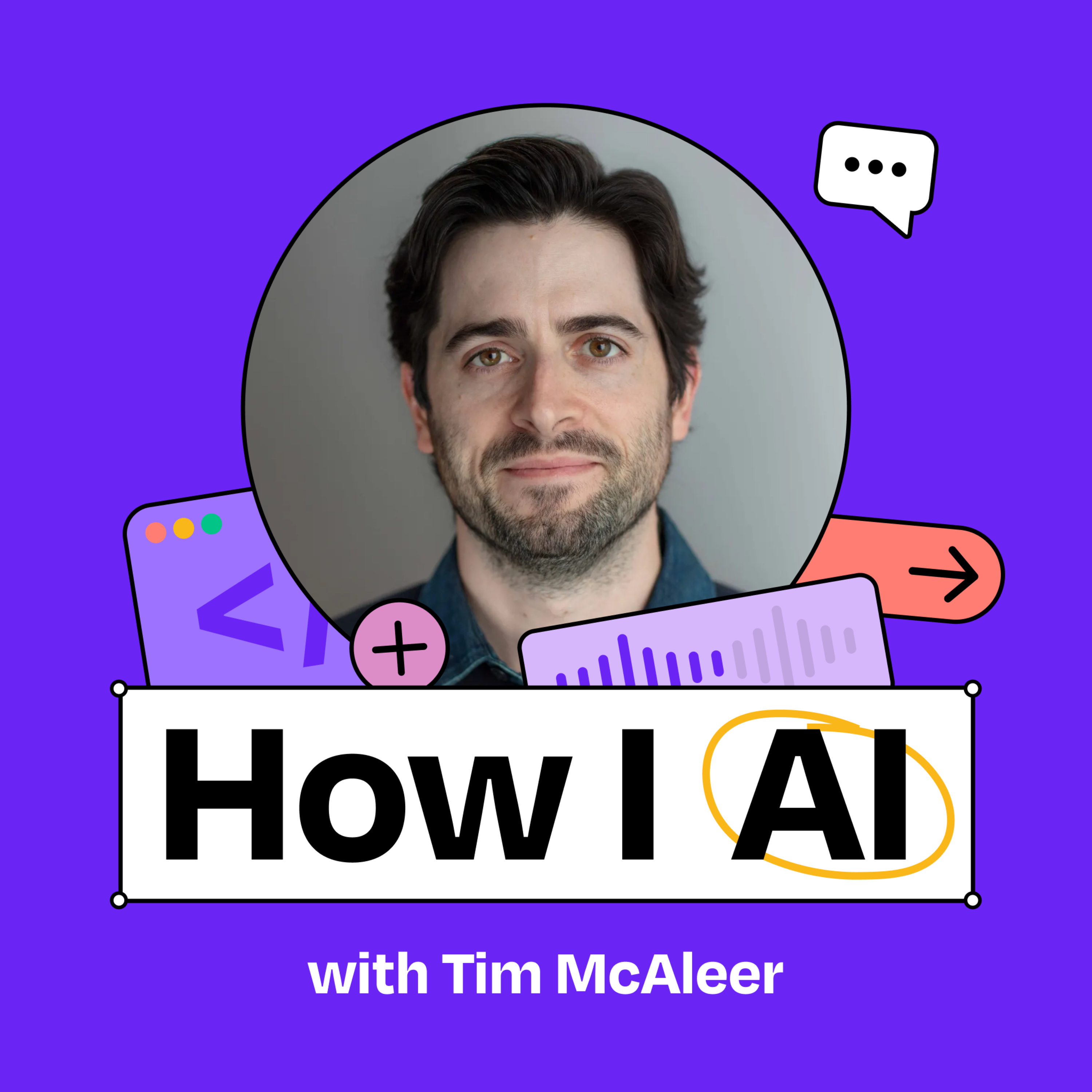
Tim McLear's journey to automate metadata logging began with a single Python script. As its value became clear, he evolved it into a robust REST API service running on a dedicated machine. This service now handles various metadata tasks for his entire film production team, demonstrating a clear path from solo experiment to shared infrastructure.
Related Insights
Traditional API integration requires strict adherence to a predefined contract. The new AI paradigm flips this: developers can describe their desired data format in a manifest file, and the AI handles the translation, dramatically lowering integration barriers and complexity.

The most significant productivity gains come from applying AI to every stage of development, including research, planning, product marketing, and status updates. Limiting AI to just code generation misses the larger opportunity to automate the entire engineering process.
While generative video gets the hype, producer Tim McLear finds AI's most practical use is automating tedious post-production tasks like data management and metadata logging. This frees up researchers and editors to focus on higher-value creative work, like finding more archival material, rather than being bogged down by manual data entry.
The popular AISDK wasn't planned; it originated from an internal 'AI Playground' at Vercel. Building this tool forced the team to normalize the quirky, inconsistent streaming APIs of various model providers. This solution to their own pain point became the core value proposition of the AISDK.

Tim McLear used AI coding assistants to build custom apps for niche workflows, like partial document transcription and field research photo logging. He emphasizes that "no one was going to make me this app." The ability for non-specialists to quickly create such hyper-specific internal tools is a key, empowering benefit of AI-assisted development.
Using plain-English rule files in tools like Cursor, data teams can create reusable AI agents that automate the entire A/B test write-up process. The agent can fetch data from an experimentation platform, pull context from Notion, analyze results, and generate a standardized report automatically.
Instead of giving an LLM hundreds of specific tools, a more scalable "cyborg" approach is to provide one tool: a sandboxed code execution environment. The LLM writes code against a company's SDK, which is more context-efficient, faster, and more flexible than multiple API round-trips.
Instead of building shared libraries, teams can grant an AI access to different codebases. The AI acts as a translator, allowing developers to understand and reimplement logic from one tech stack into a completely different one, fostering reuse without the overhead of formal abstraction.
Using a composable, 'plug and play' architecture allows teams to build specialized AI agents faster and with less overhead than integrating a monolithic third-party tool. This approach enables the creation of lightweight, tailored solutions for niche use cases without the complexity of external API integrations, containing the entire workflow within one platform.

Instead of storing AI-generated descriptions in a separate database, Tim McLear's "Flip Flop" app embeds metadata directly into each image file's EXIF data. This makes each file a self-contained record where rich context travels with the image, accessible by any system or person, regardless of access to the original database.