Get your free personalized podcast brief
We scan new podcasts and send you the top 5 insights daily.
Unlike venture creation firms that generate ideas internally, Curie.bio operates on a 'Freedom for Founders' principle. It believes the best ideas come from external innovators and its role is to augment them with capital-efficient support, fractional expertise, and operational help to translate those ideas into companies.

Related Insights
Instead of building a platform team of specialists, Eclipse operates like a small special forces unit. A lean team of senior partners, all ex-operators, handles everything from thesis creation to scaling companies. This ensures founders get direct support from proven builders, not junior staff.
A16z's foundational belief is that founders, not hired "professional CEOs," should lead their companies long-term. The firm is structured as a network of specialists to provide founders with the knowledge and connections they lack, enabling them to grow into the CEO role and succeed.

Low-cost AI tools create a new paradigm for entrepreneurship. Instead of the traditional "supervised learning" model where VCs provide a playbook, we see a "reinforcement learning" approach. Countless solo founders act as "agents," rapidly testing ideas without capital, allowing the market to reward what works and disrupting the VC value proposition.

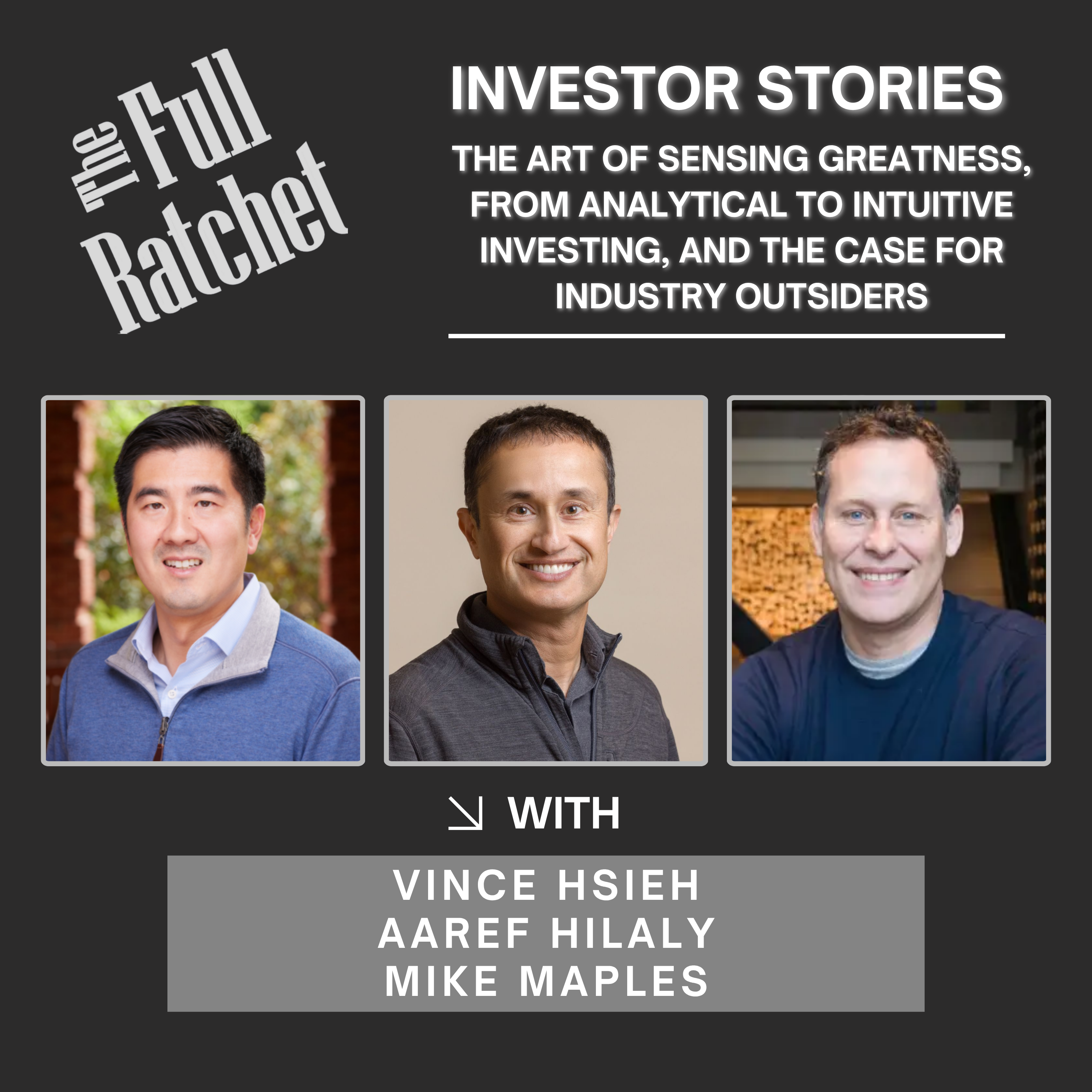
While domain experts are great at creating incremental improvements, true exponential disruption often comes from founders outside an industry. Their fresh perspective allows them to challenge core assumptions and apply learnings from other fields.
The firm’s core belief is being a fund *for* founders, trusting them to run their companies without heavy operational input. This hands-off approach gives partners the bandwidth and "permission" to go deep on their own projects, leading to spinouts like Anduril and Varda.
Actuate Therapeutics maintains high capital efficiency by keeping its full-time headcount low. The company is built around a trusted core team and supplemented by an extensive stable of "best of breed" consultants who are engaged on an as-needed basis, minimizing overhead costs.

A biotech investor's role mirrors that of a record producer by identifying brilliant talent (scientists) who may lack commercial experience. The investor provides the capital, structure, and guidance needed to translate raw scientific innovation into a commercially successful product.

Unlike operating companies that seek consistency, VC firms hunt for outliers. This requires a 'stewardship' model that empowers outlier talent with autonomy. A traditional, top-down CEO model that enforces uniformity would stifle the very contrarian thinking necessary for venture success. The job is to enable, not manage.

Incubating a company with a proven internal employee who develops an idea, like Every did with Good Start Labs, is a superior model. It bypasses the adverse selection problem inherent in recruiting external founders for pre-formed ideas, as the founder's capabilities and commitment are already known quantities.

Startups need elite talent to succeed but can't afford or attract it. Curie.bio solves this by providing its portfolio companies with on-demand, fractional access to a team of over 100 world-class drug hunters. This allows founders to tap into top-tier expertise without incurring high fixed costs.