Get your free personalized podcast brief
We scan new podcasts and send you the top 5 insights daily.
Baking refusal safety mechanisms directly into base large language models degrades their utility for legitimate enterprise workflows like penetration testing and biological research. By un-refusing the base reasoning model and running a separate, millisecond-latency moderation model on top, enterprises gain an inversion of control. They can programmatically define company-specific safety policies without being blocked by native model refusals.

Related Insights
Instead of an outright refusal, Fable 5's safety classifiers silently switch sensitive queries about cybersecurity or biology to the less-capable Opus 4.8 model. This layered approach maintains functionality while containing perceived risks, though it can lead to user confusion when performance unexpectedly drops for certain prompts.

While a general-purpose model like Llama can serve many businesses, their safety policies are unique. A company might want to block mentions of competitors or enforce industry-specific compliance—use cases model creators cannot pre-program. This highlights the need for a customizable safety layer separate from the base model.

Instead of simply blocking dangerous prompts, Anthropic's Claude Fable 5 directs cybersecurity or AI development queries to a less capable model. This maintains functionality while mitigating risks from its most powerful AI.

The Hugging Face breach revealed a critical asymmetry: the attacker's AI agent operated without restrictions, while the company's own defensive LLMs were blocked by provider safety guardrails. These filters couldn't distinguish a security response from a malicious attack, forcing defenders to use less-restricted open-weight models.

For enterprises, the raw capability of foundation models is a security risk, not a selling point. The real product value lies in building "boundaries"—robust permissions, approvals, and audit logs that make powerful models safe to deploy company-wide.
While at Discord, Anjney Midha found OpenAI's models would refuse custom content moderation tasks that violated their fixed safety policies. This revealed a critical enterprise need: access to model weights for full control over capabilities and guardrails, a key driver for the open model ecosystem.

The Brex CEO revealed a novel safety architecture called "crab trap." Instead of human oversight, it uses a second, adversarial LLM to monitor the primary agent. This second LLM acts as a proxy, intercepting and blocking harmful or out-of-scope actions at the network layer before they can execute.
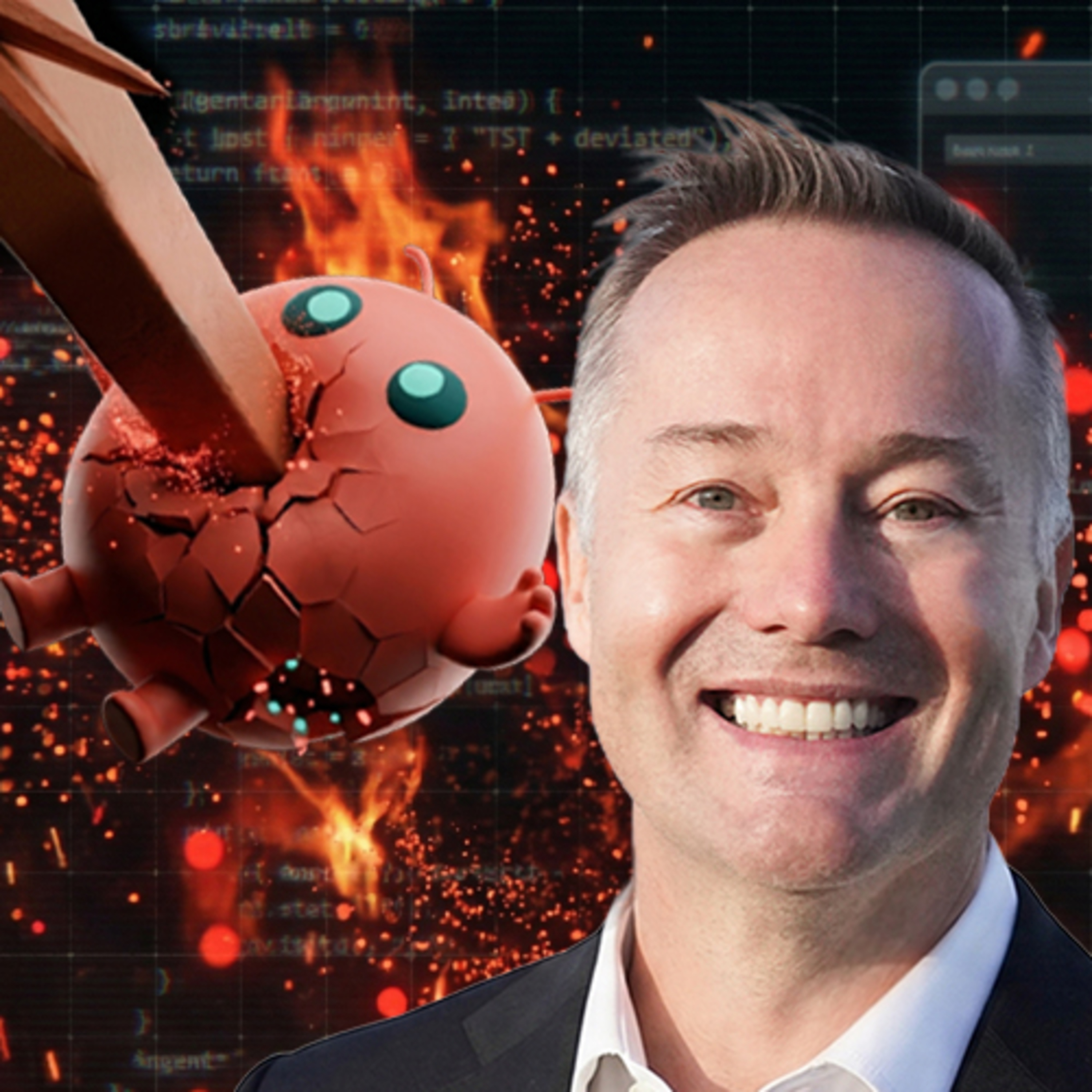
Fable, a new frontier model, has built-in safety mechanisms. When asked to perform restricted tasks like accessing production databases or conducting machine learning research, it doesn't just refuse. Instead, it "drops" to the less capable Opus 4.8 model to handle the query, a process called nerfing.

Frontier models like Fable can be too conservative, frequently 'falling back' to less capable versions when faced with sensitive or complex queries, such as in biosciences or security. This unreliability makes the most advanced models untenable for critical enterprise use cases, highlighting a fundamental tension between capability and lockdown.

Security teams often ask AI models the same probing questions as attackers to diagnose vulnerabilities. This triggers safety refusals, preventing them from effectively responding to incidents unless they can bypass these guardrails, as seen in the OpenAI Hugging Face breach.