Get your free personalized podcast brief
We scan new podcasts and send you the top 5 insights daily.
When evaluating political threats, Sam Harris distinguishes between a "normal politician" with proper qualifications who is merely an opportunist (like Marco Rubio) and a media personality who is an unqualified, genuine ideologue (like Pete Hegseth). The latter poses a greater risk to the system.

Related Insights
If you can predict someone's stance on every issue after hearing their opinion on just one, they are likely not a serious thinker. They have adopted an 'ideological onesie'—a single framework for all questions. A sign of genuine intellect is the capacity to surprise you with nuanced takes.

Society is so desperate for sanity from political extremists that it's tempting to praise them for a single rational stance, like MTG on the Epstein files. This is dangerous because it whitewashes a long history of destructive behavior. The true problem is the ecosystem of enablers that allows such figures to gain power in the first place.

The most significant threat to a political ideology comes not from the opposing party, but from the 'lunatics' on its own side. These extreme factions can make the entire group appear foolish and unreasonable, doing more damage to their credibility than any opponent ever could.
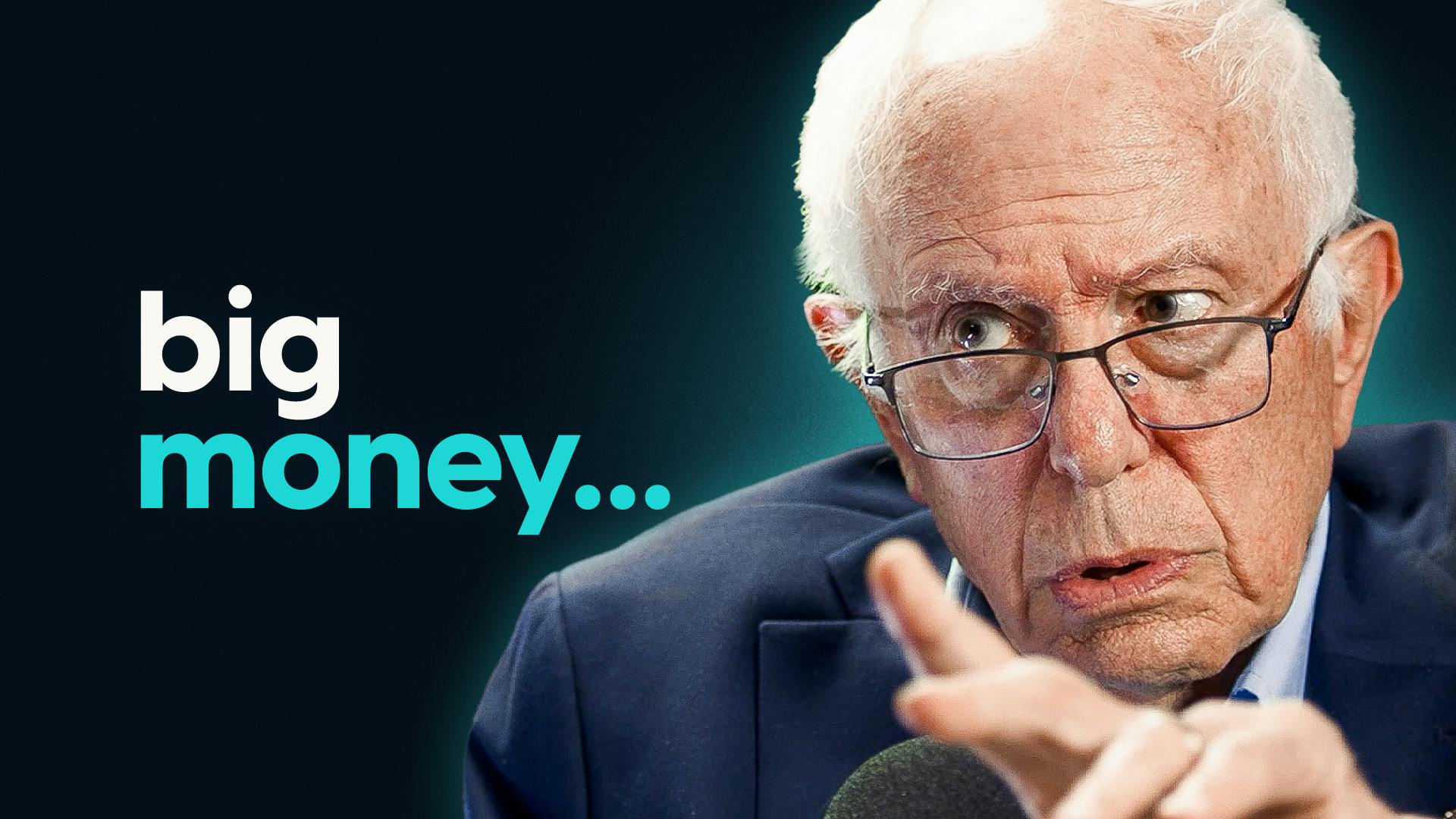
Sam Harris argues the most alarming form of political lying isn't meant to deceive but to overwhelm the public with falsehoods so audacious they defy evidence. This strategy aims to create a "mass hallucination" by bludgeoning audiences with lies rather than making a believable argument.
Seemingly irrational political decisions can be understood by applying a simple filter: politicians will say or do whatever they believe is necessary to get reelected. This framework decodes behavior better than assuming action is based on principle or for the public good.

Avoid focusing animosity on individual political figures, as they are merely symptoms of a larger, rising ideology. The real threat is the movement, not the person. Therefore, energy should be directed at debating the underlying ideas rather than launching personal attacks.
O'Leary distinguishes between celebrity and politics. As a celebrity, 50% of people may dislike you. As a politician, 50% hate you, and a "lunatic fringe" of 2.5% poses a physical threat to you and your family. He found this reality untenable, even in Canada.

Evaluate political ideologies based on their historical potential for large-scale harm ("amplitude"), not just a leader's current negative actions. A socialist path, historically leading to mass death, may pose a greater long-term threat than a leader's immediate, but less catastrophic, authoritarian tendencies.
Focusing on which political side is "crazier" misses the point. The fundamental danger is the psychological process of tribalism itself. It simplifies complex issues into "us vs. them," impairs rational thought, and inevitably leads to extremism on all sides.
Understanding political behavior is simplified by recognizing the primary objective is not ideology but accumulating and holding power. Actions that seem hypocritical are often rational calculations toward this singular goal, including telling 'horrific lies.'