Get your free personalized podcast brief
We scan new podcasts and send you the top 5 insights daily.
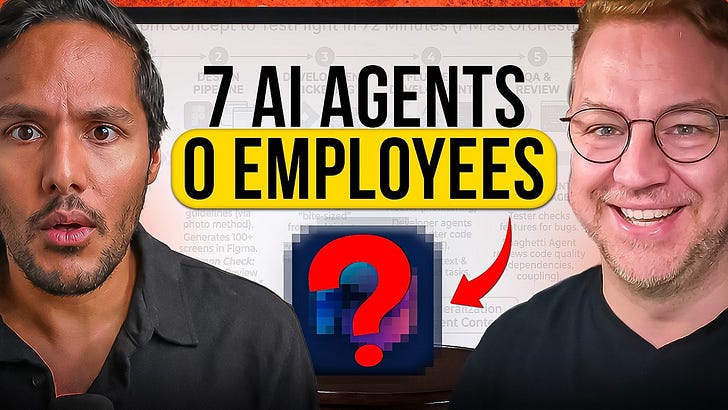
Gabor dictates long, detailed prompts to his AI agents. This allows him to provide significantly more context, nuance, and specific constraints than would be practical to type. The AI can parse the verbose input, leading to a much better-specified final product.
Related Insights
When prompting, especially with voice, use emotional and ambitious language. Pushing the AI to make something "brilliantly serendipitous" can elicit more creative responses, particularly from advanced models. This human-like interaction can improve output quality.

Instead of typing structured prompts, the most effective way to onboard an agent is to use "ramble mode." Simply record a long, stream-of-consciousness voice note explaining your needs, context, and goals. The AI can parse this high-bandwidth, unstructured data to build a comprehensive understanding of its role.

User expectations for AI responses change dramatically based on the input method. A spoken query demands a concise, direct answer, whereas a typed query implies the user has more patience and is receptive to a detailed, link-filled response. Contextual awareness of input modality is critical for good UX.

Before delegating a complex task, use a simple prompt to have a context-aware system generate a more detailed and effective prompt. This "prompt-for-a-prompt" workflow adds necessary detail and structure, significantly improving the agent's success rate and saving rework.
Instead of spending time trying to craft the perfect prompt from scratch, provide a basic one and then ask the AI a simple follow-up: "What do you need from me to improve this prompt?" The AI will then list the specific context and details it requires, turning prompt engineering into a simple Q&A session.
Instead of typing, dictating prompts for AI coding tools allows for faster and more detailed instructions. Speaking your thought process naturally includes more context and nuance, which leads to better results from the AI. Tools like Whisperflow are optimized with developer terminology for higher accuracy.

Dictation's primary benefit isn't just speed but enhanced ideation. Speaking is four times faster than typing, allowing thoughts to flow more freely. Use AI tools like Otter.ai or ChatGPT to capture more nuanced, deeper ideas that are often lost during the slower, more structured process of typing.

By writing a 1,100-word prompt detailing a complete vision, context, and components, the host received interactive prototypes from AI models like Claude and GPT. This far surpassed the static infographics generated from simpler requests, showing the power of deep context.

To get the best results from AI, treat it like a virtual assistant you can have a dialogue with. Instead of focusing on the perfect single prompt, provide rich context about your goals and then engage in a back-and-forth conversation. This collaborative approach yields more nuanced and useful outputs.

Effective AI prompting involves providing a detailed narrative of the situation, user, and goals. This forces the AI to ask clarifying questions, signaling a deeper understanding and leading to more relevant answers compared to a simple, direct command.