Get your free personalized podcast brief
We scan new podcasts and send you the top 5 insights daily.
In the fast-moving AI space, Cursor demonstrated radical adaptability by repeatedly reinventing its core product. The company evolved from an IDE to an agent platform and finally to a model platform within two years, proving that self-cannibalization is critical for staying relevant as technology advances.

Related Insights
Product-market fit is no longer a stable milestone but a moving target that must be re-validated quarterly. Rapid advances in underlying AI models and swift changes in user expectations mean companies are on a constant treadmill to reinvent their value proposition or risk becoming obsolete.

In an AI landscape dominated by research-heavy teams, devtool company Cursor differentiated itself by maintaining a laser focus on being a product company. They believed the core problem was product-centric—changing how software is written—rather than a pure model architecture challenge. This product-first culture was key to their rapid success.
When AI competitors emerged, Product Fruits' founder realized their steady growth ("riding a horse") was a path to obsolescence. He adopted a "riding the tiger" mindset: an aggressive, all-in AI rebuild. The only way forward is to keep pushing, because stopping means the new, risky tech will consume you.

AI companies are showing that rapid, fundamental business pivots are no longer just for pre-product-market-fit startups. In the fast-moving AI landscape, the ability to constantly evolve core product strategy is a prerequisite for staying relevant and successful, even for established players.

At the pace of AI development, the feeling of 'things breaking' happens every 3-6 months. Leaders must proactively reinvent the company on this cadence—reassessing roles, priorities, and processes—or risk becoming obsolete. The alternative is getting so far behind that the company dies.
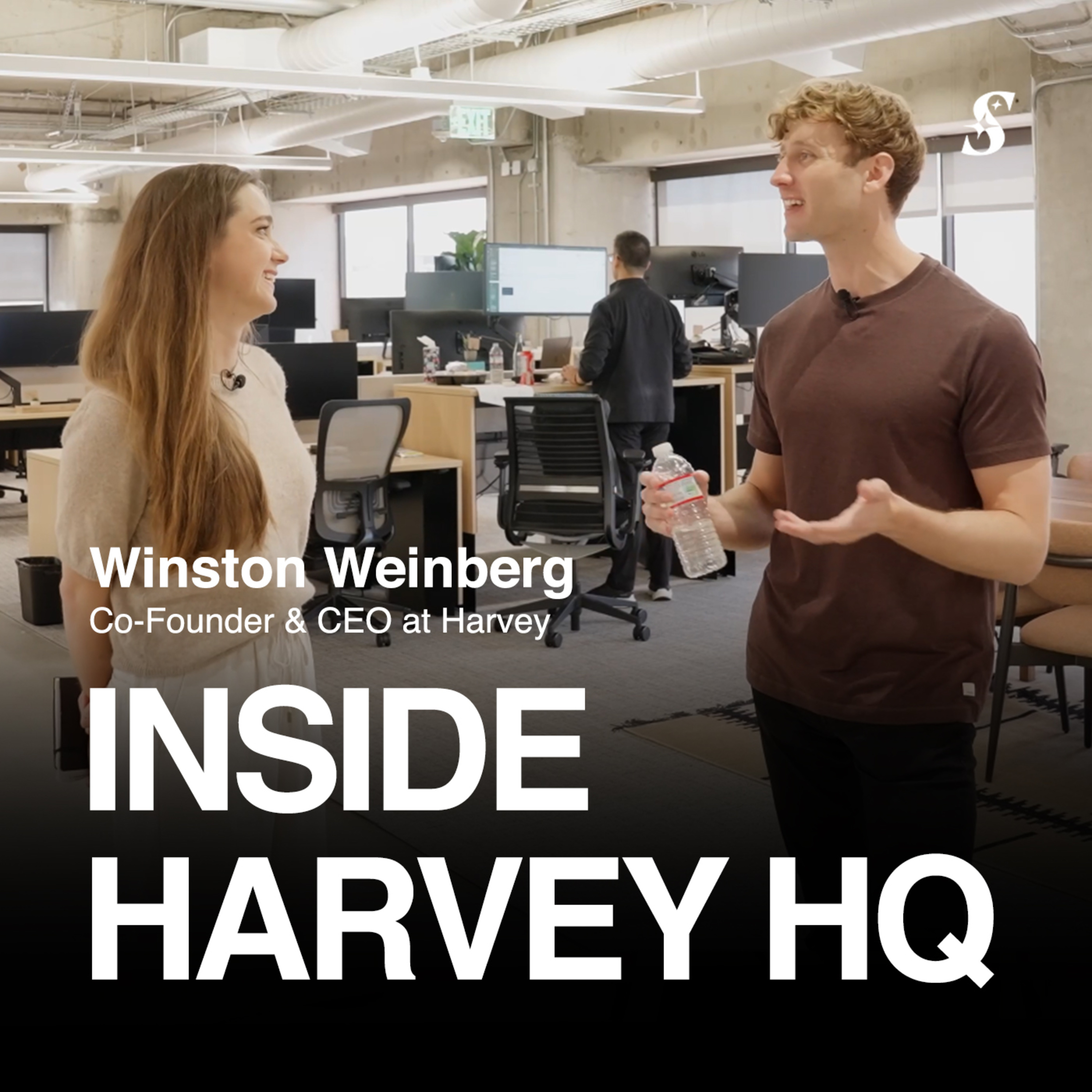
The lifecycle of a dominant technology in AI-assisted software development has compressed dramatically. Simple code auto-complete, once a massive innovation that defined the market, was disrupted by fully autonomous AI agents in a matter of months, not years, forcing companies to pivot their entire product strategy at an unprecedented speed.

In the fast-paced AI landscape, success is fleeting. The underlying models and capabilities are advancing so rapidly that market leaders must fundamentally reinvent their company and product every six to nine months. Stagnation for even a year means falling hopelessly behind, as demonstrated by Cursor's evolution from auto-complete to managing agentic swarms.

Large labs often suffer from organizational friction between product and research. A small, focused startup like Cursor can co-design its product and model in a tight loop, enabling rapid innovations like near-real-time policy updates that are organizationally difficult for incumbents.
![[State of RL/Reasoning] IMO/IOI Gold, OpenAI o3/GPT-5, and Cursor Composer — Ashvin Nair, Cursor thumbnail](https://assets.flightcast.com/V2Uploads/nvaja2542wefzb8rjg5f519m/01K4D8FB4MNA071BM5ZDSMH34N/square.jpg)
The conventional wisdom for SaaS companies to find their 'second act' after reaching $100M in revenue is now obsolete. The extreme rate of change in the AI space forces companies to constantly reinvent themselves and refind product-market fit on a quarterly basis to survive.
A product's fit with the market can vanish overnight in the fast-moving AI space. Continuous innovation is required not just for growth, but for survival. What provides a competitive edge today might be commoditized by a new model release or a competitor tomorrow.
