Get your free personalized podcast brief
We scan new podcasts and send you the top 5 insights daily.
CAR-T therapy involves a significant but finite period of acute toxicity (CRS, ICANS) that resolves within about a month. In contrast, bispecific antibodies can cause persistent, low-grade immune activation symptoms like fatigue and malaise that last for the entire duration of the continuous treatment.

Related Insights
Drugs like cervatimig are engineered for improved safety. They feature a silenced Fc portion to prevent prolonged toxicity and a low-affinity CD3 binder that engages T-cells more physiologically. This design reduces the likelihood of high-grade cytokine release syndrome (CRS) and neurotoxicity.

Subtle, early signs of serious T-cell engager toxicities like CRS and ICANS (e.g., mild confusion, headache) can be easily dismissed by patients. Effective management requires educating patients to report these symptoms immediately, as delaying can lead to severe outcomes, shifting focus to proactive patient behavior modification.

In follicular lymphoma, the treatment goal is durable remission with manageable toxicity, not necessarily a cure. Therefore, clinicians frequently prefer using a bispecific antibody first, reserving the more complex and toxic CAR-T cell therapy for transformed disease or after a bispecific fails.
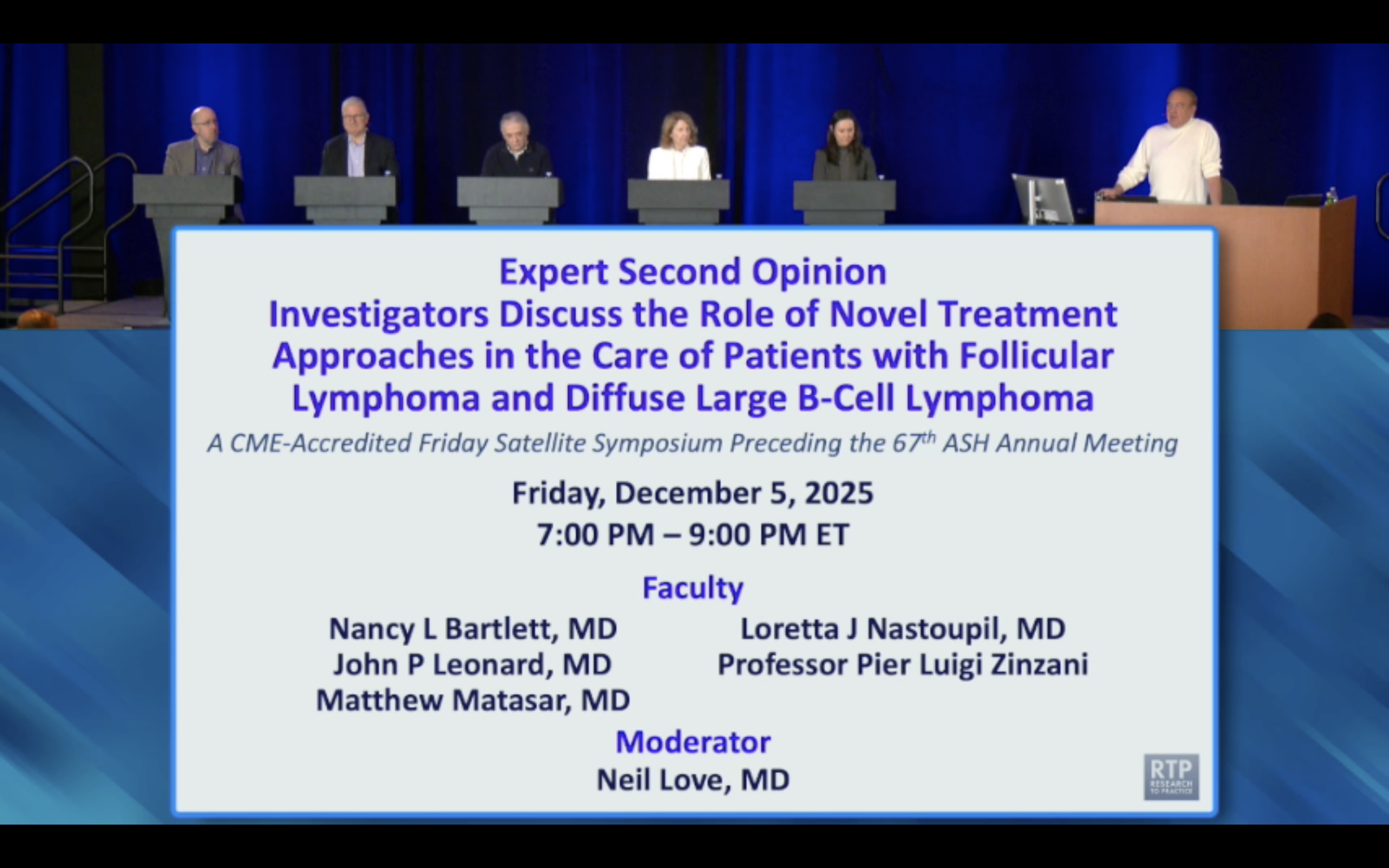
Data from the MAJESTIC three trial shows bispecific antibodies achieving progression-free survival rates comparable to CAR-T therapy. This creates a new clinical dilemma, forcing a choice between an immediate, off-the-shelf option for rapid progression versus a one-time therapy with a longer track record, making treatment an individualized decision.

The efficacy of Siltacel stems from a powerful initial expansion that eliminates cancer upfront. The CAR-T cells are often undetectable beyond six months, indicating their curative potential comes from an overwhelming initial response rather than persistent, long-term immune policing of the disease.

With highly effective treatments like CAR-T and bispecifics moving into earlier lines of therapy for multiple myeloma, the clinical focus must evolve. While efficacy benchmarks have been met, the next advancement requires vigilant attention to safety, particularly infection risks and other side effects of new paradigms.
Contrary to fears based on T-cell engagers in hematologic cancers, CRS with the DLL3 bispecific tarlatamab in SCLC is typically mild and easily managed. An expert describes it as "scary until you're treating patients and then you find that it's pretty anticlimactic," reassuring community oncologists about the therapy's safety profile.
Patients and clinicians should understand that CAR T-cell therapy requires continuous long-term management. This includes monthly IVIG infusions for hypogammaglobulinemia and monitoring for cytopenias, contrasting with the more predictable recovery from a stem cell transplant.

While Cytokine Release Syndrome (CRS) and neurotoxicity (ICANS) are dramatic acute side effects, they are rarely fatal. The leading cause of non-relapse mortality for patients receiving CAR T-cells or bispecifics is infection resulting from prolonged cytopenias. This underscores the need for vigilant monitoring and prophylaxis.

When choosing between BCMA-directed therapies, using CAR-T therapy first may be strategically advantageous. Early evidence suggests continuous T-cell engager (bispecific) therapy may exert more selective pressure, leading to a higher risk of BCMA target loss through mutation or deletion compared to one-time CAR-T infusions.
