Get your free personalized podcast brief
We scan new podcasts and send you the top 5 insights daily.
A key, underappreciated factor in the Renaissance was political fragmentation. In the city-states of Italy and duchies of Germany, there was no single king or emperor with the power to suppress new, challenging ideas, allowing humanism and innovation to thrive.

Related Insights
Unlike China's vast, easily unified plains, Europe's geography of mountains and rivers created natural barriers. This prevented a single empire from dominating and instead fostered centuries of intense competition between states. This constant conflict spurred rapid technological and military innovation, ultimately leading to European dominance.

Machiavelli, raised on the ideal that reading Cicero would create good rulers, watched as educated leaders like the Borgias started horrific wars. He concluded the 'education by osmosis' model was flawed and proposed using history as a dataset—a 'casebook of examples'—to systematically analyze what worked, effectively inventing modern political science.

Florence's republic ultimately fell to the Medici dukes, but the populace's fierce, prolonged resistance forced the new rulers to be cautious. They had to respect property rights and traditions to avoid rebellion, resulting in a significantly less tyrannical regime than in neighboring states. This demonstrates how even a losing fight can impose constraints and secure future liberties.
Upstart Italian rulers, lacking noble lineage, adopted Roman art, architecture, and scholarship as propaganda. This created an aura of classical greatness and stability, making them seem like legitimate successors to the Caesars rather than mere tyrants who had seized power through a coup.
Unlike Western Europe, where power was decentralized, Constantinople's strategic location naturally encouraged centralization. Its geographic dominance was so profound that it shaped both the Byzantine and Ottoman empires into highly centralized states, a rarity for the pre-modern world.

History's most prosperous eras, from Rome to the Song Dynasty, were defined by openness—free trade, immigration, and the movement of ideas. Their decline consistently correlates with closing borders, imposing tariffs, suppressing free thought, and the rise of authoritarianism, a worrying parallel to modern trends.

The printing press, a technology financed by the Catholic Church to solidify its power, was weaponized by Martin Luther to dismantle that same power. By printing pamphlets with bullet-pointed arguments, he bypassed the establishment's information monopoly, acting as the first mass-media disruptor.
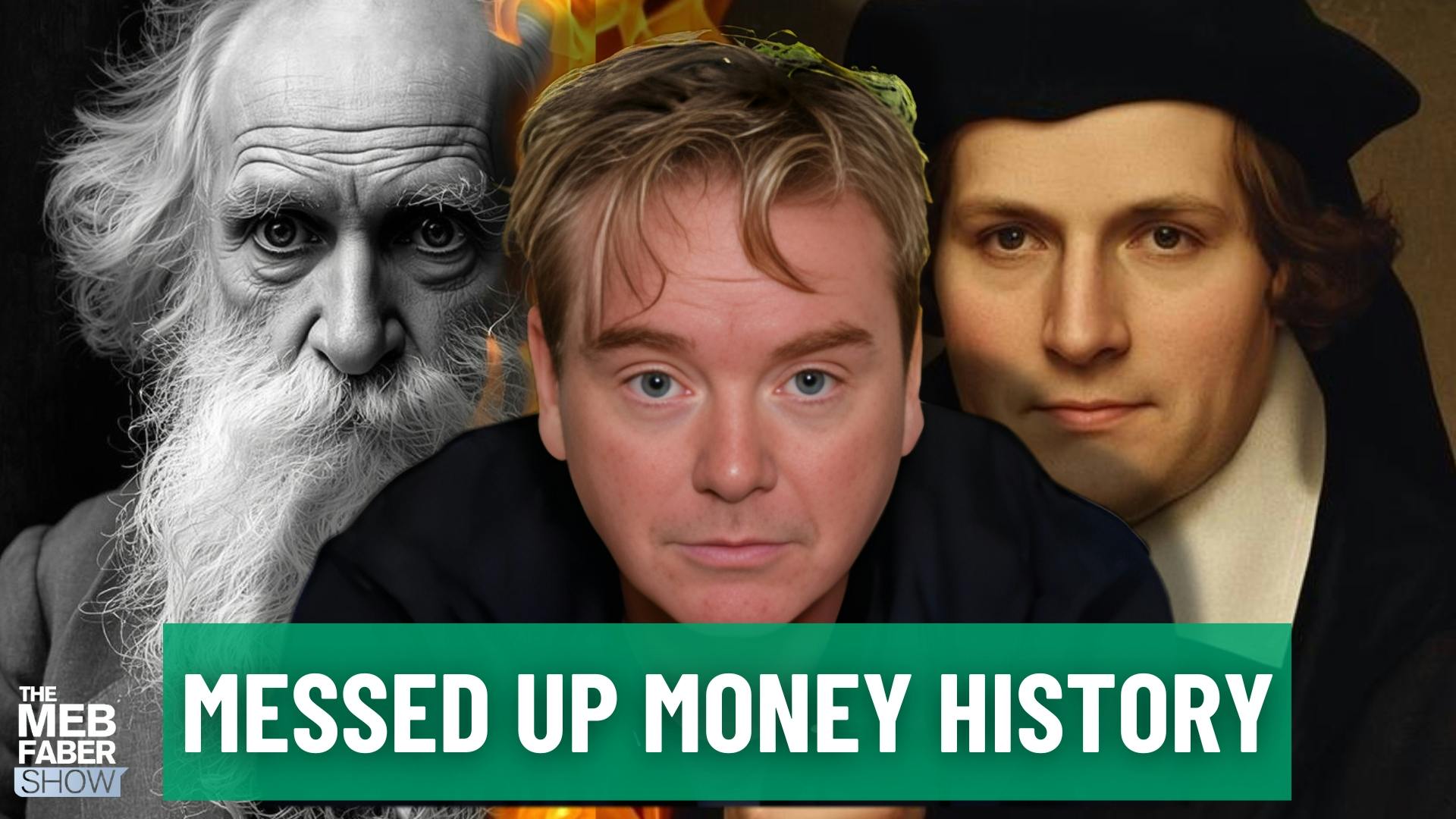
The printing press didn't just spread information; it forged modern nations. By concentrating publishing in major cities, it standardized local vernaculars (e.g., Parisian French), creating linguistic communities that became the foundation for national identity and replaced the pan-European Latin elite.
The Renaissance began as an attempt to create virtuous leaders by reviving Roman education. The project failed to produce better rulers but succeeded in building the necessary infrastructure—libraries and scholarly networks. This intellectual ecosystem, created for one purpose, became the fertile ground for the Scientific Revolution generations later.
Historian Heather Cox Richardson notes that eras of significant political fear and instability, like the late 19th century or today, are also periods of great cultural creativity. New art, music, literature, and influential voices emerge, acting as a testament to the human spirit and forming a lasting cultural legacy.
