Get your free personalized podcast brief
We scan new podcasts and send you the top 5 insights daily.
Despite his cruelty and erratic leadership that led to defeat, Emperor Theodros is now celebrated in Ethiopia as a patriotic hero who fought European imperialism. This shows how historical figures are often reinterpreted to fit modern nationalistic narratives, prioritizing symbolic resistance over the leader's actual record.

Related Insights
The story of John Simpson, a deserter who became a hero at Gallipoli, shows how national identity, like the "Anzac spirit," is constructed by elevating and sanitizing individual acts of bravery into a symbolic, patriotic narrative.
The Gallipoli campaign, a catastrophic failure for the Allies, paradoxically became a cornerstone of national identity for Australia and New Zealand (the ANZAC legend) and for the emerging Republic of Turkey, where Mustafa Kemal Atatürk made his name.

Mandela recognized rugby's deep significance to the white Afrikaner population. Instead of banning its symbols, he embraced them, using the 1995 World Cup to foster a shared national identity and win over his former enemies.

Military sieges can be categorized as "utilitarian" (strategically important) or "totemic" (civilizationally significant). The 1836 Siege of the Alamo was a tactical disaster but became a "totemic" event whose rallying cry cemented itself in national culture, demonstrating how narrative can trump military outcomes.

The warlord Kassa, after unifying the country, took the name "Theodros." This was a strategic move to tap into a long-standing Abyssinian tradition foretelling a messianic ruler named Theodros who would restore the nation's glory, effectively claiming a divine right to rule.
The same historical facts, like America's history with slavery, can be interpreted as a story of shame or a story of heroic struggle to live up to founding ideals. The narrative a society chooses dictates its collective psyche and future trajectory.

Figures like the female warrior Tomoe Gozen were likely real but immediately mythologized. The samurai actively encouraged this process, understanding that compelling narratives of heroism and tragedy solidified their cultural dominance and inspired future generations. Image and reality were inseparable from the start.

Drake, celebrated as an English hero, began his career in the slave trade. This duality fuels modern debates about his legacy, leading to partial renaming of landmarks honoring him, illustrating the difficulty of reconciling historical figures with contemporary ethics.
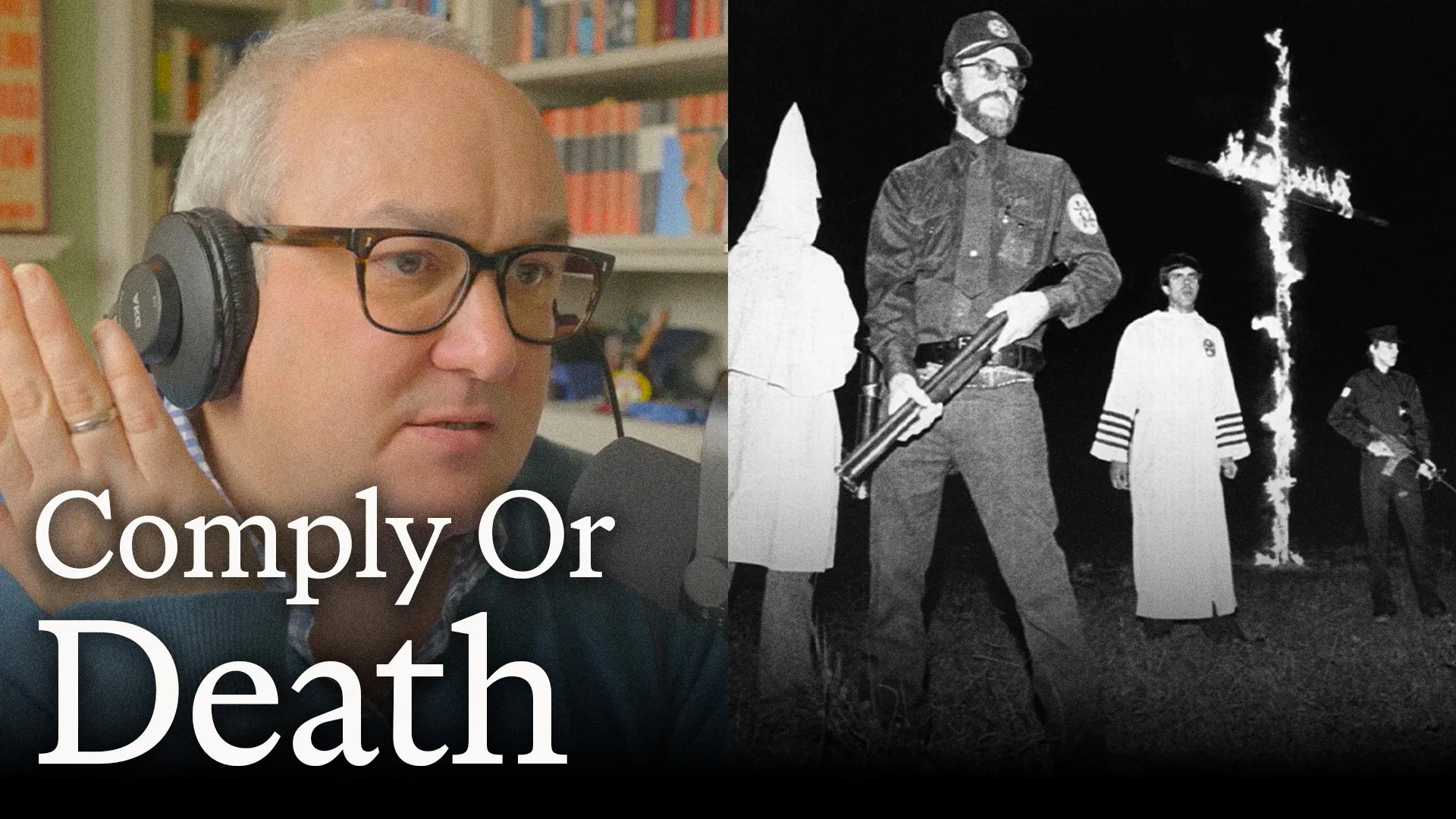
Following its demise, the KKK's violent legacy was completely sanitized by the 'Lost Cause' mythology. Academic historians and popular culture, most notably D.W. Griffith's 1915 film 'The Birth of a Nation', recast the Klan not as racist terrorists but as swashbuckling defenders of civilization, a narrative that enabled its eventual rebirth.
Coming just after Australia's 1901 federation, the Gallipoli story provided a powerful narrative for a new nation. The legend of brave Anzacs let down by inept British leaders became a cornerstone of Australia's cultural and political separation from Britain.