Get your free personalized podcast brief
We scan new podcasts and send you the top 5 insights daily.
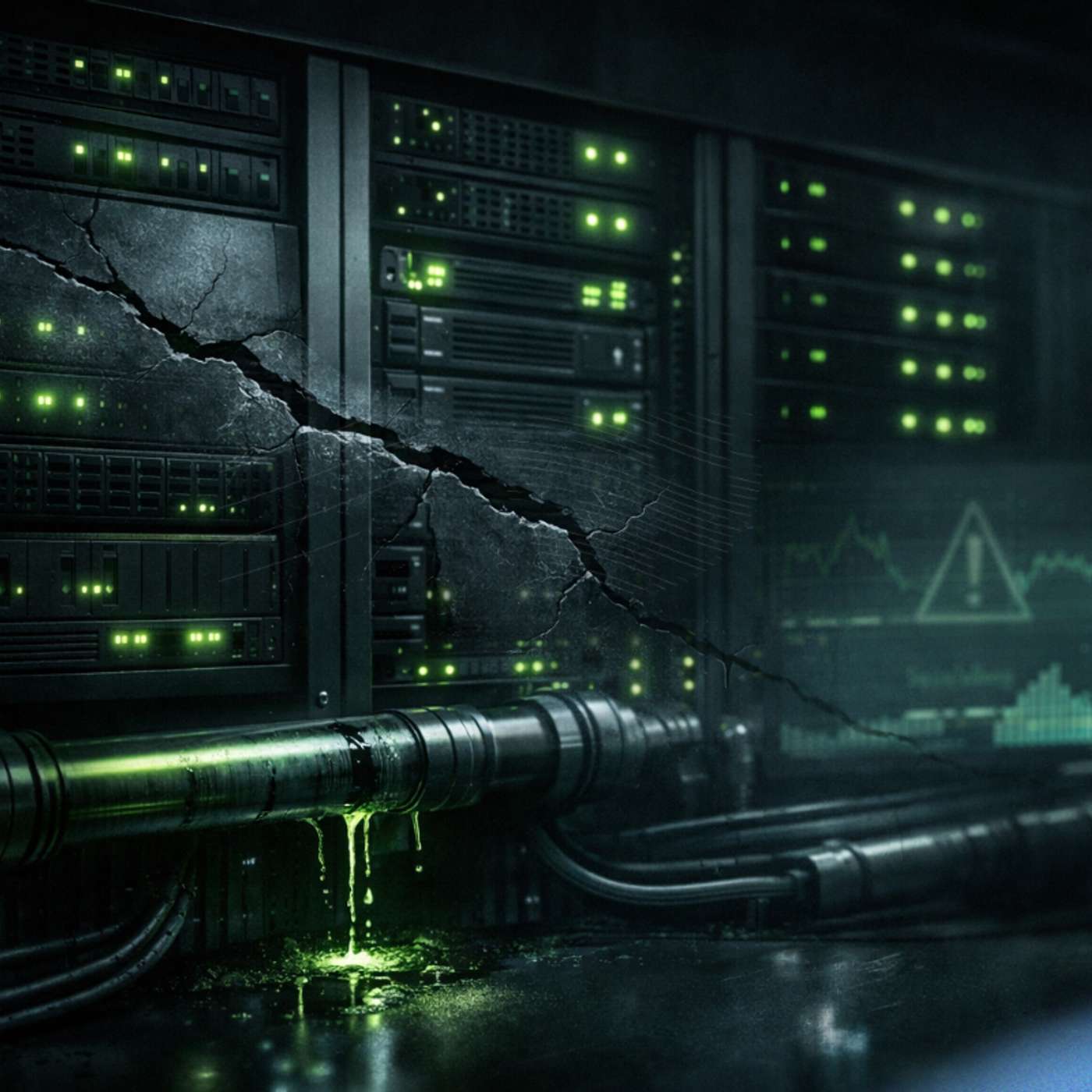
Seemingly sudden crashes in tech and markets are not abrupt events but the result of "interpretation debt"—when a system's output capability grows faster than the collective ability to understand, review, and trust it, leading to a quiet erosion of trust.
Related Insights
The primary problem for AI creators isn't convincing people to trust their product, but stopping them from trusting it too much in areas where it's not yet reliable. This "low trustworthiness, high trust" scenario is a danger zone that can lead to catastrophic failures. The strategic challenge is managing and containing trust, not just building it.

The SVB crisis wasn't a traditional bank run caused by bad loans. It was the first instance where the speed of the internet and digital fund transfers outpaced regulatory reaction, turning a manageable asset-liability mismatch into a systemic crisis. This highlights a new type of technological 'tail risk' for modern banking.

In 1929, the stock exchange ticker fell hours behind real-time trading. This information vacuum created immense uncertainty, forcing investors to physically crowd Wall Street for updates. This chaos, driven by a lack of data, contrasts sharply with today's high-speed, social-media-fueled market reactions.

The ultimate failure point for a complex system is not the loss of its functional power but the loss of its ability to be understood by insiders and outsiders. This erosion of interpretability happens quietly and long before the more obvious, catastrophic collapse.
Similar to technical debt, "narrative debt" accrues when teams celebrate speed and output while neglecting shared understanding. This gap registers as momentum, not risk, making the system fragile while metrics still look healthy.
A paradox of rapid AI progress is the widening "expectation gap." As users become accustomed to AI's power, their expectations for its capabilities grow even faster than the technology itself. This leads to a persistent feeling of frustration, even though the tools are objectively better than they were a year ago.

AI can quickly find data in financial reports but can't replicate an expert's ability to see crucial connections and second-order effects. This leads investors to a false sense of security, relying on a tool that provides information without the wisdom to interpret it correctly.

Platforms designed for frictionless speed prevent users from taking a "trust pause"—a moment to critically assess if a person, product, or piece of information is worthy of trust. By removing this reflective step in the name of efficiency, technology accelerates poor decision-making and makes users more vulnerable to misinformation.
Contrary to expectations, wider AI adoption isn't automatically building trust. User distrust has surged from 19% to 50% in recent years. This counterintuitive trend means that failing to proactively implement trust mechanisms is a direct path to product failure as the market matures.

AI systems often collapse because they are built on the flawed assumption that humans are logical and society is static. Real-world failures, from Soviet economic planning to modern systems, stem from an inability to model human behavior, data manipulation, and unexpected events.
