Get your free personalized podcast brief
We scan new podcasts and send you the top 5 insights daily.
The work on the Herculaneum scrolls has moved past the "how" and into the "what." Having proven the technology can read a complete scroll, the focus is no longer on synchrotrons and AI models but on the lost voices and historical knowledge being recovered, marking a successful transition for the project.

Related Insights
As AI increasingly handles the bottleneck of generating proofs, the primary value of human mathematicians will shift. Skills like understanding, explaining, and curating an explosion of new results will become more critical than the act of proving itself. The community will reward those who can build frameworks for this new knowledge.

The static PDF is an inefficient medium for knowledge transfer. The future may be interactive AI models that hold the research, allowing users to dynamically query, expand, and explore concepts, making science more accessible and breaking the compress/decompress cycle of papers.
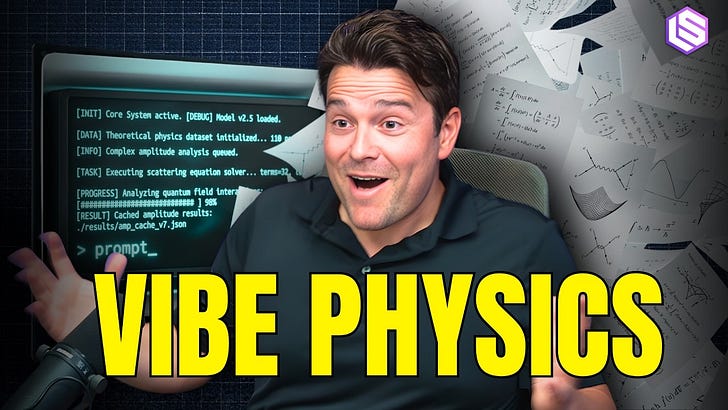
While AI is typically associated with future-facing applications, its use in deciphering the Herculaneum scrolls demonstrates a powerful "rescue mission." This provides a redemptive narrative, showing how advanced technology can restore and redeem lost parts of human civilization, countering the common dystopian fears.
The DeepMind team was surprised that their specific software became a ubiquitous tool. They expected to solve a grand challenge and then have others build useful systems based on the concepts, not use the original artifact directly.

Most classical texts survived only as copies made by medieval scribes, who often altered them. The Herculaneum scrolls are the original artifacts from an ancient library, providing a direct and uniquely authentic source, free from centuries of potential transcription errors or ideological "tinkering."
The team obsesses over perfecting the BCI cursor, treating it as the key to user agency on a computer. However, the long-term vision is to eliminate the cursor entirely by reading user intent directly. This creates a fascinating tension of building a masterwork destined for obsolescence.

A contrarian view on "destructive scanning" of old books for AI training. Instead of a loss, it's a form of preservation. This process transfers knowledge from a format no longer widely consumed (physical books) into a dynamic, interactive system (AI), making the information more accessible to the world.

The workflow isn't a one-way street from tech to humanities. Papyrologists review the digitally unwrapped text and use their domain expertise to spot anomalies, such as a "break in the narrative." This feedback helps the engineering team identify and correct errors in the AI-driven unwrapping process.
Cohere's CEO believes if Google had hidden the Transformer paper, another team would have created it within 18 months. Key ideas were already circulating in the research community, making the discovery a matter of synthesis whose time had come, rather than a singular stroke of genius.
With AI generating complex formulas and proofs, the most challenging part of scientific research is no longer solving the core problem. Instead, the primary human task becomes verifying the AI-generated results and writing them up, fundamentally changing the research workflow.
