Get your free personalized podcast brief
We scan new podcasts and send you the top 5 insights daily.
As AI increasingly handles the bottleneck of generating proofs, the primary value of human mathematicians will shift. Skills like understanding, explaining, and curating an explosion of new results will become more critical than the act of proving itself. The community will reward those who can build frameworks for this new knowledge.

Related Insights
There's a critical distinction between a proof (which establishes truth) and an explanation (which provides understanding). Even when a complex mathematical problem is solved, there remains an 'unsolved expository problem' of making the solution comprehensible. This need for clarity and intuition will remain a crucial area for human or AI effort, even after theorems are proven.
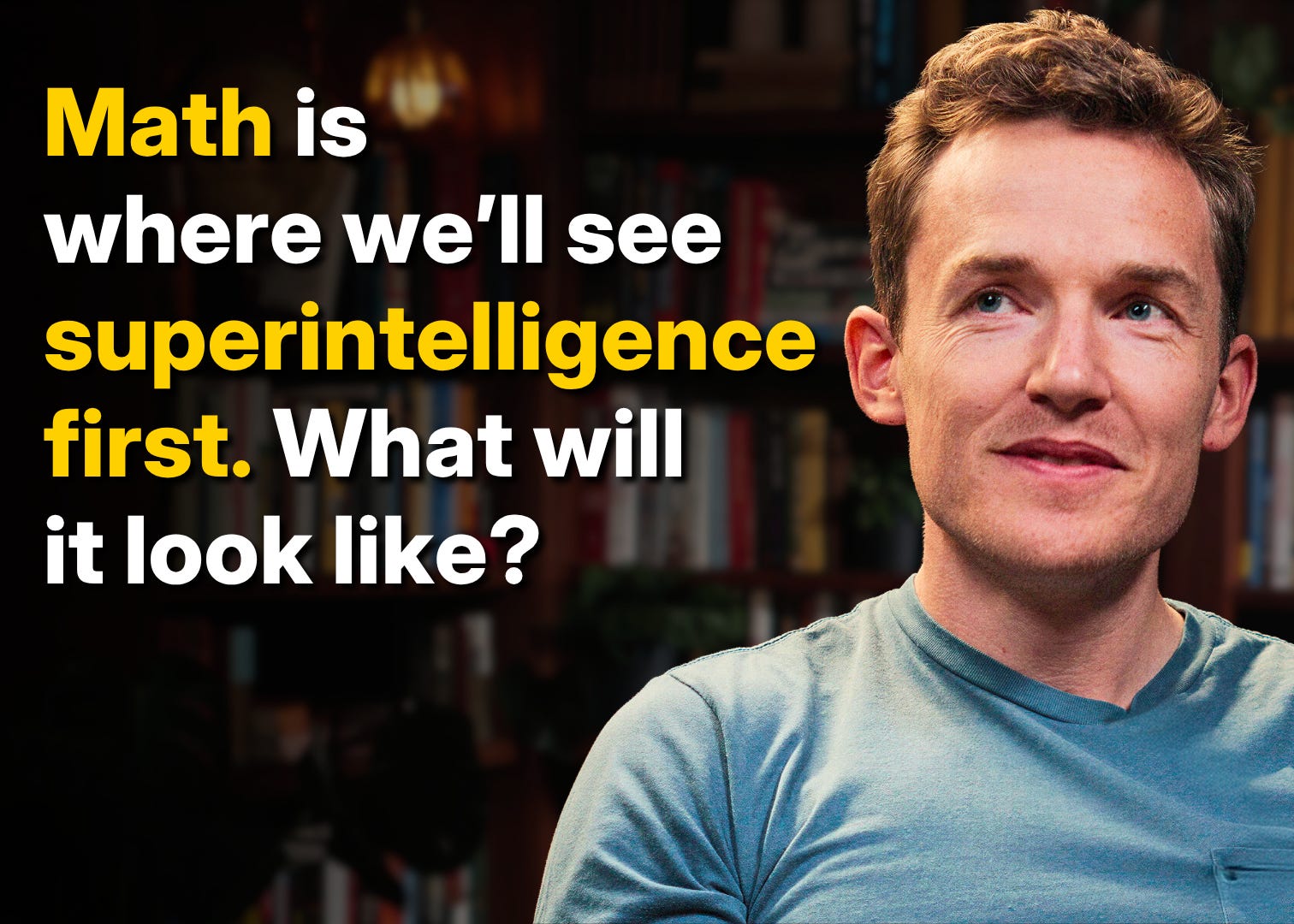
Top AI models are now solving major open problems in mathematics, leading some in the field to feel their core purpose is being automated away. This isn't just about tools; it's a profound identity crisis for a discipline built on human ingenuity and the pursuit of solving theorems.

A common fear is that AIs will produce billion-line proofs of theorems without offering human insight. However, an alternative and perhaps more likely future is that their superhuman capabilities will be applied to explanation. They could take complex, human-incomprehensible proofs and find novel ways to make them intuitive and easy to understand.

Expert mathematicians adopt formal tools like Lean not primarily to catch errors, but to offload tedious, low-level deductions. This automation allows them to operate at a higher level of abstraction and focus their cognitive energy on creative intuition and problem-solving strategy.

While AI is set to exponentially increase the output of mathematical proofs, it simultaneously provides the tools to manage this explosion. The same models that generate complex results can be used to quickly summarize, explain, and help humans absorb sophisticated mathematics, making the field more accessible, not less.
As AIs automate theorem proving and even explanation, the role of human mathematicians will shift. Instead of being creators, they will act as curators, using their taste and social connection to guide others through the vast, AI-generated landscape of mathematical ideas. Their value will lie in providing motivation and a human-centric narrative.
A mathematician argues that the ultimate purpose of his field is to produce human understanding, not just research papers. The prospect of crucial insights being locked away in opaque model weights is "unsatisfying," highlighting the need to prioritize the development of human expertise even as AI capabilities grow.
Even if AI could instantly prove any mathematical claim, it wouldn't end the field. The truly creative and valuable work in mathematics lies in higher-level tasks AI can't do: asking interesting questions, identifying fruitful problems, and inventing entirely new branches of mathematics like calculus or information theory.
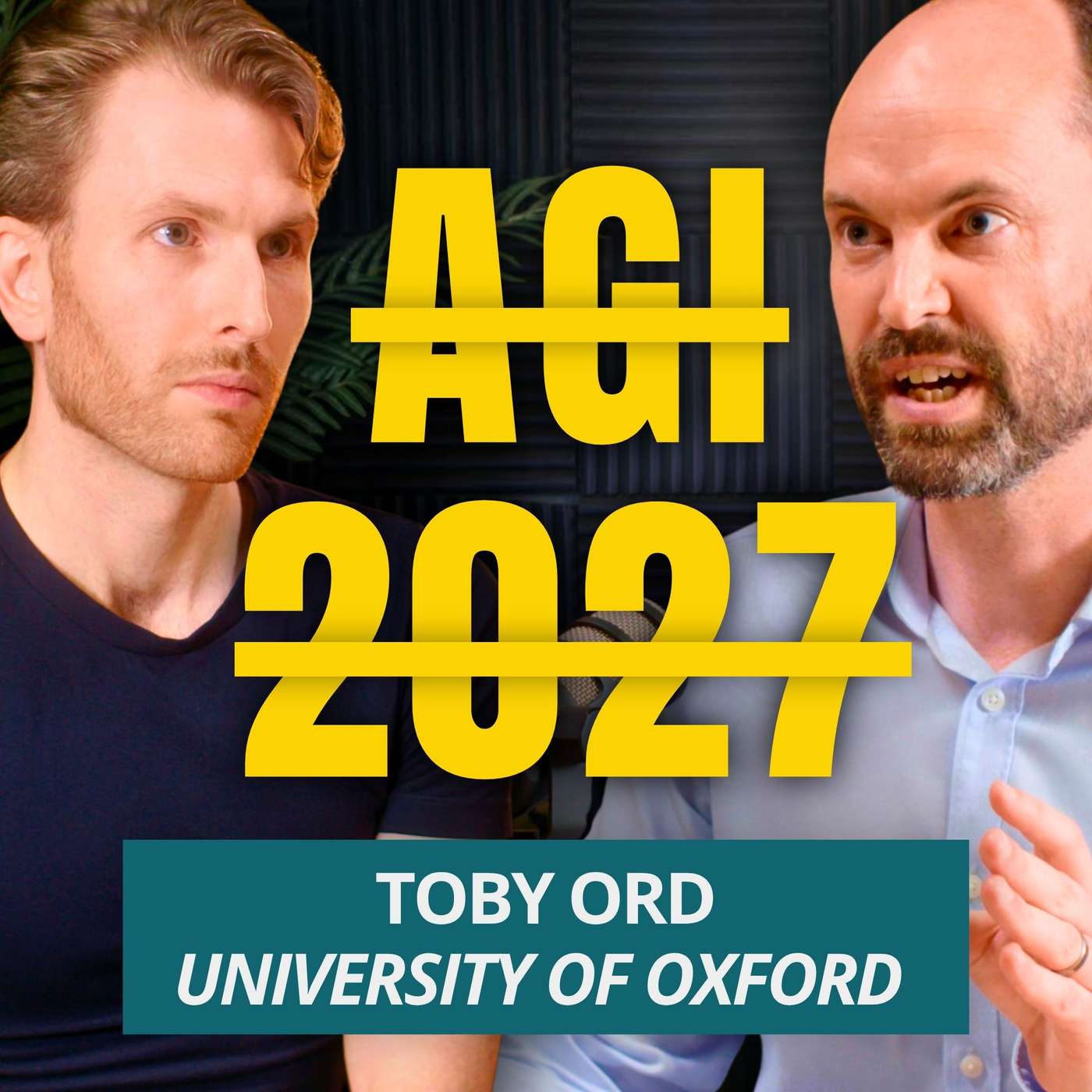
Moving beyond solving existing problems like the Millennium Prize problems, the true test of advanced AI in mathematics will be its ability to generate novel, interesting conjectures and create new, unifying definitions. This represents a higher tier of mathematical creativity, akin to the work of the greatest mathematicians who frame the questions for others to solve.
With AI generating complex formulas and proofs, the most challenging part of scientific research is no longer solving the core problem. Instead, the primary human task becomes verifying the AI-generated results and writing them up, fundamentally changing the research workflow.
