Get your free personalized podcast brief
We scan new podcasts and send you the top 5 insights daily.
Tesla launched its Miami robotaxi service without in-car safety monitors and with a smaller pre-launch testing team. This signals a strategic shift towards a more scalable, AI-driven rollout model that relies less on human oversight and extensive, market-specific testing, reflecting Elon Musk's vision for universally deployable software.

Related Insights
Zoox intentionally designed its autonomous vehicle without a steering wheel or traditional car layout. This allows for optimal sensor placement for the AI driver and a unique, face-to-face cabin experience, betting that customer comfort will outweigh the familiarity of a retrofitted car.
After proving its robo-taxis are 90% safer than human drivers, Waymo is now making them more "confidently assertive" to better navigate real-world traffic. This counter-intuitive shift from passive safety to calculated aggression is a necessary step to improve efficiency and reduce delays, highlighting the trade-offs required for autonomous vehicle integration.

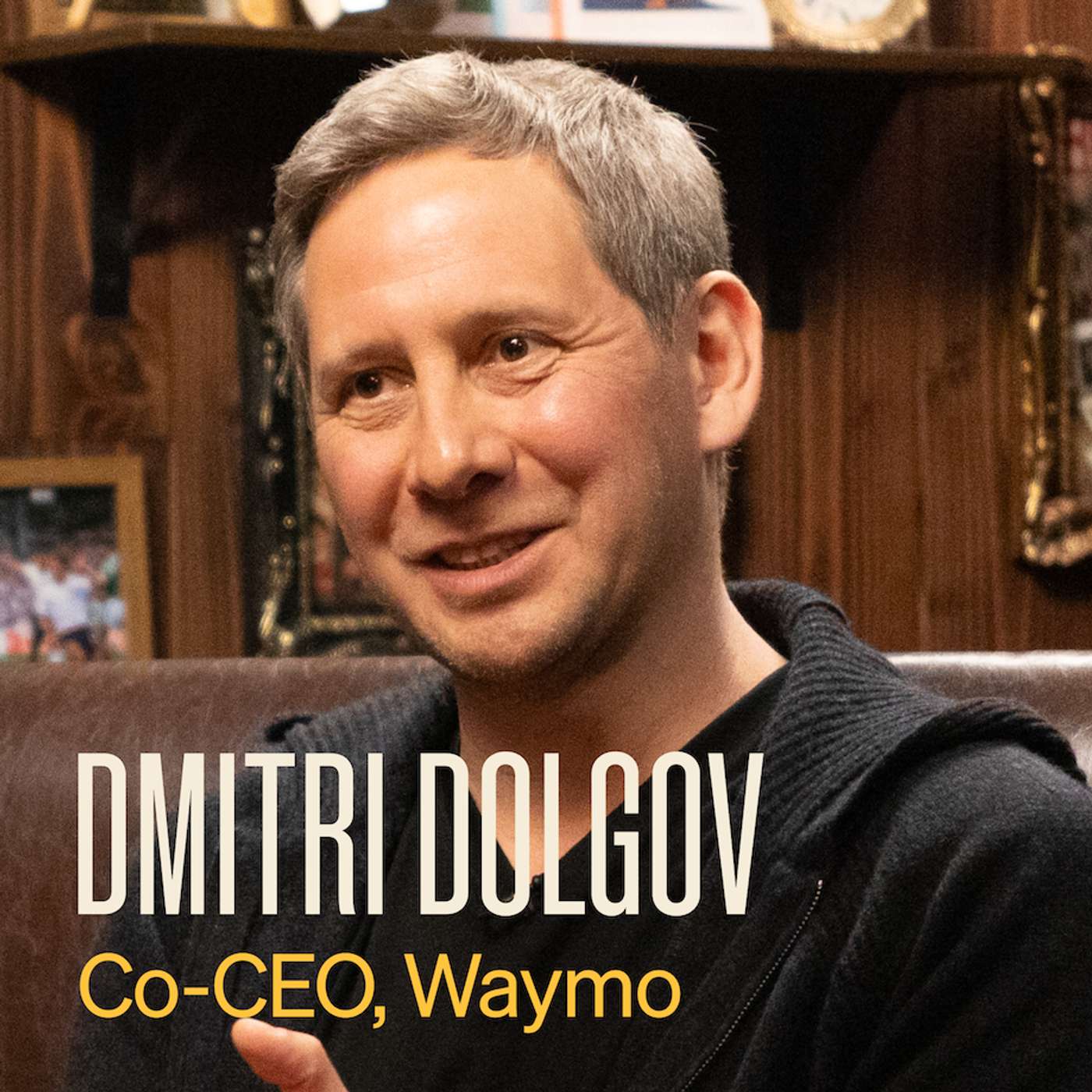
According to its co-CEO, Waymo has moved beyond fundamental research and development. The company believes its core technology is sufficient to handle all aspects of driving. The current work is an engineering challenge of specialization, validation, and data collection for new environments like London, signaling a shift to commercial deployment.
Instead of building its own capital-intensive robotaxi fleet, Waive's go-to-market strategy is to sell its autonomous driving stack to major auto manufacturers. This software-centric approach allows them to leverage the scale, distribution, and hardware infrastructure of established OEMs to reach millions of consumers.

Rivian's CEO explains that early autonomous systems, which were based on rigid rules-based "planners," have been superseded by end-to-end AI. This new approach uses a large "foundation model for driving" that can improve continuously with more data, breaking through the performance plateau of the older method.

Enterprises with existing customers cannot afford the "Waymo" approach of building a fully autonomous system in secret before launch. Instead, they should follow the "Tesla" model: iteratively automate segments of their products, keeping humans in the loop while gradually building towards greater autonomy.

The evolution of Tesla's Full Self-Driving offers a clear parallel for enterprise AI adoption. Initially, human oversight and frequent "disengagements" (interventions) will be necessary. As AI agents learn, the rate of disengagement will drop, signaling a shift from a co-pilot tool to a fully autonomous worker in specific professional domains.
Initially criticized for forgoing expensive LIDAR, Tesla's vision-based self-driving system compelled it to solve the harder, more scalable problem of AI-based reasoning. This long-term bet on foundation models for driving is now converging with the direction competitors are also taking.

To achieve scalable autonomy, Flywheel AI avoids expensive, site-specific setups. Instead, they offer a valuable teleoperation service today. This service allows them to profitably collect the vast, diverse datasets required to train a generalizable autonomous system, mirroring Tesla's data collection strategy.

The cautious and sometimes slow nature of current driverless AI makes it unsuitable for passengers in a hurry. This technological limitation has created a specific market: users who prioritize a calm, private experience over speed, such as for a relaxed evening out rather than a time-sensitive commute.