Get your free personalized podcast brief
We scan new podcasts and send you the top 5 insights daily.
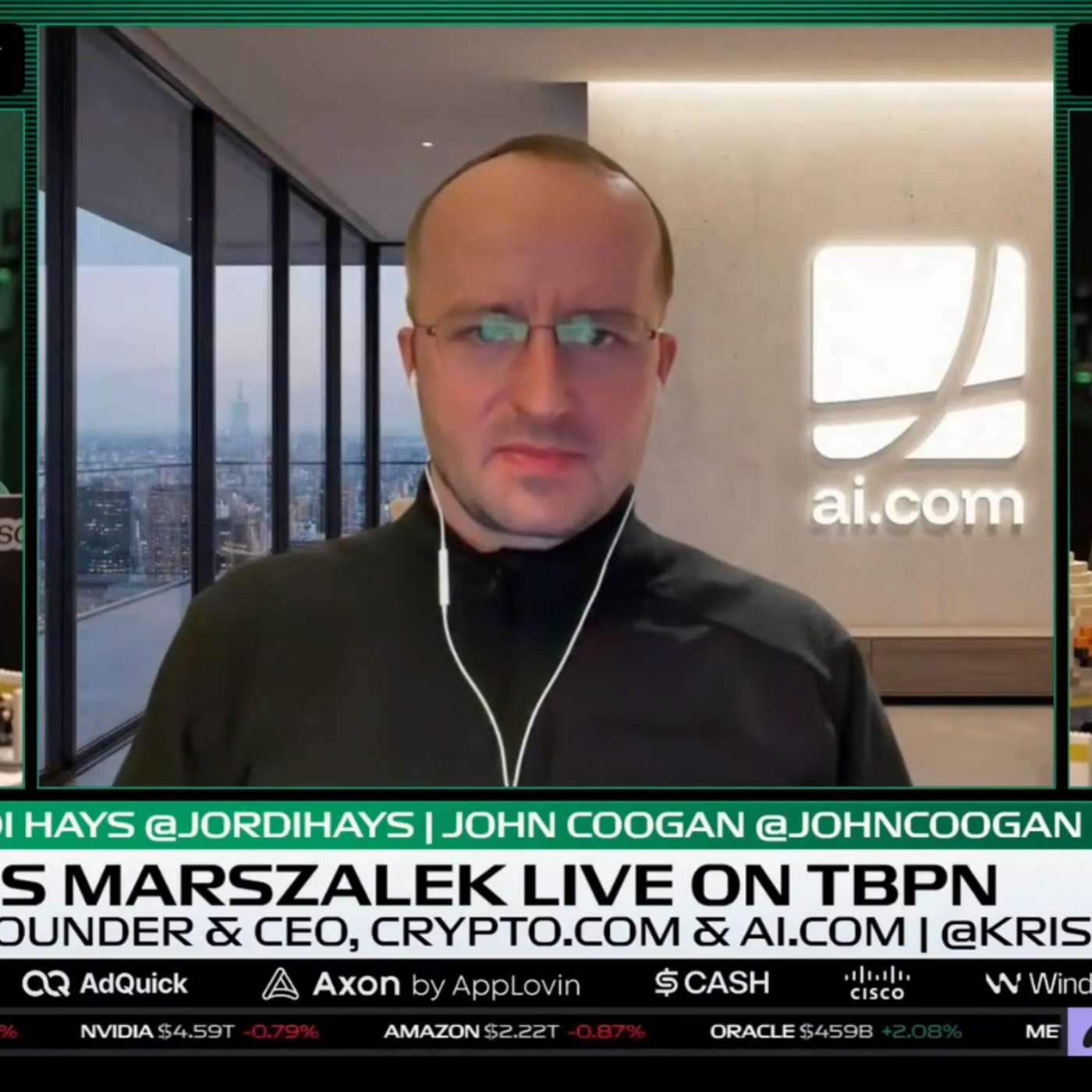
The founder of Crypto.com reveals their earlier $12M domain purchase was a tougher decision than the $70M for AI.com because it represented one-third of their capital during a bear market, highlighting that risk is relative to resources, not absolute cost.
Related Insights
The real challenge in crypto isn't identifying and buying an asset early. The true difficulty lies in having the conviction to hold that asset for over a decade through extreme volatility, regulatory threats, hard forks, and security risks. Most early buyers sell far too soon.

The speaker's catastrophic early foray into leveraged crypto speculation, resulting in a 97% loss, provided the foundational lessons for his successful value investing approach in stocks. This failure taught him to avoid technical indicators, leverage, and shorting, and to only buy assets he understands.

Kris Marszalek, who bought AI.com for a reported $70M, was approached with an offer "starting at $500 million" almost immediately after the deal closed. He turned it down, demonstrating extreme long-term conviction to build a category-defining brand rather than take a massive, quick profit.

Immediately after acquiring AI.com for $70M, the founder received and rejected an offer exceeding $500M. This demonstrates extreme long-term conviction, prioritizing the potential of building a platform over a massive, quick profit.
Investing in the world's top AI research teams carries a unique risk profile. While the business outcome has high variance, the capital risk is asymmetric. The founders are so valuable that an acqui-hire is a highly probable outcome, creating a floor on the investment's value.

Beyond branding, the financial investment in a premium domain name can serve as a powerful psychological forcing function. It solidifies commitment to a new project, increasing the likelihood that a founder will follow through and see it to completion.

When discussing Meta's massive AI investment, Mark Zuckerberg framed the risk calculus in stark terms. He believes that while building infrastructure too early and "misspending" a couple hundred billion dollars is a possibility, the strategic risk of being too slow and missing the advent of superintelligence is significantly higher.

Satya Nadella reveals that the first $1 billion investment in OpenAI was considered a high-risk bet with a high probability of failure. Bill Gates himself told Nadella he expected him to "burn this billion dollars," underscoring the extreme risk tolerance required for the deal.

Instead of viewing the $11,000 cost for waterboy.com as a pure expense, the founders framed it as an investment after validating their product. They justified the cost by calculating the future value of simplicity in marketing communications, like podcast ads.

During a tough fundraising process, founders should remove emotion and ask themselves a critical question: 'Would I invest my entire personal fortune into this right now?' Answering 'yes' with rational conviction is the key to weathering rejections and ultimately persuading an anchor investor to make the first bet.