Get your free personalized podcast brief
We scan new podcasts and send you the top 5 insights daily.
A key feature of 'sanctuary technologies' is that they are non-totalizing. Instead of trying to fix or replace monolithic systems like the dollar, they create separate, opt-in spaces. This approach is more realistic and respectful of freedom, as it provides an alternative rather than forcing a universal change.

Related Insights
In an AI-driven world where digital proof is paramount, Bitcoin's transparent ledger makes it ideal as provable collateral for institutions. This institutional focus leaves a gap for individual-focused money, a role Zcash is suited to fill with its emphasis on privacy, simplicity, and fungibility, akin to physical cash.
Both speakers see crypto as a vital technology for a future with AI. It could provide a neutral, trust-minimized financial system for both humans and AI agents. By sharing this system, humans retain economic leverage and ensure their property rights are respected in a world where their labor may become valueless.
Cryptocurrency's strategic impact isn't its potential to replace the entire financial system, but its ability to absorb the relatively small but critical volume of global transactions related to crime and sanctions evasion, where it can be uniquely effective.
For an AI to operate autonomously—earning and spending money—it needs a native digital currency. Traditional financial systems are built for human or corporate entities, making it difficult for an AI to become a credit card merchant. Crypto provides the necessary 'internet money' infrastructure.
Vitalik Buterin reframes technologies like Ethereum as 'sanctuary technologies.' In an increasingly unsafe world, they should create protected spaces where people can be safe and empowered. This model directly competes with the disempowering 'uncle in the sky' vision of safety that requires surrendering privacy and agency.
Successful crypto projects will move beyond pure financial utility. By building in social components (community identity) and emotional components (contributing to a social good), they can build the trust and narrative strength needed to stand out in a crowded market.

AI agents are turning to crypto not just for efficiency, but out of necessity. The traditional financial system is a dead end for non-human entities, as an AI cannot get a credit card or open a bank account. Crypto provides the permissionless financial rails required for AI agents to operate and self-replicate economically.
The crypto industry is maturing, shifting from a revolutionary, "code is law" ethos to a pragmatic approach focused on integrating with existing financial systems. This "collared shirt era" prioritizes real-world adoption and regulatory compliance over ideological purity, attracting more pragmatic, product-focused founders.
After years of exploring various use cases, crypto's clearest product-market fit is as a new version of the financial system. The success of stablecoins, prediction markets, and decentralized trading platforms demonstrates that financial applications are where crypto currently has the strongest, most undeniable traction.
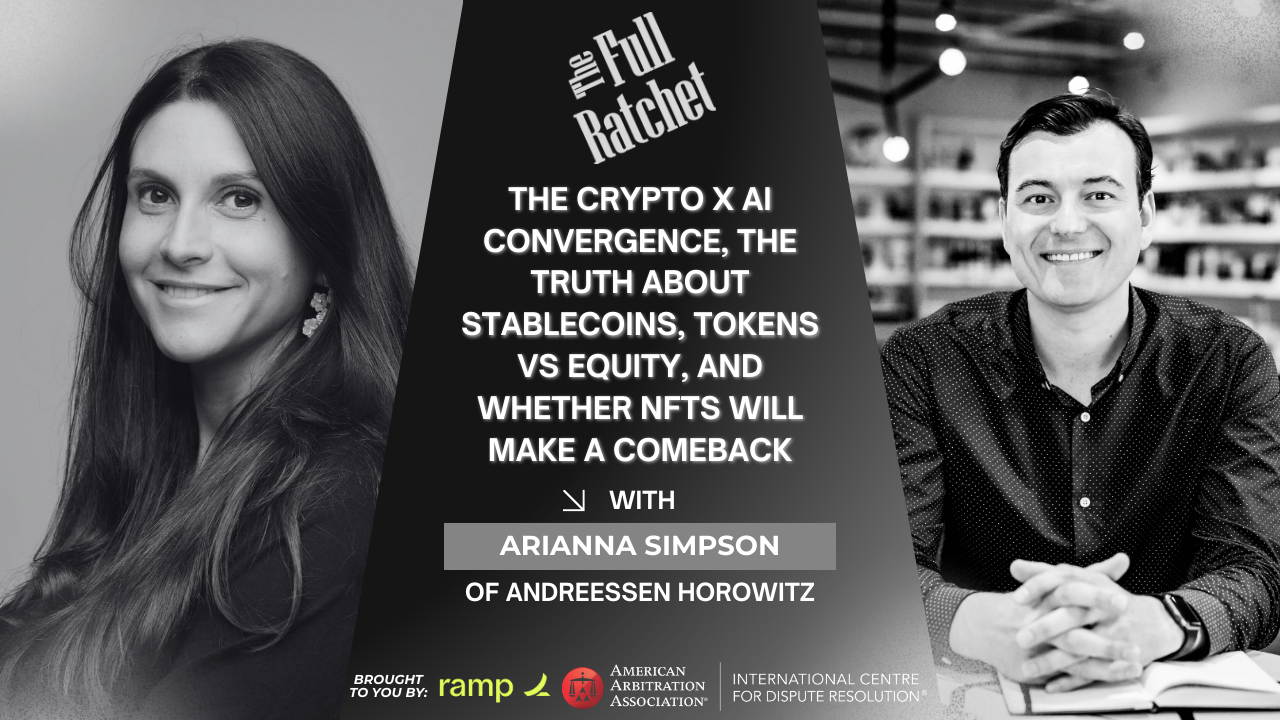
For AI agents to be truly autonomous and valuable, they must participate in the economy. Traditional finance is built for humans. Crypto provides the missing infrastructure: internet-native money, a way for AI to have a verifiable identity, and a trustless system for proving provenance, making it the essential economic network for AI.
