Get your free personalized podcast brief
We scan new podcasts and send you the top 5 insights daily.
Historically dismissed as "soft" or "feminine" skills, strong relationship abilities are now a company's key differentiator. As AI automates technical and analytical tasks, the uniquely human capacity for connection, empathy, and nuanced communication becomes the most valuable and defensible asset for high performance.

Related Insights
As AI provides customers with unprecedented information, the ability to build genuine trust and relationships—akin to doing business on a handshake—will become the key competitive advantage. AI provides the information (the yin), but human connection provides the authenticity and trust (the yang) needed to close deals.

As AI handles data analysis, the human-to-human relationship becomes the most critical and defensible skill in enterprise sales. For complex, high-stakes purchases, buyers feel uncomfortable making a final decision without a trusted human guide to consult, a role that technology cannot fully replace.
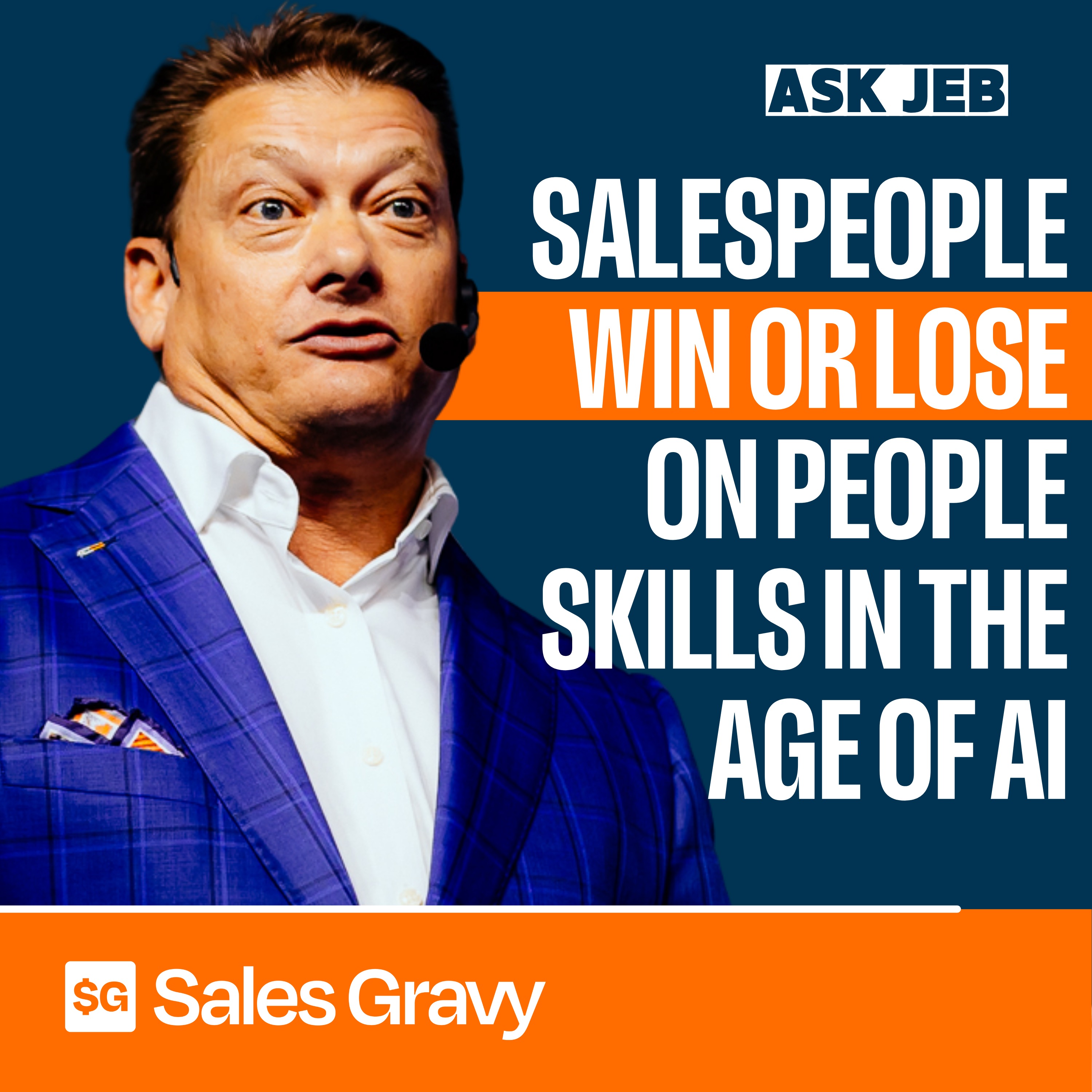
As AI automates technical and mundane tasks, the economic value of those skills will decrease. The most critical roles will be leaders with high emotional intelligence whose function is to foster culture and manage the human teams that leverage AI. 'Human skills' will become the new premium in the workforce.

As AI handles more technical marketing tasks, skills like communication, storytelling, and motivating people become the key differentiators. The human element grows in importance as the technical side becomes more automated, making soft skills a critical investment for career growth.

Skills like curiosity, courage, creativity, compassion, and communication—often dismissed as "soft"—are becoming your primary competitive advantage. As AI handles more technical and routine work, these uniquely human capabilities are essential for innovation and long-term career survival.

The rise of etiquette training for tech founders signals a key shift. As AI automates technical work, interpersonal 'soft skills'—like reading a room and building relationships—are becoming the critical, non-automatable assets for securing deals and leading companies in the new tech landscape.

As AI makes communication more generic, authentic human interaction becomes a powerful differentiator. Prioritizing physical meetings and personal relationships builds a level of trust that AI cannot replicate. This "human touch" is essential for establishing deep, meaningful partnerships that transcend digital efficiency and cut through the noise.

As AI commoditizes nearly everything, the only durable competitive advantage will be what it can't replicate: authentic, raw, and unpolished human experience. This "handcrafted humanity" becomes the new premium, as people seek trust and realness in a sea of AI-generated slop.

While technical proficiency is important, AI is becoming exceptional at automating routine "grind them out" tasks. Ben Horowitz argues that uniquely human skills—creativity for generating original ideas and the ability to build high-fidelity relationships—are becoming paramount. These are difficult to automate and will be a key differentiator for talent in the AI era.

Solomon believes AI will never replicate core human traits like trust, creative voice, or emotional intelligence (EQ). As technology automates analytical tasks, these uniquely human skills will become more valuable differentiators, not less. The future lies in leveraging tech to enhance, not replace, human connectivity.
