Get your free personalized podcast brief
We scan new podcasts and send you the top 5 insights daily.
Anthropic's strategy of running workloads on diverse chips (NVIDIA, Google TPU, AWS Trainium) is less about long-term diversification and more about immediate survival. In a market where compute is severely constrained, the ability to utilize any available chip becomes a critical competitive advantage, forcing deep technical competence across architectures.

Related Insights
Anthropic's capital efficiency in model training has been impressive. However, OpenAI's willingness to spend massively on compute could become a decisive advantage. As user demand outstrips supply, reliable service capacity—not just model quality—may become the key differentiator and competitive moat.

Unlike traditional software, OpenAI's growth is limited by a zero-sum resource: GPUs. This physical constraint creates a constant, painful trade-off between serving existing users, launching new features, and funding research, making GPU allocation a central strategic challenge.

Google is offering its TPUs externally for the first time as a strategic move to gain market share while it has a temporary hardware advantage over Nvidia. This classic tactic aims to build a crucial install base that can be upgraded later, even after its competitive performance edge inevitably narrows.

Anthropic is pioneering a new hardware strategy. Instead of just renting Tensor Processing Units (TPUs) from Google Cloud, it is buying the chips directly from co-designer Broadcom. This gives Anthropic more control over its infrastructure, a significant move away from the standard cloud-centric model for AI companies.
Google is abandoning its single-line TPU strategy, now working with both Broadcom and MediaTek on different, specialized TPU designs. This reflects an industry-wide realization that no single chip can be optimal for the diverse and rapidly evolving landscape of AI tasks.
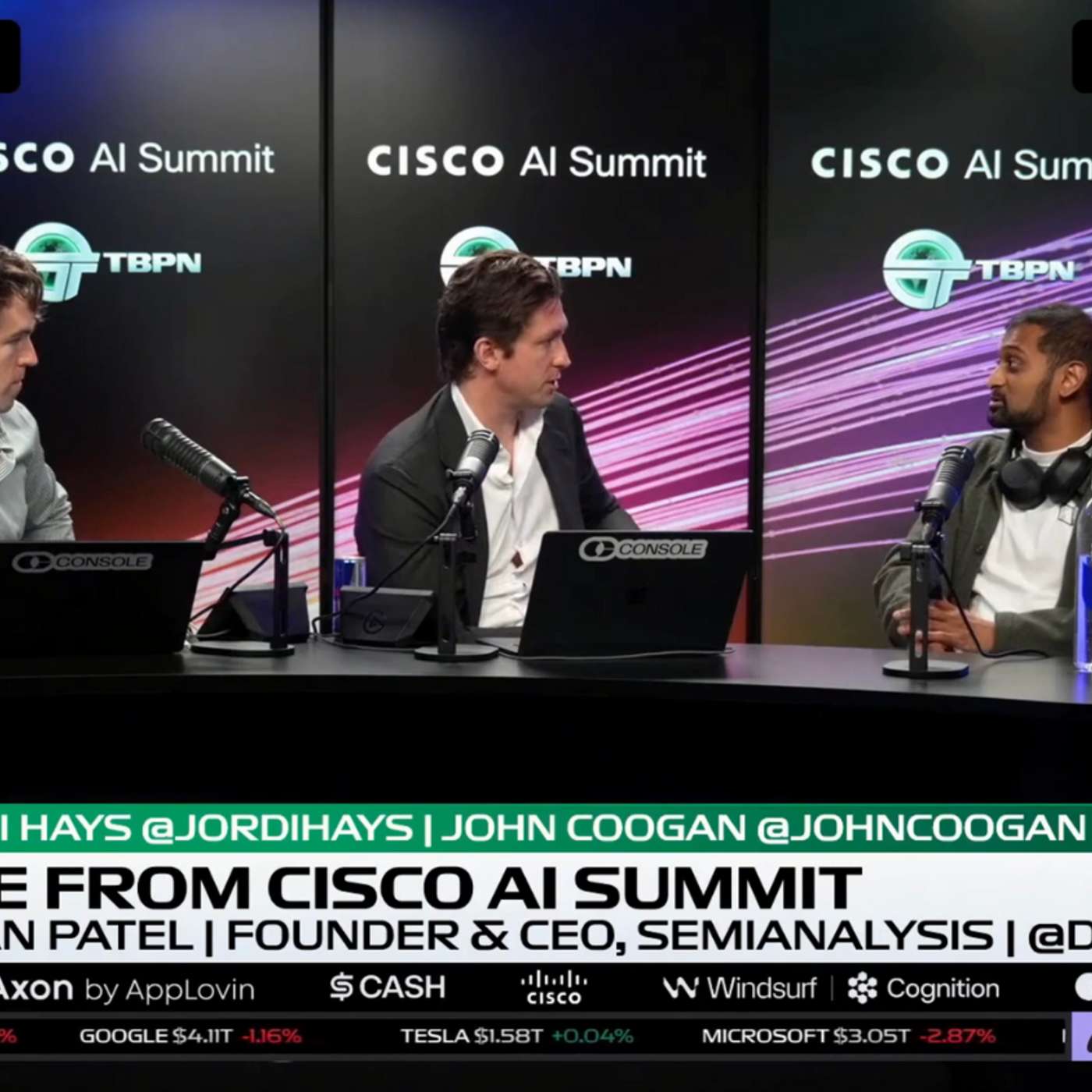
Google's cloud division (GCP), incentivized to sell compute, is allocating scarce TPU chips to external customer Anthropic. This directly constrains Google's own AI lab, Gemini, hindering its progress in the hyper-competitive AI race and revealing significant internal friction between business units with conflicting goals.
Anthropic's choice to purchase Google's TPUs via Broadcom, rather than directly or by designing its own chips, indicates a new phase in the AI hardware market. It highlights the rise of specialized manufacturers as key suppliers, creating a more complex and diversified hardware ecosystem beyond just Nvidia and the major AI labs.

NVIDIA investing in startups that then buy its chips isn't a sign of a bubble but a rational competitive strategy. With Google bundling its TPUs with labs like Anthropic, NVIDIA must fund its own customer ecosystem to prevent being locked out of key accounts.

The narrative of NVIDIA's untouchable dominance is undermined by a critical fact: the world's leading models, including Google's Gemini 3 and Anthropic's Claude 4.5, are primarily trained on Google's TPUs and Amazon's Tranium chips. This proves that viable, high-performance alternatives already exist at the highest level of AI development.
While competitors like OpenAI must buy GPUs from NVIDIA, Google trains its frontier AI models (like Gemini) on its own custom Tensor Processing Units (TPUs). This vertical integration gives Google a significant, often overlooked, strategic advantage in cost, efficiency, and long-term innovation in the AI race.
