Get your free personalized podcast brief
We scan new podcasts and send you the top 5 insights daily.
As AI interfaces become the primary user workflow, traditional SaaS UIs will see less traffic. To stay relevant, data-rich SaaS companies should offer their data via APIs in a "headless" model. This creates a new data-licensing revenue stream and embeds them into the customer's AI stack, preventing disintermediation.

Related Insights
As AI agents become primary software users, SaaS companies like Salesforce are building "headless" versions where the API is the UI. This fundamentally breaks the traditional B2B SaaS business model based on pricing per human user, forcing a shift towards consumption-based, agent-native pricing models.

The future of business software will be dominated by AI command centers, not individual apps. Users will interact with services like Stripe or Firebase via agents, making traditional UIs and dashboards irrelevant. SaaS companies will need to adapt to a 'headless' model, providing value through APIs consumed by agents.

The traditional SaaS model of bundling data, logic, and UI is being challenged. To stay relevant, SaaS companies must unbundle their core assets—like semantic models and business logic—so they can be consumed by AI agents, not just humans via a UI. This creates new agent-driven usage and business models.
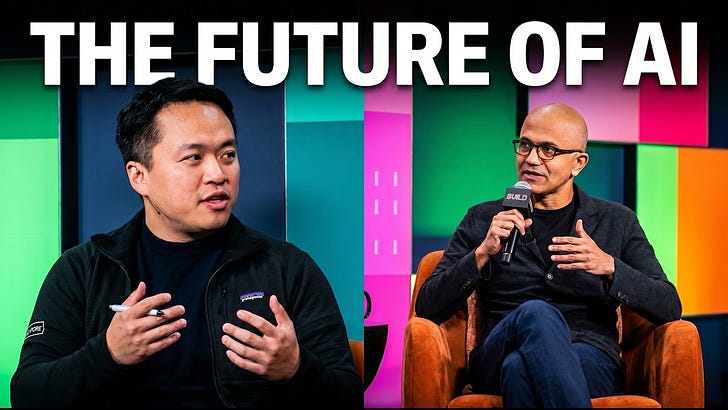
The ability for AI agents to access and operate on a SaaS platform's data is becoming critical. Companies that lock down their data risk being isolated, while those with open data APIs will become part of the new AI ecosystem, even if it means ceding the primary 'workspace' layer.
With AI agents in platforms like ChatGPT becoming the primary work surface, the traditional SaaS moat of owning the user interface is eroding. The most defensible position will be owning the core data as the "system of record," making the SaaS platform an essential backend database.

As AI agents become the primary users of software, interacting via APIs instead of graphical interfaces, the traditional moat of a sticky UI disappears. SaaS companies like Salesforce are going "headless," betting that future defensibility lies in the underlying data layer, operational logic, and real-world execution capabilities.

Nadella predicts the traditional, vertically integrated SaaS stack is being broken apart by AI. While underlying data and logic remain valuable, the UI is less so. SaaS vendors must expose their core components for agents to consume, creating new, usage-based business models beyond per-seat licenses.

As AI agents increasingly perform tasks on behalf of humans, they will interact with software via APIs, not UIs. To stay relevant, SaaS platforms must adopt a 'headless' (API-first) architecture that allows agents to programmatically sign up, configure, and use their services without human intervention.

In a world where AI agents perform tasks, the value of a SaaS product is no longer its user-friendly interface but the robustness of its APIs. The core differentiator becomes the proprietary business logic, security, and data governance embedded within the API layer.

Existing SaaS platforms must pursue two AI strategies simultaneously. First, build a deeply integrated, best-in-class agent that leverages proprietary domain knowledge. Second, expose data and functionality headlessly via robust APIs so external agents can interact with their system. Focusing on only one approach will lead to failure.