Get your free personalized podcast brief
We scan new podcasts and send you the top 5 insights daily.
The true power of agentic AI lies in abstracting away complex, multi-step consumer tasks. For instance, a user could simply state they need a medical test, and an AI agent would automatically handle insurance verification, cost calculation, provider search, and appointment booking.

Related Insights
To discover high-value AI use cases, reframe the problem. Instead of thinking about features, ask, "If my user had a human assistant for this workflow, what tasks would they delegate?" This simple question uncovers powerful opportunities where agents can perform valuable jobs, shifting focus from technology to user value.
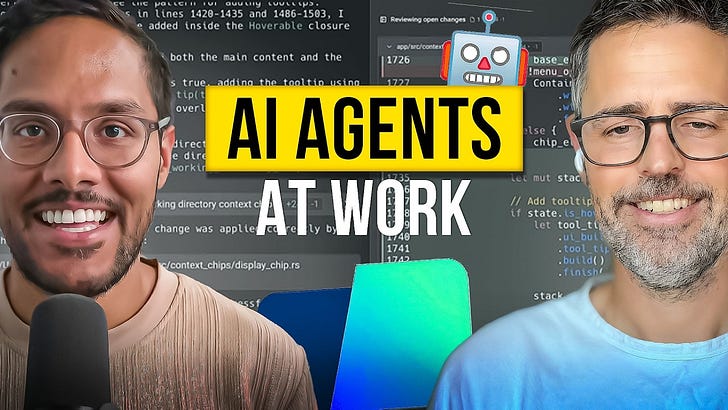
The key product innovation of Agent Skills is changing the user's perception of AI. Instead of just a tool that answers questions, AI becomes a practical executor of defined workflows, making it feel less like a chat interface and more like powerful, responsive software.
The future of patient interaction involves personal AI assistants (like Siri) managing healthcare tasks. A patient will tell their phone's AI to refill a prescription, which will then communicate directly with the pharmacy's AI to process the request, schedule pickup, and even navigate dependencies like renewing a doctor's visit.
A user deployed AI to research obscure camper van deals in Europe, message vendors, and even complete a multi-hour travel agent licensing exam to save money. This showcases using AI not just for answers, but for executing complex, goal-oriented projects.

The most significant opportunity for AI in healthcare lies not in optimizing existing software, but in automating 'net new' areas that once required human judgment. Functions like patient engagement, scheduling, and symptom triage are seeing explosive growth as AI steps into roles previously held only by staff.

The friction of navigating insurance and pharmacies is so high that chronic disease patients often give up, skipping tests or medications and directly worsening their health. AI can automate these tedious tasks, removing the barriers that lead to non-compliance and poor health outcomes.

Chronic disease patients face a cascade of interconnected problems: pre-authorizations, pharmacy stockouts, and incomprehensible insurance rules. AI's potential lies in acting as an intelligent agent to navigate this complex, fragmented system on behalf of the patient, reducing waste and improving outcomes.
Agentic AI will evolve into a 'multi-agent ecosystem.' This means AI agents from different companies—like an airline and a hotel—will interact directly with each other to autonomously solve a customer's complex problem, freeing humans from multi-party coordination tasks.

An AI agent can track due dates for medication prior authorizations and pre-populate submissions. This transforms a manual, time-consuming letter-writing process into a simple, two-click approval, freeing up significant clinician time to focus on patient care instead of administrative burdens.
The next evolution of enterprise AI isn't conversational chatbots but "agentic" systems that act as augmented digital labor. These agents perform complex, multi-step tasks from natural language commands, such as creating a training quiz from a 700-page technical document.
