Get your free personalized podcast brief
We scan new podcasts and send you the top 5 insights daily.
In healthcare, where trust is paramount, large vendors like Epic are vulnerable due to slow response times to customer problems. A revenue cycle team cannot wait months for a critical fix. Startups can compete effectively by being hyper-responsive, turning superior customer service into a durable competitive advantage.

Related Insights
A powerful entry strategy is to target industries where legacy players have notoriously bad customer service. You don't need a massively differentiated product to win. Simply providing responsive, high-quality customer service can create a cult-like following and a strong competitive advantage.

While not in formal business frameworks, speed of execution is the most critical initial moat for an AI startup. Large incumbents are slowed by process and bureaucracy. Startups like Cursor leverage this by shipping features on daily cycles, a pace incumbents cannot match.

Urgency is forcing a major shift in hospital procurement. CIOs are no longer willing to wait years for incumbents like Epic to develop AI tools. They are actively partnering with startups to deploy commercially ready solutions now, prioritizing speed and immediate operational impact over vendor loyalty.

With traditional moats gone, the only way to stay ahead is to move faster. Defensibility now comes from the speed at which a team can ship new value and deeply understand its customers, ensuring the product is always one step ahead of a crowded field.

When competing against a resourceful incumbent, a startup's key advantage is speed. Bizzabo outmaneuvered its rival during the pandemic by launching a virtual solution in weeks, not months. This agility allows challenger brands to seize market shifts that larger players are too slow to address.

While proprietary data and high-quality models are important, Abridge's true moat lies in its deep integration into the clinical workflow. By solving problems like prior authorization in real-time while the patient is still in the room, it collapses weeks of administrative latency into minutes, creating value that is hard to replicate.
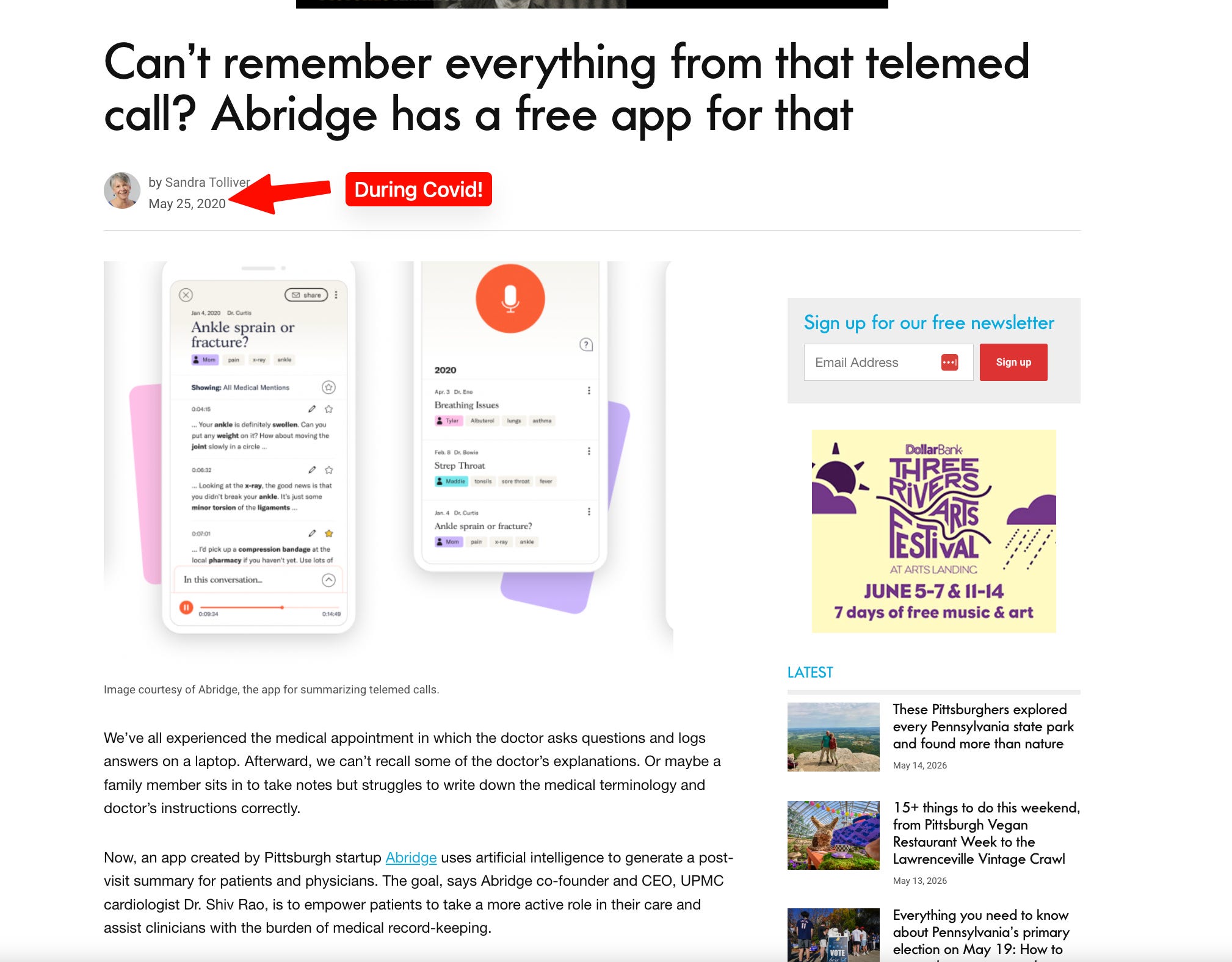
In a fast-moving AI landscape, startups can create defensible moats by leveraging new tools to rapidly build solutions for highly specific customer needs. This deep personalization—for a niche provider, rare disease patient, or specific administrative workflow—creates a "wow moment" that large, generalist models struggle to replicate.

In an industry where software updates happen biannually, Abridge has earned enough trust to move its enterprise health system customers to monthly release cycles. A select group even participates in continuous development, allowing Abridge to iterate at a speed unheard of in healthcare, creating a significant competitive advantage.
While moats like network effects and brand develop over time, the only sustainable advantage an early-stage startup has is its iteration speed. The ability to quickly cycle through ideas, build MVPs, and gather feedback is the fundamental driver of success before achieving scale.

Responsiveness and speed are not just good customer service; they are a strategic advantage. Removing every piece of friction, especially the time it takes to follow up, is essential. A slow response gives a warm prospect permission to move on to a competitor.
