Get your free personalized podcast brief
We scan new podcasts and send you the top 5 insights daily.
The key difference is the environment. Cowork provides a pre-configured, sandboxed development environment for non-developers or users on locked-down machines. Claude Code directly interacts with a developer's own local tools, credentials, and hardware, assuming a configured setup.

Related Insights
In large companies, designers overwhelmingly use local AI coding tools (Cursor, Claude) over cloud-based ones (Replit, V0). The key advantage is using the company's real production app as a "starting place," which eliminates the need to recreate screens or components from scratch for every prototype.
The development of Claude Cowork demonstrates a massive acceleration in product velocity. The entire application was written by its underlying AI agent, Claude Code, in just a week and a half. This showcases how AI-driven coding is collapsing development cycles for new software products.

The host observed that error messages from Cowork were identical to those from Claude Code, suggesting Cowork is a streamlined interface designed to make the powerful, long-running capabilities of Claude Code accessible to non-technical users, rather than a separate backend system.

Anthropic employs a bifurcated product strategy. Claude Cowork is designed for simplicity to appeal to a broad, non-technical audience. In contrast, Claude Code is built with extensive customizability (skills, hooks, permissions) to satisfy expert engineers who love to "hack their tools."

Claude Code's terminal-based interaction within a specific folder allows it to automatically read and reference local files. This makes "context engineering" drastically faster and more powerful than manually pasting information into a traditional chat interface, as the context is implicitly understood.

Tools like Claude Code offer superior capabilities beyond standard chatbots. They can access local file systems, enabling them to read and write files, maintain persistent memory, and execute complex, multi-step "recipes" autonomously, acting as a true virtual assistant rather than a simple text generator.

A key advantage of Claude Cowork is its ability to run locally and access files directly on a user's computer. This provides the AI with vastly more context than is possible with cloud tools that have limited file uploads, enabling complex analysis of large, local datasets like hundreds of documents.
Cowork originated from observing non-coders using the command-line tool, Claude Code, for general knowledge work. This prompted Anthropic to build a more accessible version with a GUI and safety guardrails, running the core agent in a virtual machine.
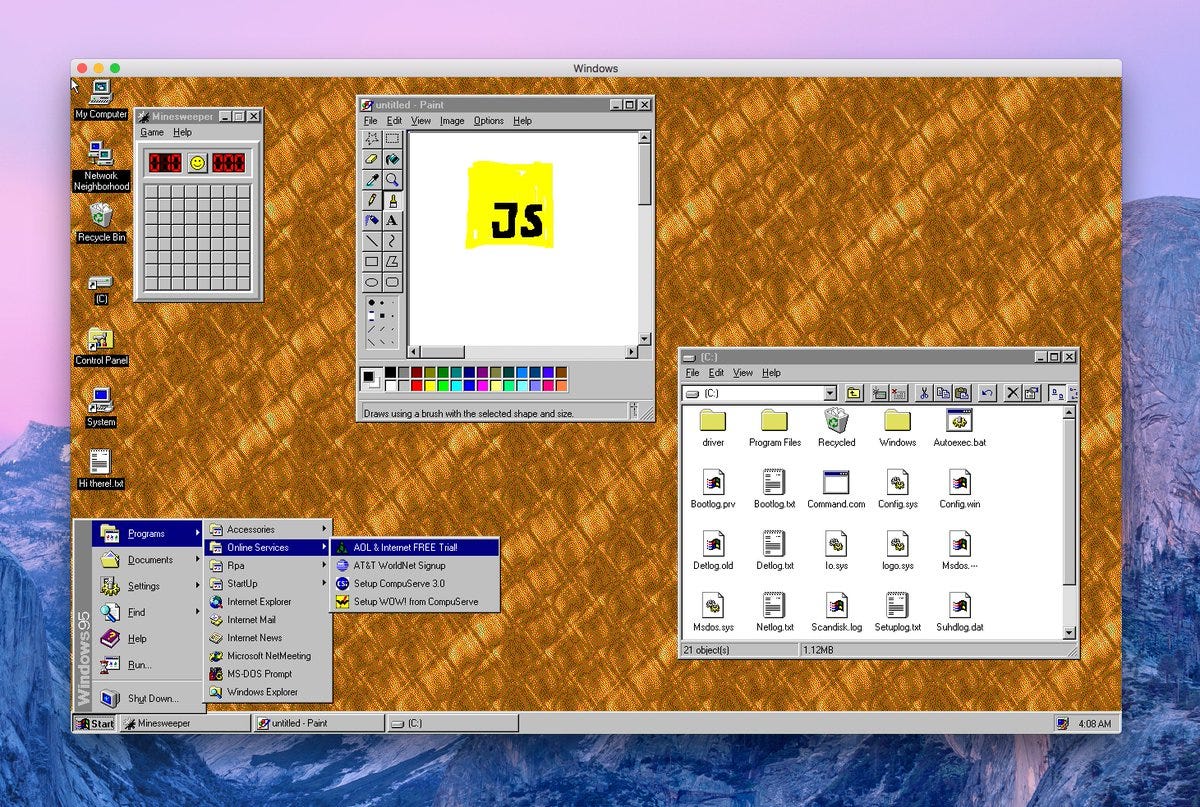
Claude Cowork runs in a lightweight VM on the user's machine. This "subcomputer" concept provides a secure, sandboxed environment where the AI can install tools and operate freely without compromising the host system or requiring complex cloud permissions for every local resource.
Anthropic has released Claude CoWork, an agentic tool that automates office tasks by directly interacting with local computer files. It's effectively a "no-code" version of their developer tool, signaling the imminent arrival of AI agents in mainstream workflows, though Anthropic explicitly warns users about potential security risks.