Get your free personalized podcast brief
We scan new podcasts and send you the top 5 insights daily.
Cacioppo says Vanta's product team kept pitching onboarding wizards because they knew wizards work and doubted the LLM drag-and-drop flow could. Leadership had to explicitly say they would bet on the LLM and allow hill climbing; once that fear was removed, the team shipped the new experience.

Related Insights
Because LLMs are non-deterministic like humans, it's more effective to integrate them using existing human-centric processes. Give an agent an email, permissions, and "onboarding" so it can navigate the organization like an employee, rather than building complex new software interfaces.

Technical interfaces like drag-and-drop workflow builders are immediately rejected and delegated by senior business leaders. To achieve executive buy-in and direct engagement with AI process tools, the interface must be presented in a familiar format: a plain English document that they can read and edit.

Non-technical teams often abandon AI tools after a single failure, citing a lack of trust. Visual builders with built-in guardrails and preview functions address this directly. They foster 'AI fluency' by allowing users to iterate, test, and refine agents, which is critical for successful internal adoption.

Technical teams often struggle with AI adoption not because of technical challenges, but because it requires giving up direct control over the code generation process. This can feel threatening to their value and identity, a psychological hurdle that leaders must address directly.

New users hesitate with open-ended AI prompts. Successful products overcome this by offering constrained, guided entry points like slash commands, templates, or contextual suggestions. This reduces user uncertainty and boosts consistent use, making adoption easier.
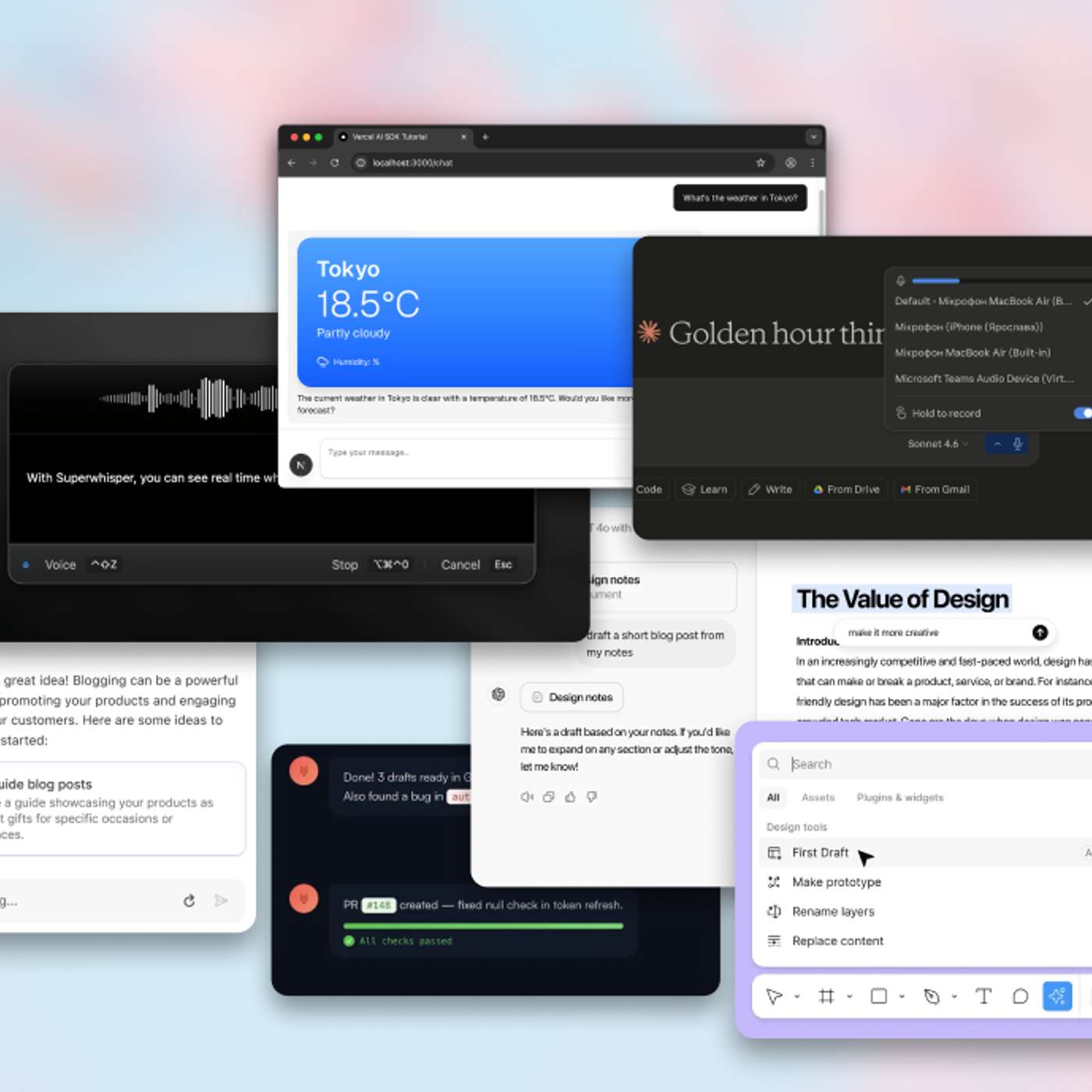
Startups often use forward-deployed engineers to compensate for confusing software rather than building intuitive products. When products require specialized prompting knowledge or manual onboarding, it represents a product flaw rather than a user skill gap.

Since AI capabilities are novel, users often struggle with adoption. Rather than using traditional templates or tutorials, a more effective method is to build an AI agent or operator that guides users through the process. This approach uses the AI to teach the user how to leverage AI's potential within the product's specific context.

When an engineering team is hesitant about a new feature due to unfamiliarity (e.g., mobile development), a product leader can use AI tools to build a functional prototype. This proves feasibility and shifts the conversation from a deadlock to a collaborative discussion about productionizing the code.

Employees hesitate to use new AI tools for fear of looking foolish or getting fired for misuse. Successful adoption depends less on training courses and more on creating a safe environment with clear guardrails that encourages experimentation without penalty.

Many teams face false starts with complex AI platforms requiring developer support. To succeed, first use an easy, intuitive tool to generate excitement and quick wins. This momentum builds confidence and makes it easier to later tackle more sophisticated solutions as a team.
