Get your free personalized podcast brief
We scan new podcasts and send you the top 5 insights daily.
Vercel's founder argues that a camera's photo should be treated as a starting point (an input) for AI models, not the final image. This reframes photography around AI enhancement rather than hardware quality, opening up new product categories for image transformation and post-processing.

Related Insights
Don't view AI as just a feature set. Instead, treat "intelligence" as a fundamental new building block for software, on par with established primitives like databases or APIs. When conceptualizing any new product, assume this intelligence layer is a non-negotiable part of the technology stack to solve user problems effectively.
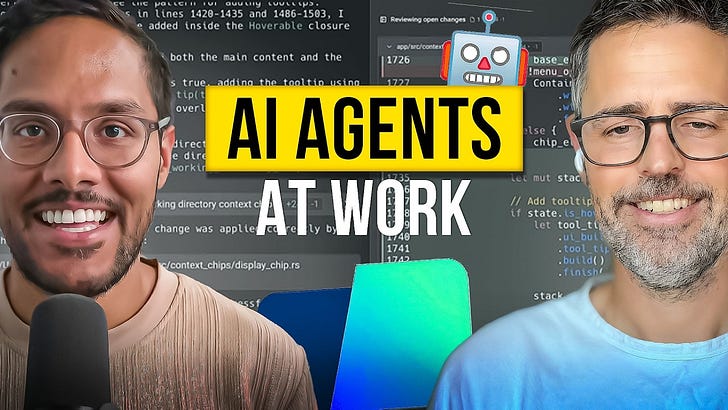
Don't view generative AI video as just a way to make traditional films more efficiently. Ben Horowitz sees it as a fundamentally new creative medium, much like movies were to theater. It enables entirely new forms of storytelling by making visuals that once required massive budgets accessible to anyone.

The 'uncanny valley' is where near-realistic digital humans feel unsettling. The founder believes once AI video avatars become indistinguishable from reality, they will break through this barrier. This shift will transform them from utilitarian tools into engaging content, expanding the total addressable market by orders of magnitude.

Synthesia initially targeted Hollywood with AI dubbing—a "vitamin" for experts. They found a much larger, "house-on-fire" problem by building a platform for the billions of people who couldn't create video at all, democratizing the medium instead of just improving it for existing professionals.
Don't just sprinkle AI features onto your existing product ('AI at the edge'). Transformative companies rethink workflows and shrink their old codebase, making the LLM a core part of the solution. This is about re-architecting the solution from the ground up, not just enhancing it.

While today's focus is on text-based LLMs, the true, defensible AI battleground will be in complex modalities like video. Generating video requires multiple interacting models and unique architectures, creating far greater potential for differentiation and a wider competitive moat than text-based interfaces, which will become commoditized.

In the fast-paced world of AI, focusing only on the limitations of current models is a failing strategy. GitHub's CPO advises product teams to design for the future capabilities they anticipate. This ensures that when a more powerful model drops, the product experience can be rapidly upgraded to its full potential.

Google's Nano Banana Pro is so powerful in generating high-quality visuals, infographics, and cinematic images that companies can achieve better design output with fewer designers. This pressures creative professionals to become expert AI tool operators rather than just creators.

Despite the hype, AI's impact on daily life remains minimal because most consumer apps haven't changed. The true societal shift will occur when new, AI-native applications are built from the ground up, much like the iPhone enabled a new class of apps, rather than just bolting AI features onto old frameworks.
The rapid pace of change, accelerated by AI, demands brands become more fluid. Rigid, static brand guidelines are obsolete, replaced by generative systems that can evolve with user needs and market trends while retaining a core identity.