Get your free personalized podcast brief
We scan new podcasts and send you the top 5 insights daily.
Previous technologies replaced physical or rote mental labor. AI is a categorical error to view similarly because it's the first tool that can think and execute. It replaces the pattern-recognition and reasoning layer *above* the task, representing a zero-to-one moment in technological change.

Related Insights
Historically, humans moved from manual to cognitive labor as technology automated physical tasks. Emad Mostaque argues AI now automates cognitive work, creating an "intelligence inversion." There's no obvious higher-value domain left for human labor to escape to, unlike previous technological shifts.

Unlike previous technologies that augmented specific skills, AI could eventually outperform humans in all domains, including creative and emotional tasks. This suggests the historical pattern of technology creating more jobs than it destroys may not hold true.

Previous technological revolutions automated physical labor but enhanced human thinking. AI's goal is to replicate and surpass human cognitive abilities, creating a categorical shift that threatens the core of human economic value.

AI's primary impact is not wholesale human replacement but rather collapsing the middle of the value pyramid by automating routine knowledge work. The value of human workers will shift to higher-level judgment and strategic oversight, where AI can structure options and simulate outcomes, but humans retain final say due to liability concerns.

The classic argument that technology always creates new jobs is flawed when applied to AGI. Previous inventions like the tractor automated a single sector. AGI, by its nature, automates all forms of human cognitive labor—from finance to programming—simultaneously, overwhelming society's capacity to retrain and adapt.

The biggest mistake in AI adoption is simply automating an existing manual workflow, which creates an efficient but still flawed process. True transformation occurs when AI enables a completely new, non-human way of achieving an outcome, changing the process itself rather than just the actor performing it.

The threat isn't that AI will take jobs, but that people who fail to adopt AI tools will be replaced by those who do. The distinction is crucial: technology doesn't replace people, but people become replaceable when they can no longer prove their value in an AI-augmented organization.

The fundamental economic shift is not just job automation but an inversion of roles. AI, as pure intelligence, will become the employer, hiring humans as contractors for physical tasks it cannot perform, like visiting a warehouse or collecting brochures. Intelligence becomes a cloud commodity, while physical presence becomes the service.
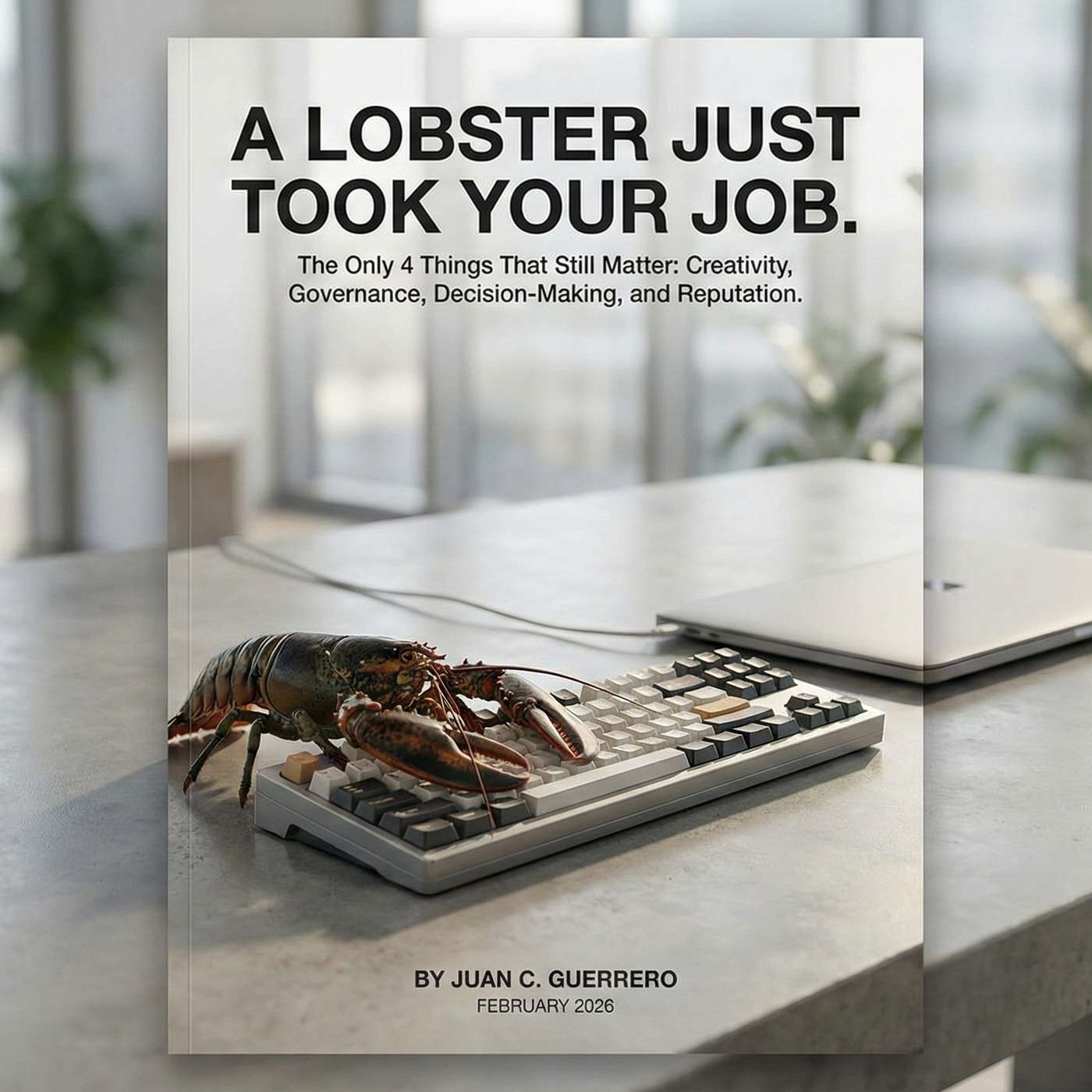
The true threshold for AI becoming a disruptive, "non-normal" technology is when it can perform the new jobs that emerge from increased productivity. This breaks the historical cycle of human job reallocation, representing a fundamental economic shift distinct from past technological waves.

Capitalism values scarcity. AI's core disruption is not just automating tasks, but making human-like intellectual labor so abundant that its market value approaches zero. This breaks the fundamental economic loop of trading scarce labor for wages.
