Get your free personalized podcast brief
We scan new podcasts and send you the top 5 insights daily.
While used for ITP, rituximab (a CD20 antibody) actually increases levels of BAF, a cytokine that promotes B-cell growth. This is counterproductive. In contrast, newer agents like unalumab block the BAF receptor, offering a more direct and potentially superior mechanism of action.

Related Insights
An oncologist observed that some ITP patients treated with rilzabrutinib or yanalumab experienced an unexpected side benefit: improvement in their seasonal allergy symptoms. This suggests these autoimmune-targeted therapies may have broader effects on immune dysregulation beyond just ITP.
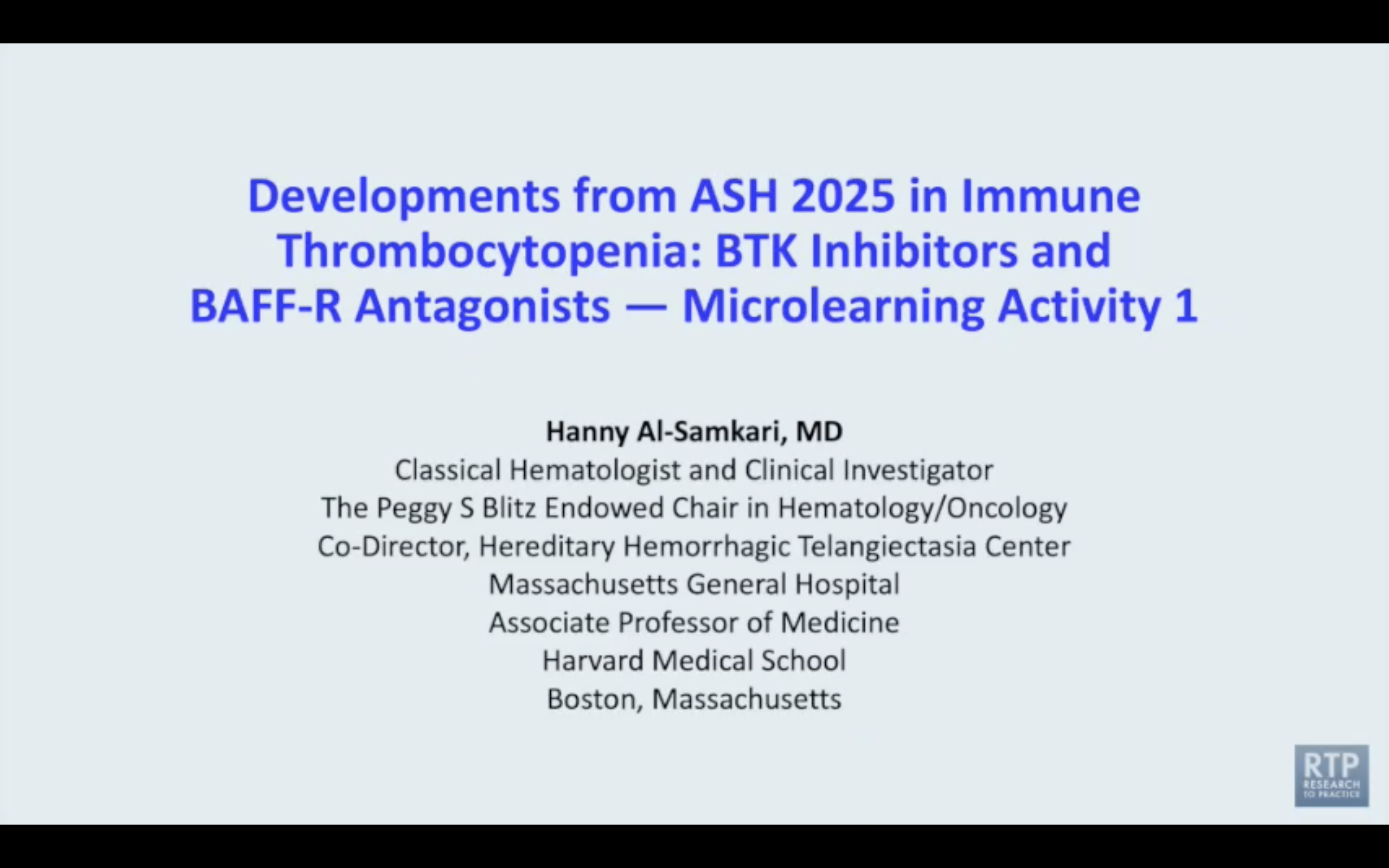
Beyond raising platelet counts, the newly approved BTK inhibitor rilzabrutinib provides dramatic improvements in the fatigue associated with ITP. This unique benefit, likely due to its anti-inflammatory properties, makes it a strong consideration for patients where fatigue is a primary quality of life issue.

The treatment paradigm for ITP is shifting towards early combination therapy. Recent clinical trials are investigating augmented first- and second-line regimens, such as combining dexamethasone with rituximab or romiplostim, to achieve more durable, treatment-free responses than monotherapy.
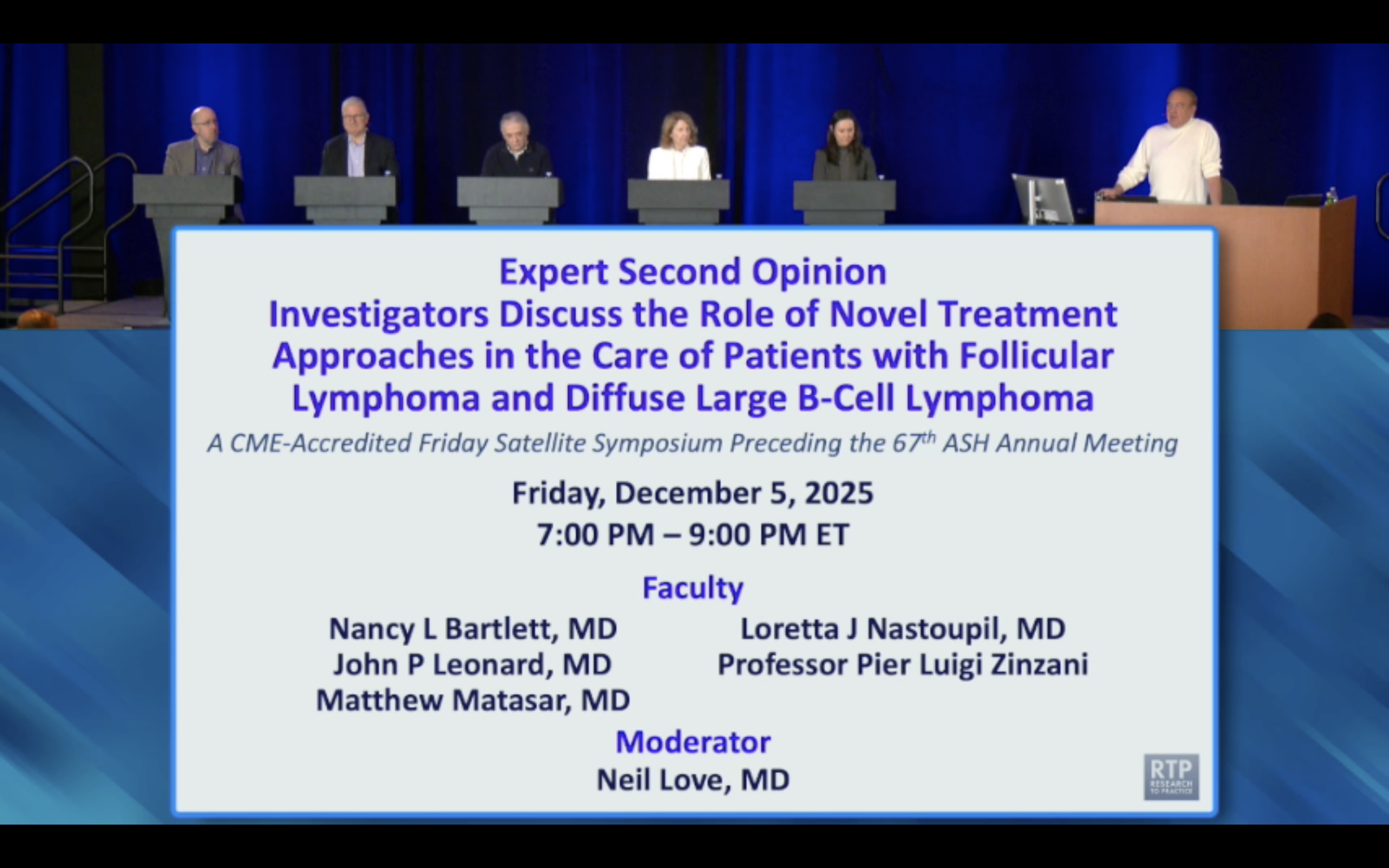
Not all CD20-targeting bispecifics can be combined with rituximab. Mosunetuzumab binds the same epitope, causing competition. However, glofitamab and epcoritamab bind different epitopes, allowing for logical and potentially synergistic combinations with rituximab-based regimens.
The drug's mechanism avoids maximum suppression, instead aiming for a precise balance—"not too much, not too little." This "Goldilocks" approach to intercepting BAF and APRIL cytokines is key to resolving inflammation and stabilizing kidney function without causing excessive immunosuppression, a critical differentiator in autoimmune therapies.

Yanalumab not only blocks the BAF receptor to prevent B-cell maturation but also acts as a potent B-cell depleter. This two-headed mechanism is why it's named after the two-faced Roman god Janus, providing a memorable link between its name and function.
In the VahIT-three trial, heavily pre-treated ITP patients achieved a 44% response rate with just four infusions of unalumab. This offers a significant advantage over chronic daily therapies, providing a short treatment course with the potential for durable response in a difficult-to-treat population.
To manage hypogammaglobulinemia from bispecific antibodies, clinicians are adopting a more proactive approach. Following the model from myeloma care, they are initiating IVIG therapy earlier to prevent infections, rather than waiting for recurrent infections to occur as was standard with rituximab.
Named after the two-faced god Janus, yanalumab has a dual mechanism. It acts as a highly potent B-cell depleter while also blocking the BAF receptor pathway, which is critical for auto-reactive B-cell survival. This offers potential for deep, lasting, treatment-free remission.
In cases of severe ITP unresponsive to standard therapies, the anti-CD38 monoclonal antibody daratumumab can be highly effective. It works by eliminating the long-lived plasma cells responsible for secreting platelet autoantibodies, a mechanism distinct from other ITP treatments.