Get your free personalized podcast brief
We scan new podcasts and send you the top 5 insights daily.
Named after the two-faced god Janus, yanalumab has a dual mechanism. It acts as a highly potent B-cell depleter while also blocking the BAF receptor pathway, which is critical for auto-reactive B-cell survival. This offers potential for deep, lasting, treatment-free remission.
Related Insights
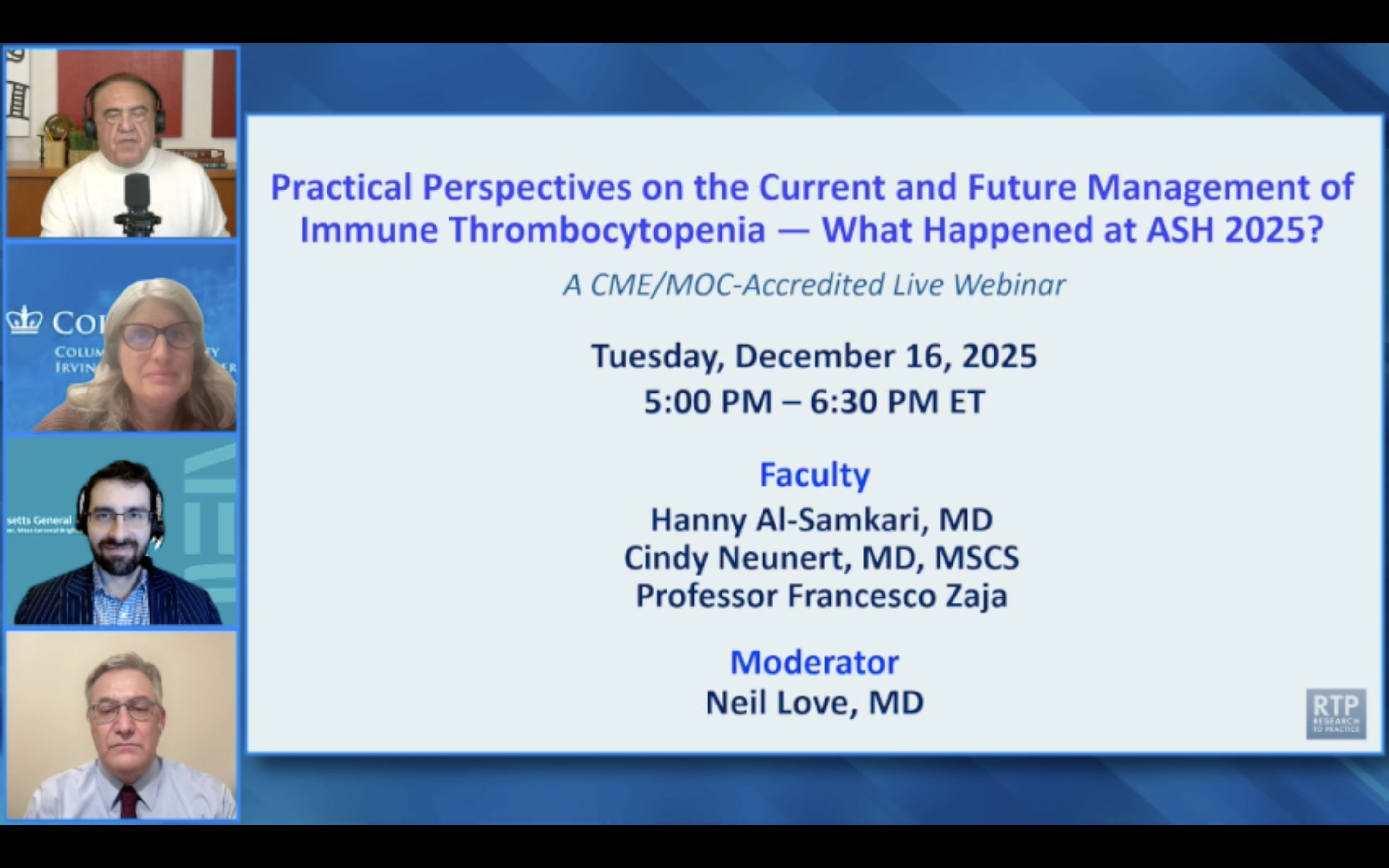
ITP caused by immune checkpoint inhibitors (ICIs) is rare (0.25% incidence) but generally has a good prognosis. Most patients respond to standard first-line ITP therapies, and approximately 70% of those re-challenged with the ICI can continue treatment without a recurrence of ITP.
The drug exhibits a multimodal mechanism. It not only reverses chemoresistance and halts tumor growth but also 'turns cold tumors hot' by forcing cancer cells to display markers that make them visible to the immune system. This dual action of direct attack and immune activation creates a powerful synergistic effect.

Beyond raising platelet counts, the newly approved BTK inhibitor rilzabrutinib provides dramatic improvements in the fatigue associated with ITP. This unique benefit, likely due to its anti-inflammatory properties, makes it a strong consideration for patients where fatigue is a primary quality of life issue.
The treatment paradigm for ITP is shifting towards early combination therapy. Recent clinical trials are investigating augmented first- and second-line regimens, such as combining dexamethasone with rituximab or romiplostim, to achieve more durable, treatment-free responses than monotherapy.
The drug's mechanism avoids maximum suppression, instead aiming for a precise balance—"not too much, not too little." This "Goldilocks" approach to intercepting BAF and APRIL cytokines is key to resolving inflammation and stabilizing kidney function without causing excessive immunosuppression, a critical differentiator in autoimmune therapies.

The current boom in immunology and autoimmune (I&I) therapeutics is not a separate phenomenon but a direct consequence of capital and knowledge from immuno-oncology. Many of the same biological pathways are being targeted, simply modulated down (for autoimmune) instead of up (for cancer), allowing for rapid therapeutic advancement and platform reuse.

Despite significant progress in managing symptoms for autoimmune conditions, very few treatments fundamentally alter the disease's course. The major unmet needs and investment opportunities lie in therapies that can induce remission or target common underlying pathologies like fibrosis, moving beyond mere symptom relief.
Unlike therapies that only manage symptoms, the CALR antibody INCA033989 reduces hematopoietic stem and progenitor cell pools. This suggests the drug targets the root clonal source of the disease, indicating a potential for genuine disease modification rather than just killing off downstream cancer cells.
A new class of oral drugs, BCL6 degraders, are demonstrating complete remissions as a single agent in heavily pretreated aggressive lymphoma patients. This activity was surprising, as they were initially expected to require combination therapy to be effective, signaling a promising new non-cell surface targeting mechanism.
In cases of severe ITP unresponsive to standard therapies, the anti-CD38 monoclonal antibody daratumumab can be highly effective. It works by eliminating the long-lived plasma cells responsible for secreting platelet autoantibodies, a mechanism distinct from other ITP treatments.