Get your free personalized podcast brief
We scan new podcasts and send you the top 5 insights daily.
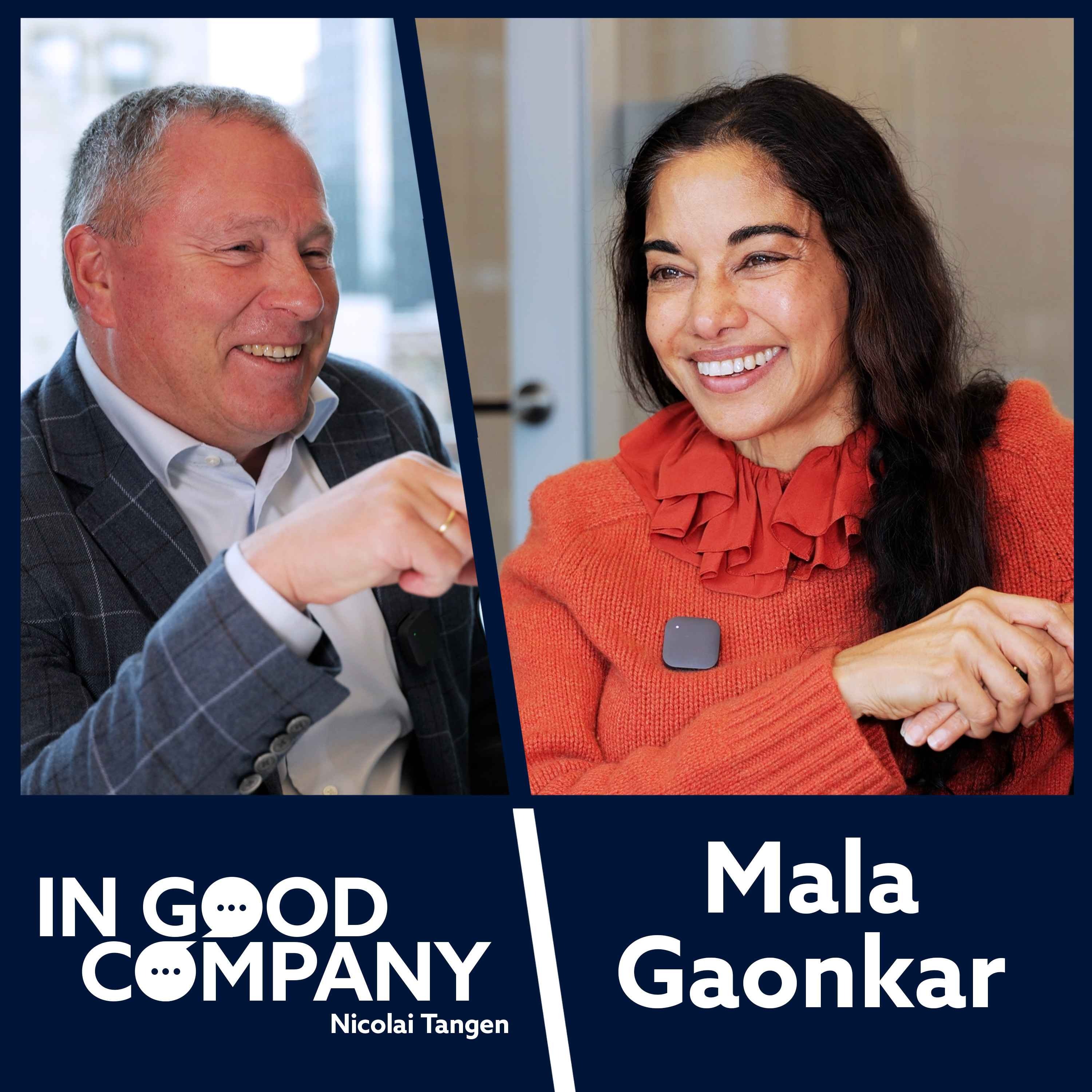
While many investors look for a competitive "moat," investor Mala Gaonkar's primary differentiator is identifying businesses with very long-duration moats. The key to finding truly great companies is assessing how long their competitive advantage can be sustained, not just that it exists today.

Related Insights
Many investors focus on the current size of a company's competitive advantage. A better indicator of future success is the direction of that moat—is it growing or shrinking? Focusing on the trajectory helps avoid value traps like Nokia in 2007, which had a wide but deteriorating moat.
![[REPLAY] Paul Black - Gratitude, Fun, and Growth Stocks (Capital Allocators, EP.51) thumbnail](https://static.libsyn.com/p/assets/f/b/7/6/fb76e1c8bfb69e8dd959afa2a1bf1c87/CA_Square_logo_light_background_6.26.24.jpg)
Some companies execute a 3-5 year plan and then revert to average returns. Others 'win by winning'—their success creates new opportunities and network effects, turning them into decade-long compounders that investors often sell too early.
Eagle Capital's competitive advantage stems from a structure designed for long-term thinking. This includes a multi-decade history, long-term client relationships (avg. 10 years), and a diversified client base. This "duration" allows the firm to invest with a longer time horizon than competitors, which is a growing differentiator.
Gaonkar favors businesses with complex, "systemic" moats derived from deeply integrated processes, like TSMC's manufacturing expertise. She argues these are more durable than moats based on a single advantage, comparing it to owning the process of gold extraction rather than just owning the mine.
Investor Henry Ellenbogen favors two types of competitive advantages. First, hard-to-replicate physical assets like distribution networks, which are messy and time-consuming to build. Second, “soft” moats built on elite human systems for talent development, operational excellence (like the Danaher Business System), and sharp capital allocation. These are harder to see but just as powerful as physical scale.
![Henry Ellenbogen - Man Versus Machine - [Invest Like the Best, EP.452] thumbnail](https://megaphone.imgix.net/podcasts/498a0910-d6ea-11f0-aae4-8f837283e00f/image/9b60f0353346cd1b5cbd326c86e22287.jpg?ixlib=rails-4.3.1&max-w=3000&max-h=3000&fit=crop&auto=format,compress)
A sustainable competitive advantage is often rooted in a company's culture. When core values are directly aligned with what gives a company its market edge (e.g., Costco's employee focus driving superior retail service), the moat becomes incredibly difficult for competitors to replicate.
As AI commoditizes business execution, true defensibility will come from creative ingenuity in areas like go-to-market strategy or novel business models. This form of creativity cannot be generated by AI, making it a rare and durable competitive advantage.
Sustainable scale isn't just about a better product; it's about defensibility. The three key moats are brand (a trusted reputation that makes you the default choice), network (leveraged relationships for partnerships and talent), and data (an information advantage that competitors can't easily replicate).

A durable competitive advantage, as defined by lessons from Amazon's Jeff Bezos, is an edge that persists even if a competitor woke up tomorrow and perfectly copied your strategy with equally talented people. Amazon used its early cost advantage to build physical fulfillment centers, creating an infrastructure lead that became impossible to close, even once the strategy was obvious.
Beyond typical due diligence, a company's true defensibility can be measured with a simple thought experiment: if the business disappeared overnight, how severe would the impact be on its customers? A high level of disruption indicates a strong, defensible business model.
