Get your free personalized podcast brief
We scan new podcasts and send you the top 5 insights daily.
Beyond catching compile-time errors, a strong static type system's main benefit is making large, aging codebases maintainable. Dynamically typed programs can become immutable as original authors leave. With static types, a developer can fearlessly refactor a 35-year-old codebase by letting the compiler guide them to all necessary changes.

Related Insights
Beyond code generation, Patrick Collison sees a huge opportunity for AI in automated refactoring. He imagines an AI that continuously improves a codebase's architecture, turning the 'detritus' from rapid development into elegant, maintainable systems, thus solving the classic speed-versus-quality tradeoff.

An experiment measured developer productivity when switching from C to C++. While C++ compilation took twice as long, its stronger type system caught errors earlier. This resulted in C programmers recompiling twice as often, making the overall time spent compiling roughly equal for both languages.

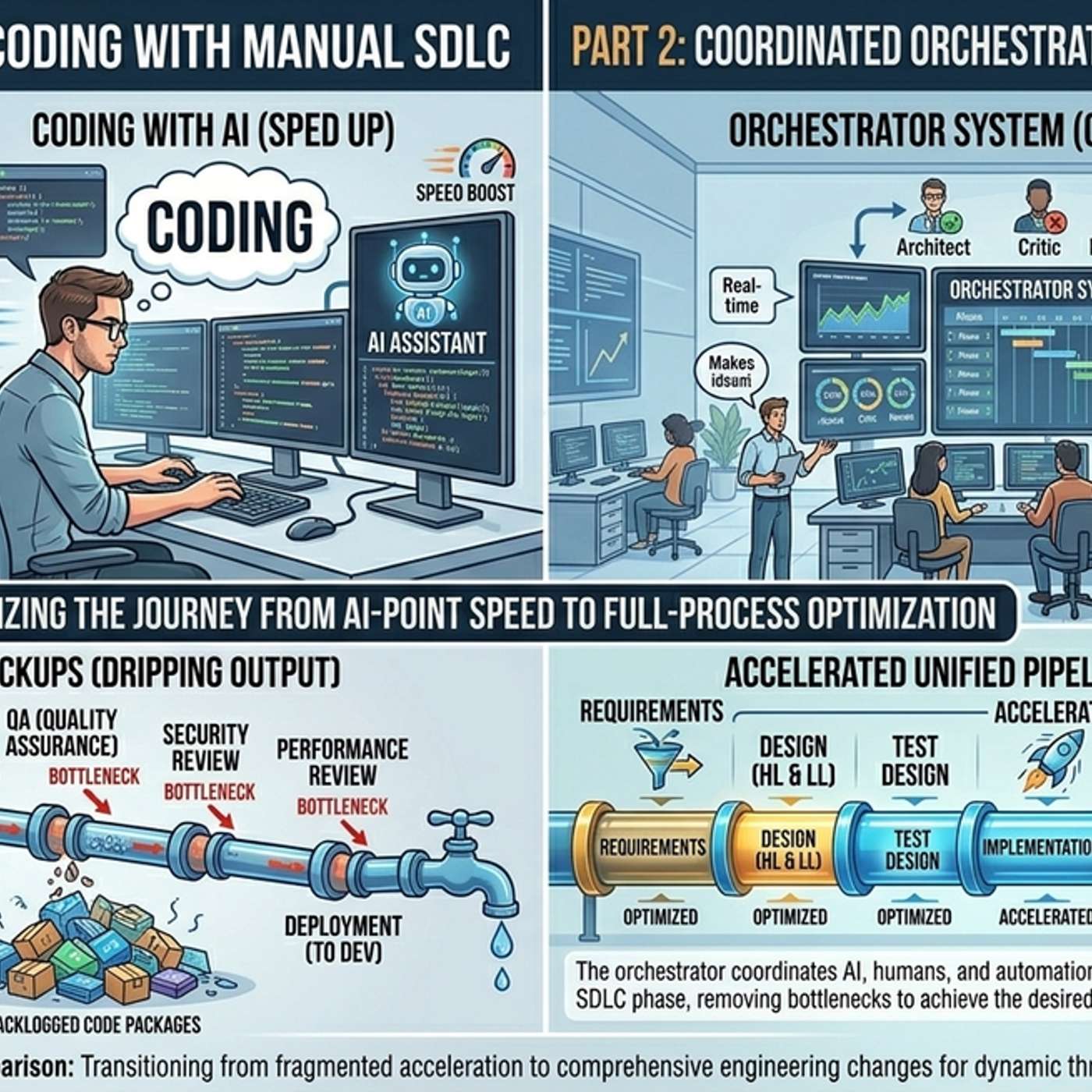
Unlike AI tools that just accelerate coding (and thus tech debt), an AI-orchestrated SDLC enforces consistency in documentation and testing. This creates a compounding benefit where the codebase becomes stronger and easier to maintain with each new feature, actively reversing the typical trend of system fragility over time.
An LLM generating code can use a static type checker as a rapid verifier. This allows the model to iterate and correct its own type errors internally before presenting the final code. This dramatically constrains the problem space and improves the quality of the generated output, making static typing a boon for LLMs.
Most compilers use complex, untyped intermediate representations. GHC desugars Haskell into a tiny, statically-typed language called Core. This allows a type-checker to run after each optimization pass, immediately catching bugs in the compiler that would otherwise manifest as cryptic runtime segfaults in the final compiled program.
Dreamer's CTO chose TypeScript for their agent SDK over Python, his personal favorite. Strong typing provides immediate feedback at compile time, enabling AI coding agents to enter a tight loop of generating code, perceiving errors, and self-correcting—a critical advantage for building reliable software with AI.

To maximize an AI agent's effectiveness, establish foundational software engineering practices like typed languages, linters, and tests. These tools provide the necessary context and feedback loops for the AI to identify, understand, and correct its own mistakes, making it more resilient.

In imperative code, functions can silently read or write shared global variables, creating invisible and dangerous dependencies. Functional programming forces these interactions to be explicit (e.g., through function arguments or monads), encouraging a more modular and less coupled design that is easier to reason about and maintain over time.
While static typing aids performance, its primary motivation for Stroustrup was reliability in systems without a human operator. Unlike a developer at a desk, a telephone switch or embedded device can't stop and enter a debugger for a runtime type error, making compile-time checks essential for robustness.
AI coding assistants have recently crossed a critical threshold. They are no longer just for building new features but are now highly effective at refactoring legacy code. This dramatically changes the economics of modernizing established software companies by accelerating the notoriously slow process of paying down technical debt.
