Get your free personalized podcast brief
We scan new podcasts and send you the top 5 insights daily.
Consumer apps like TikTok thrive on endless scrolling and creation. AI creation tools like Sora, however, are so compute-intensive they must impose strict rate limits. This frustrating user experience is fundamentally incompatible with building a sticky consumer habit.

Related Insights
The AI-generated video app Sora is predicted to be shuttered. It's a costly distraction, burning an estimated $15M daily with minimal revenue. With user engagement plummeting and the company needing to focus all resources on the enterprise market it's losing to Anthropic, the app is a prime candidate for termination.

Counterintuitively, consumer AI apps like ChatGPT show more durable user loyalty than B2B developer tools. Developers can easily swap models via API calls, but consumers build habits and workflows that are harder to change, creating a more stable user base.

Large publishers find that while users love new AI conversational features, the underlying inference costs are prohibitively expensive. They can only test on a tiny fraction of their traffic. This financial pain point is the primary driver for adopting new monetization platforms.

Unlike traditional SaaS, achieving product-market fit in AI is not enough for survival. The high and variable costs of model inference mean that as usage grows, companies can scale directly into unprofitability. This makes developing cost-efficient infrastructure a critical moat and survival strategy, not just an optimization.

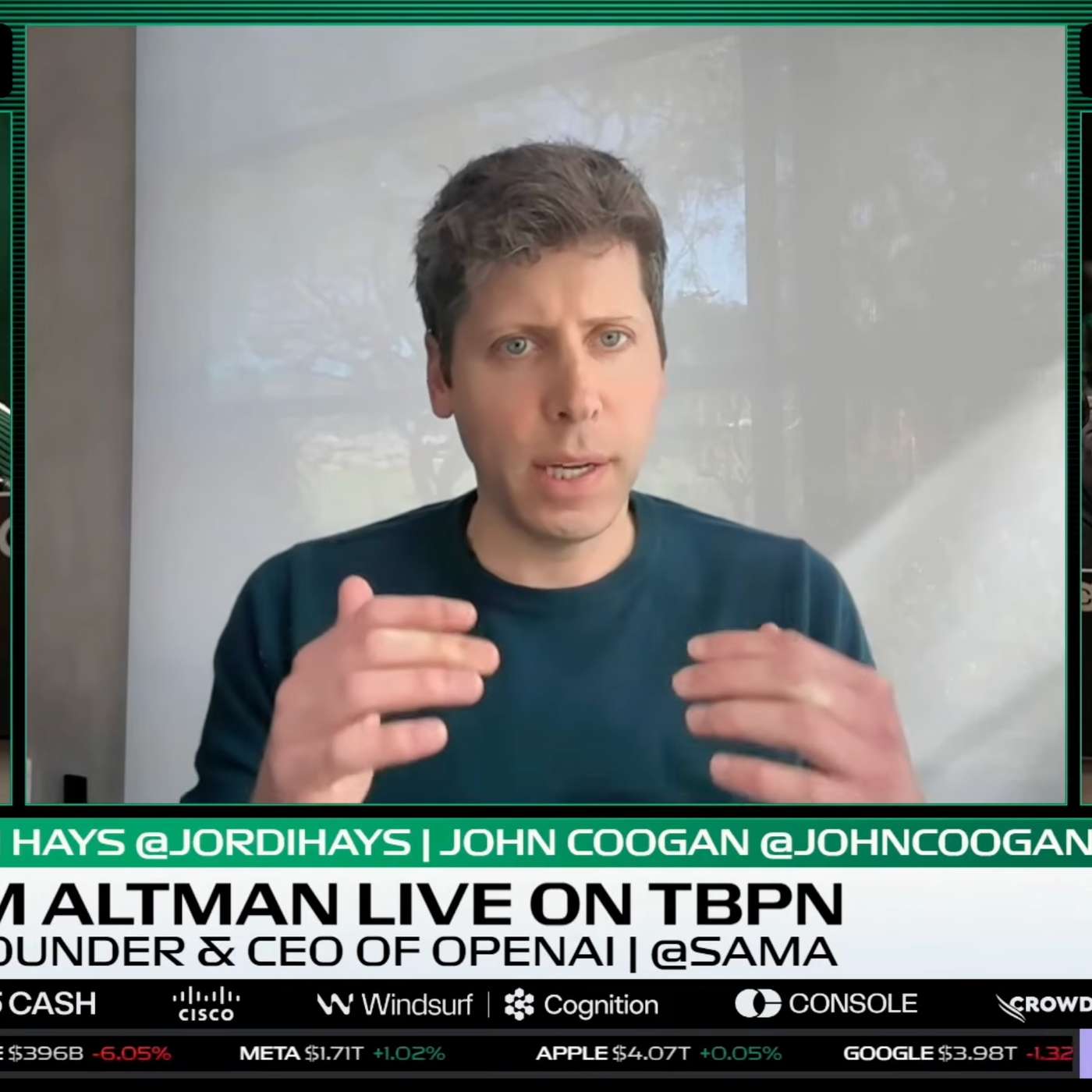
Sam Altman observes an asymmetry in AI-generated media: users love creating personalized content with tools like Sora, but show little interest in consuming AI content made by others. This creator-consumer gap is a key hurdle for generative AI as a mainstream entertainment medium.
Companies like OpenAI and Anthropic are intentionally shrinking their flagship models (e.g., GPT-4.0 is smaller than GPT-4). The biggest constraint isn't creating more powerful models, but serving them at a speed users will tolerate. Slow models kill adoption, regardless of their intelligence.
![Dylan Patel - Inside the Trillion-Dollar AI Buildout - [Invest Like the Best, EP.442] thumbnail](https://megaphone.imgix.net/podcasts/799253cc-9de9-11f0-8661-ab7b8e3cb4c1/image/d41d3a6f422989dc957ef10da7ad4551.jpg?ixlib=rails-4.3.1&max-w=3000&max-h=3000&fit=crop&auto=format,compress)
Sora's rapid decline after a viral launch reveals a critical lesson for media platforms. Because its videos were exportable, its best content was reposted to TikTok and Reels. There, the AI content competed against the best human content on a superior platform, making Sora's dedicated feed experience strictly inferior and unsustainable as a social destination.

While the growth of new consumer AI users is slowing into an S-curve, the compute consumption per user is still growing exponentially. This is driven by the shift from simple queries to complex, token-intensive tasks like reasoning and agents, sustaining massive demand for GPU infrastructure.
Platforms like Sora 2 struggle to retain users as social destinations. The core driver of social networks—the status game tied to authentic, personal representation—is lost when content is known to be AI-generated. These apps function as powerful creator tools for existing platforms, not as new social graphs.
While user growth for apps like ChatGPT is slowing, per-user token consumption is skyrocketing as models shift from simple queries to complex reasoning and AI agents. This creates a hidden, exponential growth in compute demand, validating Oracle's massive infrastructure investment even as front-end adoption matures.