Get your free personalized podcast brief
We scan new podcasts and send you the top 5 insights daily.
In 2008, when AI was not a popular field, the eventual founder of DeepSeek, Liang, declined an invitation to be a co-founder at the drone startup DJI. His deep conviction in AI's future led him to pass on what became a tens-of-billions-dollar opportunity to instead focus on AI for financial markets.

Related Insights
In an unprecedented display of conviction for a company at a $50B valuation, the founder of Chinese AI firm DeepSeek is personally contributing $3 billion to its new $7 billion funding round. This move, while he already owns 90% of the company, deviates sharply from typical venture capital structures and signals extreme personal and financial commitment.

DeepMind's founders knew their ambitious AGI mission wouldn't appeal to mainstream VCs. They specifically targeted Peter Thiel, believing they needed "someone crazy enough to fund an AGI company" who valued ambitious, contrarian ideas over a clear business plan, demonstrating the importance of strategic investor-founder fit.
Jay Madheswaran transitioned from VC at Lightspeed back to founder because his conviction in AI's potential was too high to express through investing alone. He felt a compelling need to build directly in the space while he still had the "operational chops."

The most critical factor for an AI startup's success is not the technology itself, but the founder's deep, intrinsic passion for the problem they are solving. This genuine interest provides the resilience to persevere through challenges, a quality that investors should value above a trendy business idea.

Unlike prior tech waves where founders aimed to build companies, many top AI founders are singularly focused on achieving AGI. This unified "North Star" creates a unique tension between long-term research and near-term product goals, leading to unconventional founder and company dynamics.
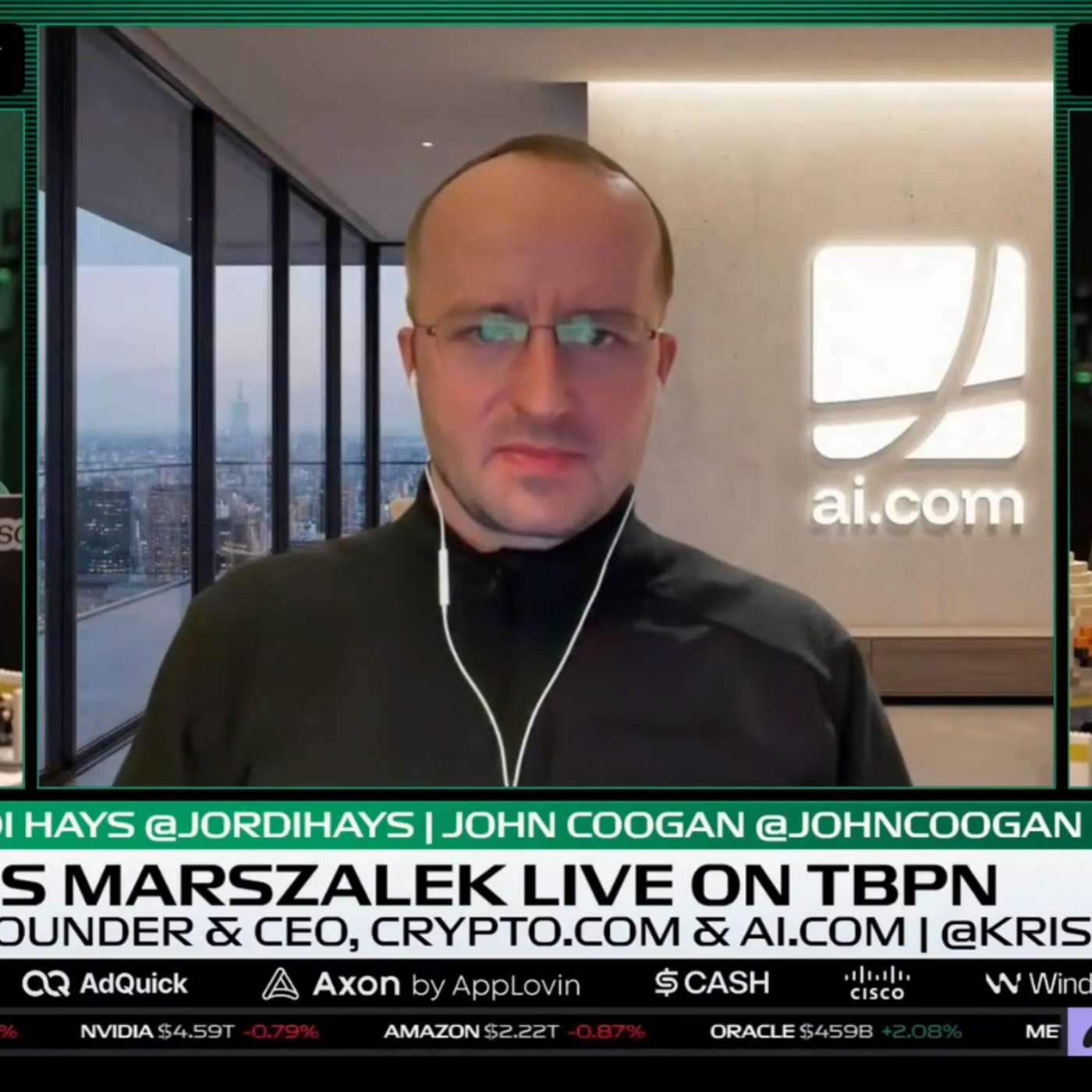
Kris Marszalek, who bought AI.com for a reported $70M, was approached with an offer "starting at $500 million" almost immediately after the deal closed. He turned it down, demonstrating extreme long-term conviction to build a category-defining brand rather than take a massive, quick profit.

Immediately after acquiring AI.com for $70M, the founder received and rejected an offer exceeding $500M. This demonstrates extreme long-term conviction, prioritizing the potential of building a platform over a massive, quick profit.
Truly mission-driven founders prioritize their ultimate vision over immense, early financial gain. At 17, Demis Hassabis turned down a million-pound offer (worth ~$8M in today's money) to stay at a game company, choosing instead to study AI at Cambridge and remain broke.

Legendary investors often succeed by making contrarian bets on ideas considered fringe. Peter Thiel became the first backer of DeepMind when AI was dismissed as 'sci-fi' by both the scientific and entrepreneurial communities, demonstrating a pattern of betting on unpopular but transformative technologies.
OpenAI co-founder Greg Brockman left successful startup Stripe not because it lacked a mission, but because AI was a problem he was willing to dedicate his entire life to. This deep personal connection to the problem, beyond its general importance, was his ultimate motivator.
