Get your free personalized podcast brief
We scan new podcasts and send you the top 5 insights daily.
A viral hit attracts fleeting attention without building a relationship. Binge-worthy content, however, fosters an emotional investment from the viewer, encouraging them to return and build trust over time, which is essential for turning viewers into customers.

Related Insights
Most content fails because its intention is selfish: to convert a user. A successful strategy treats the content itself as the final product, designed solely to provide value and build a relationship. This consumer-centric approach, which avoids treating content as a top-of-funnel tactic, is what builds long-term trust and a loyal audience.

Influencer Roger Wakefield extends the 'know, like, trust' model to 'know, love, trust, and connected to.' He argues video's unique power lies in creating a deep, personal connection with the audience, turning them from viewers into genuine fans who feel they know you personally.
Companies focus on customer LTV but neglect their engaged, non-customer audience. Treating this potential pipeline poorly with irrelevant or aggressive content burns future customers. Nurturing the audience with respect preserves their long-term potential to convert when the time is right.

Dhar Mann attributes his audience retention to building a community through emotional connection rather than just optimizing for data. He believes if the audience feels something, they will stick around, engage, and take action. He explicitly states he doesn't live in his analytics dashboard, a counter-intuitive approach in a data-driven creator world.
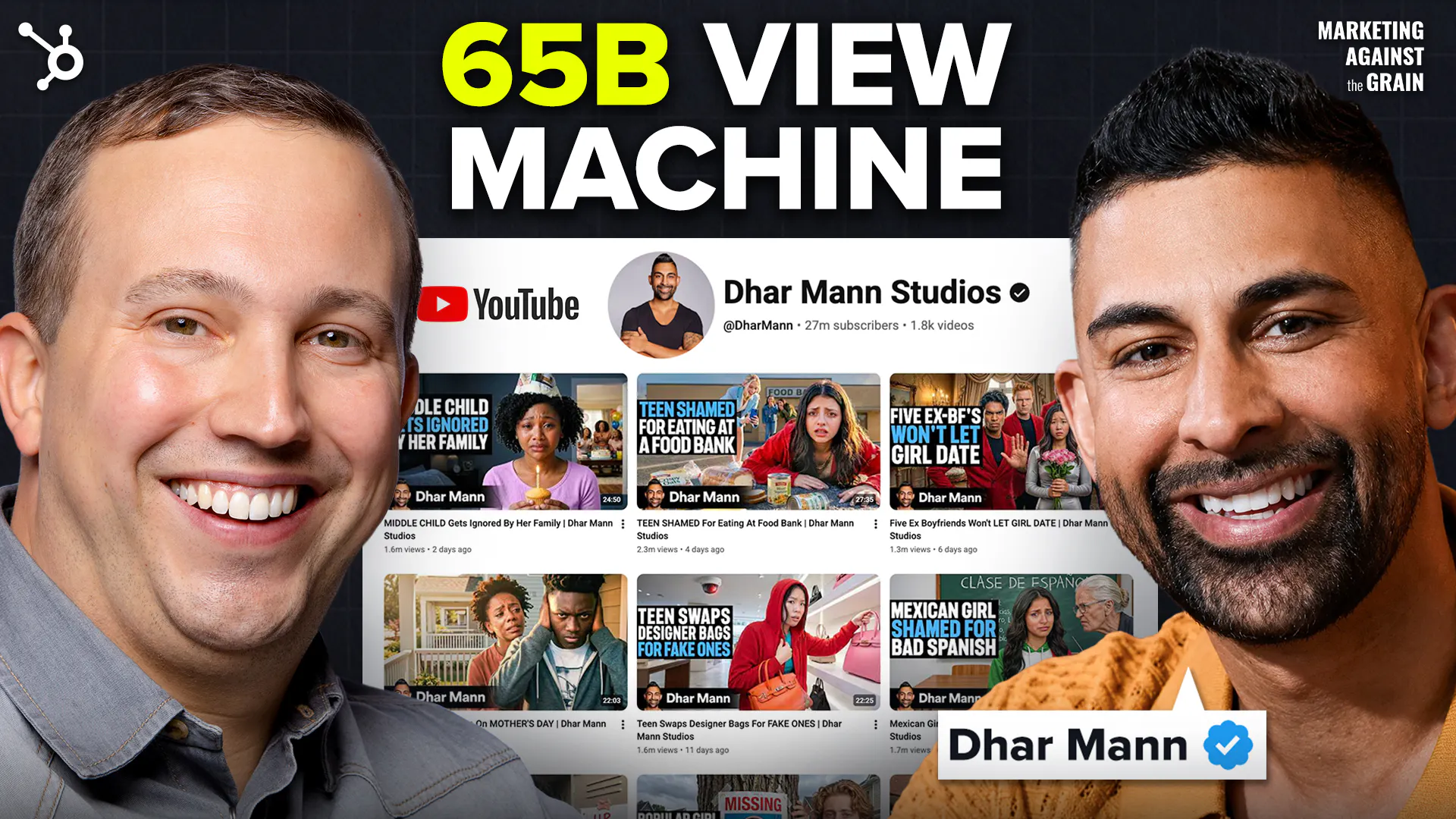
Chasing viral moments is a losing game. The deep, intimate connection built by being a consistent voice in someone's ears via a podcast creates more brand equity and drives bigger results than any fleeting viral hit. Trust, earned over time, compounds and cannot be bought.

Long-form content is superior for building influence because it allows for more time-exposure and 'reinforcement cycles.' To achieve the same exposure as two one-hour videos, a viewer would need to consume approximately 480 short-form clips. Influence is a function of time spent, not just number of views.

Gaining millions of views is a vanity metric if the audience isn't engaged or aligned with business goals. Instead of pursuing fleeting viral moments, focus on consistent content that cultivates a real community. That engaged community, not a passive audience, can eventually be converted into customers.
Rather than just jumping on viral trends, brands can build more durable audiences by creating original, serialized content, much like a mini TV show. This strategy fosters loyalty and gives consumers a reason to follow the brand itself, not just its take on a popular meme.
The next marketing wave isn't chasing viral trends, which builds trend recall but not brand recall. Instead, brands must create immersive, episodic 'worlds' that function as standalone entertainment. This shifts the goal from grabbing attention to holding it through compelling, serialized content.

Chris Koerner treats his millions of short-form views as top-of-funnel lead generation. The goal is to convert a 22-second viewer into a 9-minute long-form viewer, which he calculates builds 20 times more trust and creates a more valuable audience member.