Get your free personalized podcast brief
We scan new podcasts and send you the top 5 insights daily.
Sacha Baron Cohen says Borat singing "Throw the Jew Down the Well" was shocking in 2001 or 2002 because it exposed antisemitism; today it would not be interesting. A satirist must keep looking for what has not been said and reinvent the characters. He recalibrated by creating extreme left and right figures.

Related Insights
Mark Twain saw humorists as having a critical role: to challenge authority and consensus. He argued that irreverence is the "champion of liberty" because despots fear a laughing public more than anything else. This frames satire not just as entertainment, but as a vital tool for maintaining a free society.

The 'PE Guy' character successfully targets the private equity industry—a well-known trope—but adds psychological nuance. This framework makes the content accessible to a general audience while still feeling smart and resonant to industry insiders.

Leno gave interns the authority to pull a cord and stop a segment if a joke sounded corny or dated. They laughed at his Rolling Stones joke because the band looked like old guys playing guitar; he changed the joke. Young staff served as a live dated-reference sensor.

Roy Wood Jr. notes that the context of comedy provides him license to be more direct than traditional journalists. He can deliver a blunt truth as a joke and receive applause, whereas the same statement would be deemed inappropriate if delivered by a news anchor.
The societal benefit of a great comedy show extends beyond the two hours of laughter. By tackling taboo subjects, it broadens the "Overton window" of what is acceptable to discuss. The real impact is the more open conversations the audience can have afterward, having been given permission by the comedian.

Vittorio Angelone observes a trend where jokes that don't land are "saved" by adding a slur. The audience claps not because it's funny, but because it feels like a transgressive act against political correctness—the right-wing equivalent of easy anti-Trump applause.

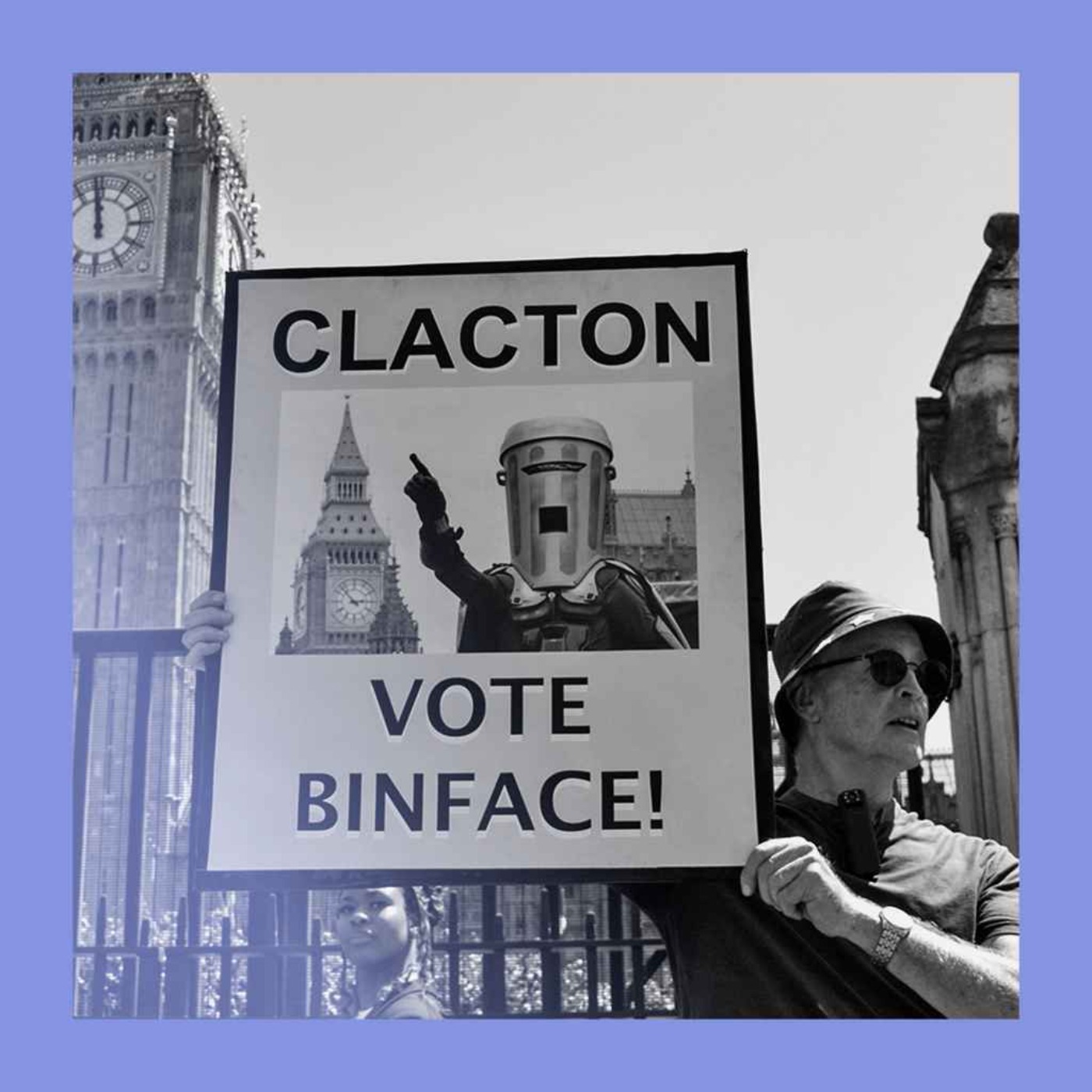
The UK by-election is a farce because incumbent Nigel Farage initiated it without compulsion, not because of the joke candidate Count Binface. Satirical figures serve to highlight the absurdity of actions by mainstream politicians, acting as a mirror to the political system's flaws.
In polarized environments, expressing constant rage only provokes reciprocal anger. Satire, however, can be a more effective persuasion tool. It encourages opponents to see the absurdity in their own positions, leading to self-awareness and potentially changing their minds, something direct confrontation rarely achieves.

Salman Rushdie posits that humor is more than just entertainment; it is a potent tool against oppression. He observes that dictators and narrow-minded individuals are characteristically humorless and that satire can provoke them more effectively than direct criticism, making it a crucial element in the struggle for free expression.

Engaging controversial figures through a comedic lens serves as a powerful humanizing agent. It punctures their self-serious persona and tests their ability to laugh at the absurdity of their own position. This can disarm audiences who expect confrontation and instead reveal a more relatable, self-aware individual.