Get your free personalized podcast brief
We scan new podcasts and send you the top 5 insights daily.
AI automation is collapsing traditional corporate hierarchies. Instead of a manager overseeing a team of people, the new model will be a single team leader who directs and manages an AI that performs the team's entire function. The human role shifts from people management to AI-driven strategy and oversight.

Related Insights
Don't think of AI as replacing roles. Instead, envision a new organizational structure where every human employee manages a team of their own specialized AI agents. This model enhances individual capabilities without eliminating the human team, making everyone more effective.

As AI agents take over execution, the primary human role will evolve to setting constraints and shouldering the responsibility for agent decisions. Every employee will effectively become a manager of an AI team, with their main function being risk mitigation and accountability, turning everyone into a leader responsible for agent outcomes.
The next evolution of work will involve humans acting as orchestrators for "swarms" of specialized AI agents. A manager will direct a team of agents—each trained for a specific function like email marketing or media buying—to collaboratively execute complex projects with high levels of autonomy.

The adoption of powerful AI agents will fundamentally shift knowledge work. Instead of executing tasks, humans will be responsible for directing agents, providing crucial context, managing escalations, and coordinating between different AI systems. The primary job will evolve from 'doing' to 'managing and guiding'.

AI makes individual workers so productive that companies no longer need to build large middle-management teams to oversee frontline workers. The new organizational model is a thin leadership layer managing highly autonomous "doers" who can deploy AI to achieve more on their own.

The paradigm for employees shifts from being an individual contributor to being a manager of AI agents. Success is no longer just direct output, but the ability to effectively set up, direct, and manage a team of autonomous agents to achieve goals.

As AI agents begin to run entire business departments like finance or sales, the role of human leadership will pivot. Instead of managing people's day-to-day tasks, leaders will become "directors of the AI," focusing on high-level strategy, sequencing, and handling exceptions.

The paradigm of work is shifting from managing people to managing technology. A manager's future value will be determined by their ability to effectively command and orchestrate a large fleet of AI agents to achieve business outcomes, making it the new measure of leverage.

The trend of lean operations and automation won't stop at one-person companies. The logical next step in this evolution is the emergence of businesses almost entirely run by a single, autonomous AI agent, representing a fundamental shift in corporate structure.
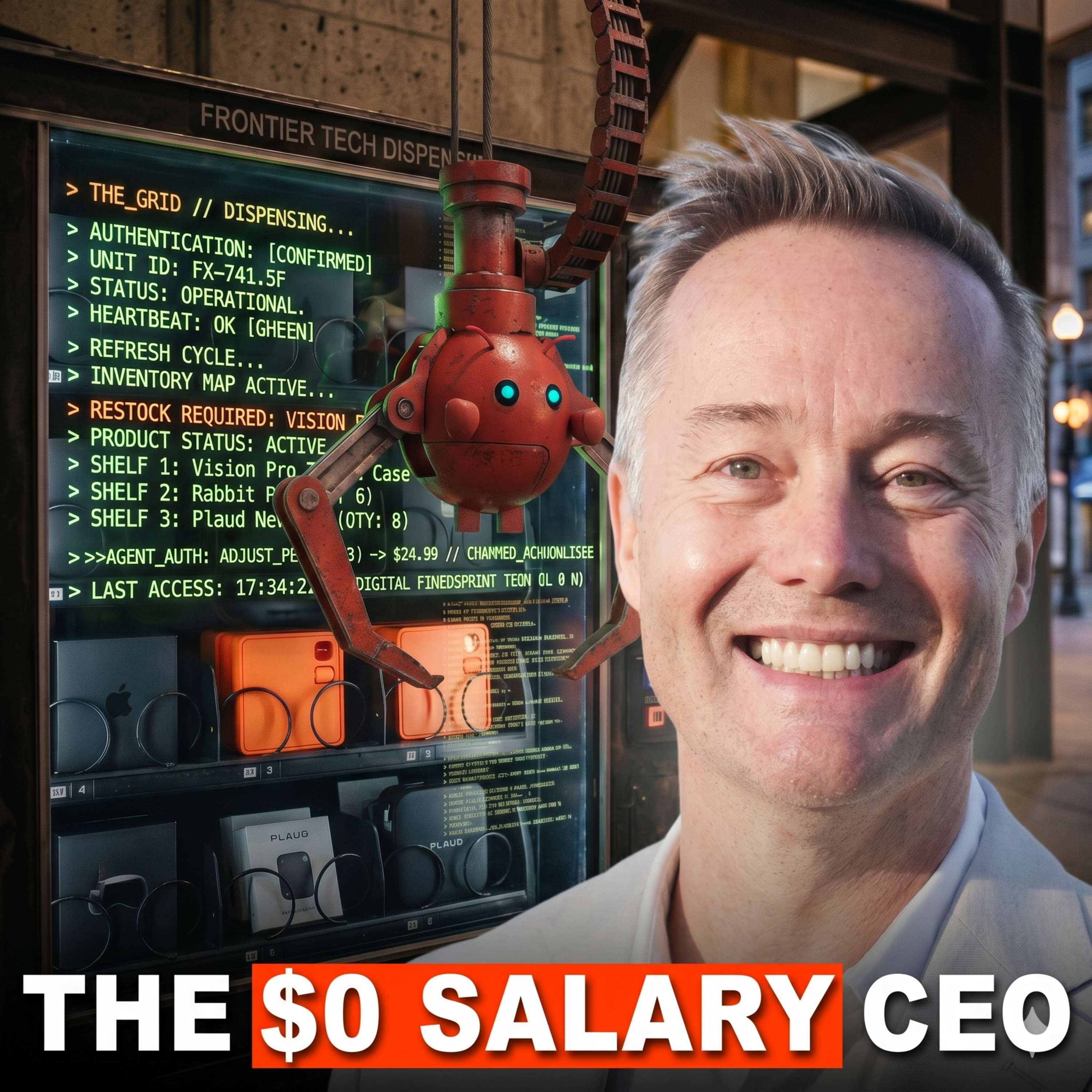
Like an F1 team principal, workers can now manage a team of specialized AI agents. This shifts the human role away from performing discrete tasks towards higher-level strategy, outcome-based thinking, and applying unique domain knowledge, making the human more valuable.