Get your free personalized podcast brief
We scan new podcasts and send you the top 5 insights daily.
Dr. Wei-Wu He queried his company's AI to learn his life expectancy (85-90) and then asked for five specific, actionable parameters he could change to live to 95. This provides a tangible, personal example of AI-driven preventative health in action.

Wei-Wu He: Craig Venter’s Legacy and the Future of Human Longevity
Related Insights
According to longevity scientist David Sinclair, AI is dramatically accelerating biological research. His lab completed work in just a couple of months that would have traditionally taken over a century and a half, showcasing AI's exponential impact on scientific discovery.

Health can be managed like a technology stack, with offensive layers (nutrition, exercise) and defensive layers (medicines for lipids, blood pressure). This proactive, systematic approach uses data to extend both lifespan and healthspan by addressing key risk areas.
![Alex Karnal - The Trillion-Dollar Health Revolution - [Invest Like the Best, EP.467] thumbnail](https://megaphone.imgix.net/podcasts/cbc5538c-3d2c-11f1-abeb-8fa0b9345ba8/image/7338c7270d70078f65b4911eb9cd5b0b.jpg?ixlib=rails-4.3.1&max-w=3000&max-h=3000&fit=crop&auto=format,compress)
A powerful personal AI application is to create a bespoke health agent. By feeding an AI model your entire medical history and directing it to draw from credible sources like Johns Hopkins, you can get more creative and personalized insights than a typical doctor can provide.
The ultimate goal of a connected patient data ecosystem is to shift from reactive support to genuinely anticipatory care. In the near future, AI agents will sense and predict risks—like non-adherence or access barriers—and trigger interventions before the patient or their physician even encounters the problem.

Coursera Health's strategy is a two-pronged approach that combines distinct technologies. It uses a deep causal AI tool to predict an individual's lifetime cardiovascular risk, then deploys a once-annual RNAi therapeutic to prevent that risk from materializing. This integration of prediction and prevention targets healthy individuals long before disease onset.

Current healthcare is a 'sick care' system that reacts to problems after they arise. AI health agents, by continuously integrating data from wearables, environment, and even smart appliances, can identify baseline health and prompt proactive behaviors to optimize wellness and prevent disease from occurring.
By feeding an AI agent diverse personal data—diet logs, sleep tracking, bloodwork, and genetics—it can identify complex health issues that elude general advice. The AI can find "needle in the haystack" answers, like connecting restless leg syndrome to Swedish ancestry, offering hyper-personalized insights.

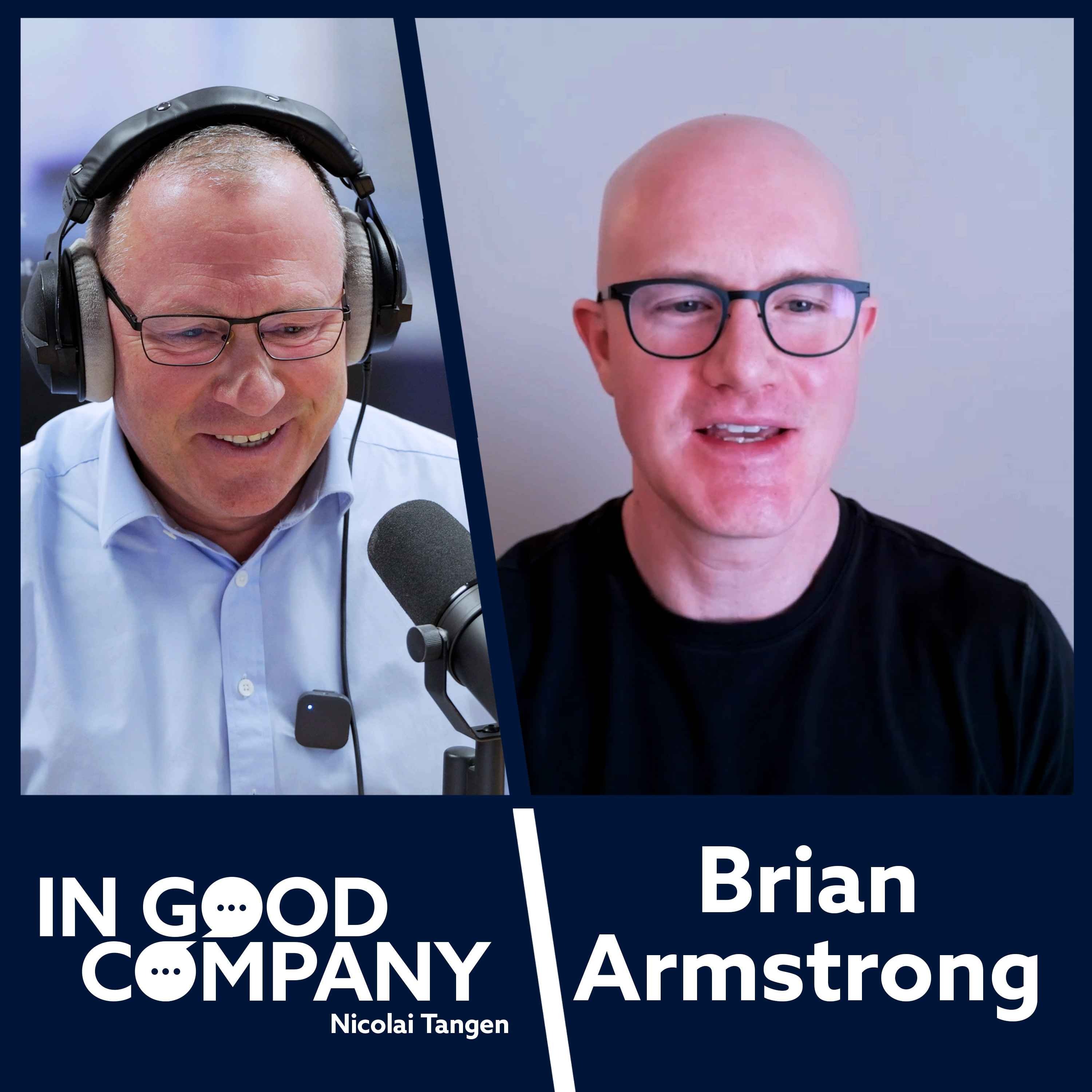
As a co-founder of a longevity biotech firm, Brian Armstrong predicts a 50% chance of reaching "longevity escape velocity" by 2030-2035. This is the point where medicine adds more than a year to life expectancy for every year that passes, driven by breakthroughs in AI-powered drug discovery and cellular analysis.
Instead of replacing experts, AI can reformat their advice. It can take a doctor's diagnosis and transform it into a digestible, day-by-day plan tailored to a user's specific goals and timeline, making complex medical guidance easier to follow.
The traditional endpoint for a longevity trial is mortality, making studies impractically long. AI-driven proxy biomarkers, like epigenetic clocks, can demonstrate an intervention's efficacy in a much shorter timeframe (e.g., two years), dramatically accelerating research and development for aging.
