Get your free personalized podcast brief
We scan new podcasts and send you the top 5 insights daily.
Standard SaaS platforms are one-size-fits-all. With AI coding assistants like Perplexity Computer, you can build a custom UI, such as a Kanban board for Slack messages, that perfectly matches your personal workflow and adds missing features like bulk-archiving specific message types.

Related Insights
The next generation of software may lack traditional user interfaces. Instead, they will be 'API-first' or 'agent-first,' integrating directly into existing workflows like Slack or email. Software will increasingly 'visit the user' rather than requiring the user to visit a dashboard.

Instead of relying on one-off prompts, professionals can now rapidly build a collection of interconnected internal AI applications. This "personal software stack" can manage everything from investments and content creation to data analysis, creating a bespoke productivity system.

The barrier to creating software is collapsing. Non-coders can now build sophisticated, personalized applications for specific workflows in under an hour. This points to a future where individuals and teams create their own disposable, custom tools, replacing subscriptions to numerous niche SaaS products.

Users are leveraging AI agents to build their own bespoke software, stripping away unused features from SaaS giants like Notion. This trend toward hyper-personalization threatens the one-size-fits-all SaaS model as users create cheaper, more effective personal tools.
For decades, buying generalized SaaS was more efficient than building custom software. AI coding agents reverse this. Now, companies can build hyper-specific, more effective tools internally for less cost than a bloated SaaS subscription, because they only need to solve their unique problem.

User workflows rarely exist in a single application; they span tools like Slack, calendars, and documents. A truly helpful AI must operate across these tools, creating a unified "desired path" that reflects how people actually work, rather than being confined by app boundaries.
While replacing complex systems like Workday with AI is impractical, the real opportunity is in extensibility. AI allows users to build small, custom apps on top of existing platforms, solving specific needs and making the core SaaS product even stickier and more valuable.

Treat your personal software as malleable. Instead of enduring friction, describe your pain point to an AI and have it build a solution, like a custom web UI or Kanban board, in hours. This shifts the paradigm from using to co-creating tools.

Instead of integrating with existing SaaS tools, AI agents can be instructed on a high-level goal (e.g., 'track my relationships'). The agent can then determine the need for a CRM, write the code for it, and deploy it itself.
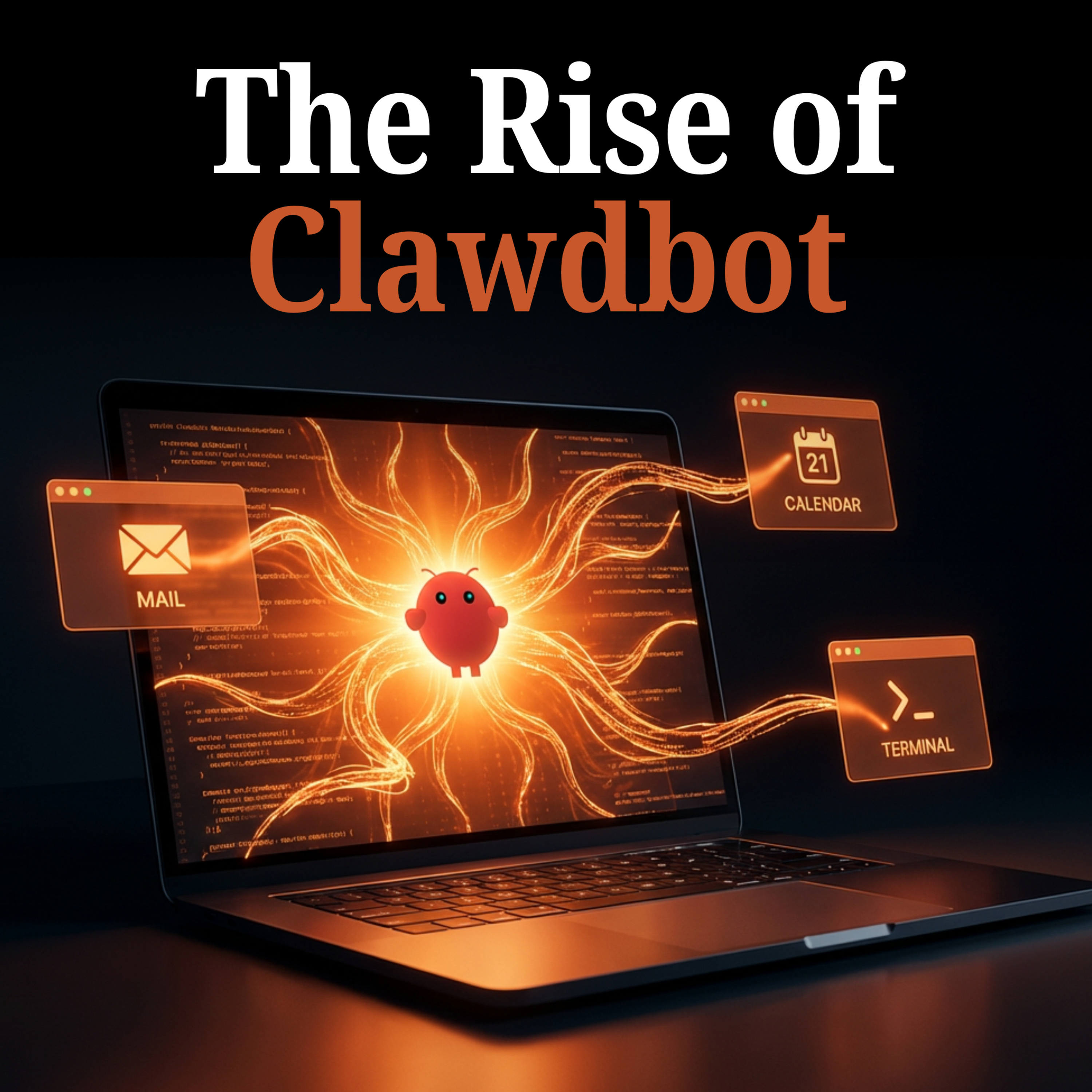
Non-technical users are leveraging agents like Moltbot to build their own hyper-personalized software. By simply describing a problem in natural language, they can create internal tools that perfectly solve their needs, eliminating the need to subscribe to many single-purpose SaaS applications.
