Get your free personalized podcast brief
We scan new podcasts and send you the top 5 insights daily.
Chai Discovery's core philosophy is a direct application of "The Bitter Lesson" to biotech. They prioritize scaling compute, data, and simple models over creating complex, bespoke biological modules, betting that general-purpose learning methods will outperform human-engineered ones at scale.

Related Insights
Chai Discovery found that its first model, with 23 submodules, was too complex to iterate on and scale effectively. A core guiding principle became radical simplification, which makes it easier to understand model dynamics and identify promising scaling directions, even in a complex domain like biology.
The bottleneck for AI in drug discovery is not the algorithm but the lack of high-quality, large-scale biological data. New platforms are needed to generate this necessary "substrate" for AI models to learn from, challenging the narrative that better models alone are the solution.

NewLimit combines artificial intelligence with high-throughput biology in a virtuous cycle. Their AI model, Ambrosia, predicts which gene combinations will be effective. These predictions are then tested in thousands of parallel experiments, which in turn generate massive datasets to further train and refine the AI, accelerating discovery.

The next inflection point will come from clever data generation strategies optimized for AI models, not human analysis. This "black box data" approach—like pooled screening with sequencing readouts—is vastly more scalable and creates a powerful, proprietary moat for companies.

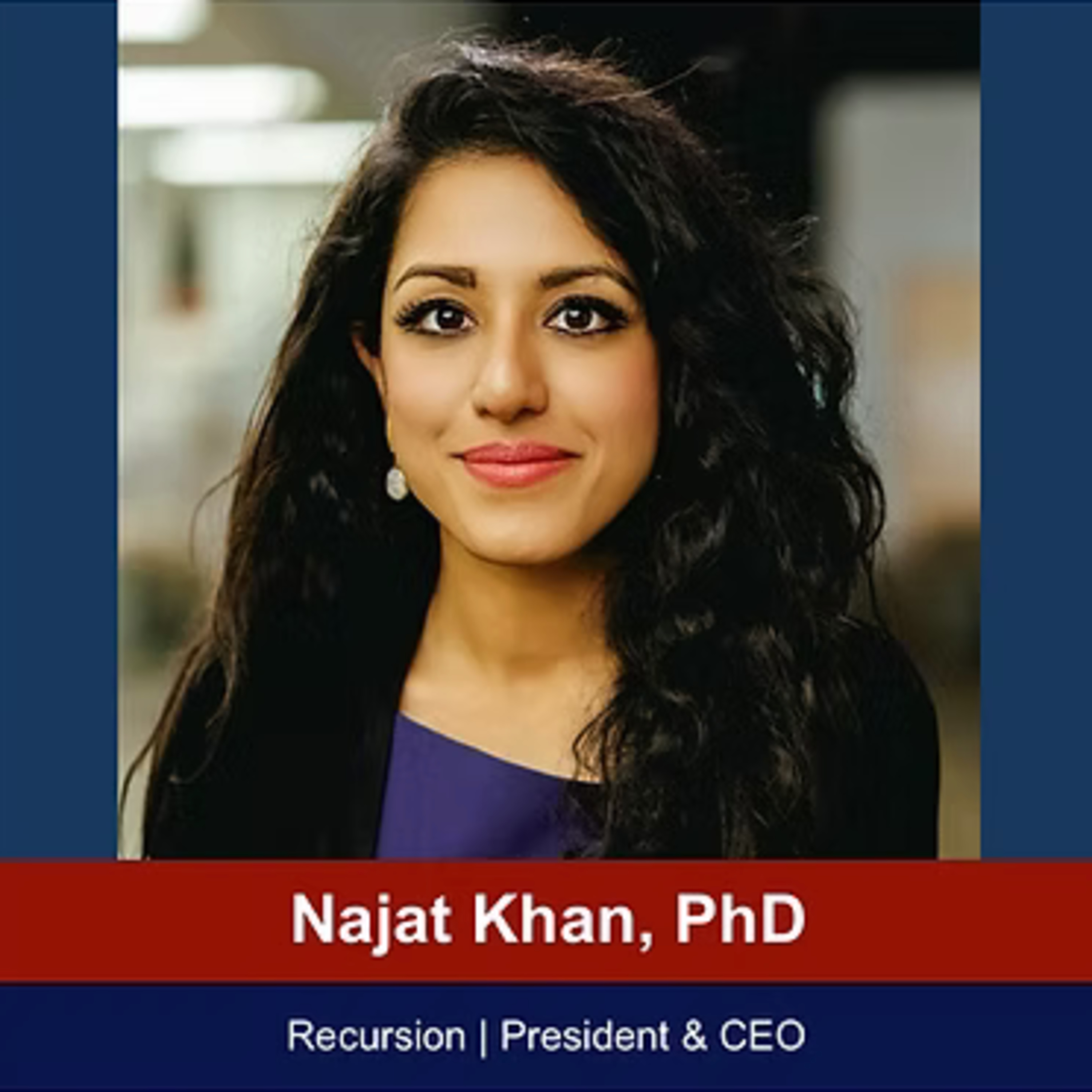
AI's potential in drug discovery is contingent on having a robust "data factory" to generate massive, high-quality biological datasets. Najat Khan emphasizes that the combination of this data infrastructure, AI, supercomputing, and human expertise is what creates a true competitive advantage, not the algorithm alone.
The future of AI in drug discovery is shifting from merely speeding up existing processes to inventing novel therapeutics from scratch. The paradigm will move toward AI-designed drugs validated with minimal wet lab reliance, changing the key question from "How fast can AI help?" to "What can AI create?"

By choosing a partnership model over developing its own drugs, Chai Discovery subjects its AI to a higher bar. Its models must generalize across diverse targets for multiple partners like Pfizer and Eli Lilly, preventing them from creating bespoke solutions for a single problem. This business model forces technical rigor and scalability.
A new 'Tech Bio' model inverts traditional biotech by first building a novel, highly structured database designed for AI analysis. Only after this computational foundation is built do they use it to identify therapeutic targets, creating a data-first moat before any lab work begins.

The bottleneck for AI in drug development isn't the sophistication of the models but the absence of large-scale, high-quality biological data sets. Without comprehensive data on how drugs interact within complex human systems, even the best AI models cannot make accurate predictions.

Chai Discovery simplifies the complexity of biology by abstracting different molecular challenges, like designing antibodies vs. mini-proteins, into mere "prompts" for a unified model. This is analogous to how a large language model can handle both math problems and English homework, enabling broader generalization from a single architecture.