Get your free personalized podcast brief
We scan new podcasts and send you the top 5 insights daily.
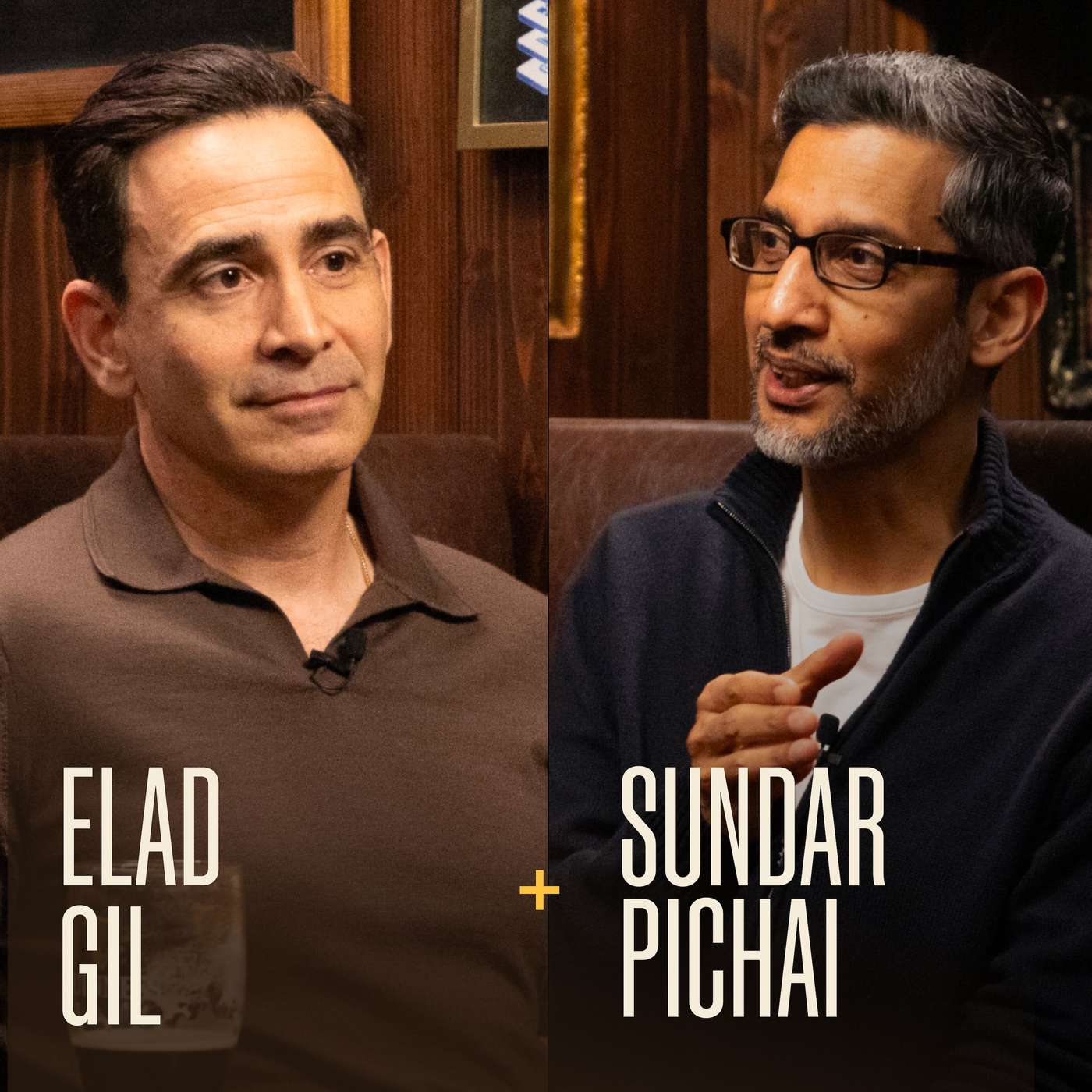
Sundar Pichai said Google is building a unified agent that works across Workspace, Search and Gemini, first for enterprise and then consumers. Ranjan Roy predicted Google may go headless, but success requires a new owner and changing product metrics—for example, counting repeated Gmail queries through the agent instead of DAU.

Related Insights
Google is integrating AI agents directly into search, allowing users to create ongoing tasks like monitoring apartment listings. This transforms search from a tool for one-time information retrieval into a persistent service that works 24/7, a fundamental shift in its core function and user interaction model.

Google's various AI initiatives—intelligent search, agent platforms like Spark, and app-building tools—are destined to converge. The future of search, per Pichai, is a unified system that can execute complex tasks (e.g., plan a trip) rather than just linking to information.

Pichai describes Gemini moving toward a unified agent that runs 24-7 in a headless service with user context across Search, Gmail, and Workspace. He says a steadily growing share of Gemini requests are already agentic tasks rather than chats, and Google will bring this to consumers.
CEO Sundar Pichai sees the 'AI moment' as a way to unify product development. By building on a common infrastructure like Gemini, teams can create consistent, cross-product features, countering the company's reputation for launching fragmented or overlapping products.
For years, Google has integrated AI as features into existing products like Gmail. Its new "Antigravity" IDE represents a strategic pivot to building applications from the ground up around an "agent-first" principle. This suggests a future where AI is the core foundation of a product, not just an add-on.

Google is shifting its product integration strategy. Initially, the Gemini model API was the common thread. Now, its 'Antigravity' agent harness is the new standard, embedding action-taking capabilities natively across all products, from Search to the Gemini app.

Creating a cohesive AI super app requires centralizing user experience, forcing product areas like Gmail to become background services. Google's "fiefdom" structure creates political friction that slows this integration, giving an advantage to more nimble competitors like OpenAI and Anthropic.
The host listed Google's rare assets: an agent across 13 billion-user products, search, model licensing, cloud and chips, Waymo and an Anthropic stake. Ranjan Roy said each advantage also brings complexity and ownership fights, pointing to Google Maps giving worse answers than Gemini and unresolved power centers across Cloud, DeepMind and Search.
As AI model performance commoditizes, the strategic battleground is shifting from models to platforms. Tech giants like Google are positioning their offerings not as features, but as the fundamental 'operating system' for the agentic enterprise. The new competitive moat is the control plane that orchestrates agents.
Instead of being replaced by AI chatbots or agents, Pichai believes Search will evolve to manage them. Users will run multiple, long-running tasks, and Search will become the interface to orchestrate these agentic flows, expanding its capabilities rather than becoming obsolete.