Get your free personalized podcast brief
We scan new podcasts and send you the top 5 insights daily.
NGS testing is revealing that acquired HER2 kinase domain mutations, not amplifications, are an emerging resistance mechanism in ER+ lobular breast cancer. This creates a targetable population for HER2 TKIs like neratinib or tucatinib, offering a new line of targeted therapy.

Related Insights
A dramatic epidemiological shift has occurred in HER2+ breast cancer. Due to highly effective adjuvant therapies preventing recurrence, the majority of new metastatic cases (two-thirds) are now de novo, a complete reversal from 15 years ago when relapsed disease dominated.
After famously retreating from oncology, GSK's re-entry is not a broad effort. Their CSO clarifies a focused strategy anchored in two key areas: hematology (blood cancers) and solid tumors that are genetically unstable (DMMR/MSI high), with a particular emphasis on women's cancers like endometrial cancer.

Pathways like integrins have long been of interest but lacked effective therapeutic approaches. The advent of new technologies, such as antibody-drug conjugates and checkpoint inhibitors, has created opportunities to re-explore these older targets with potent, modern drugs, breathing new life into decades-old research.

An individual tumor can have hundreds of unique mutations, making it impossible to predict treatment response from a single genetic marker. This molecular chaos necessitates functional tests that measure a drug's actual effect on the patient's cells to determine the best therapy.

The same cancer-driving mutation behaves differently depending on the cell's internal "wiring." For example, a drug targeting a mutation works in melanoma but induces resistance in colorectal cancer due to a bypass pathway. This cellular context is why genetic data alone is insufficient.
Experts question the efficacy of sequencing ADCs like EV (Nectin-4 target) and DV (HER2 target) because they share the same MMAE chemo payload. Since resistance is often tied to the payload, not the target antibody, switching targets may not overcome resistance, though anecdotal responses have been observed.

Despite the presence of PIK3CA mutations in some triple-negative breast cancer (TNBC) tumors, Phase III trials with AKT inhibitors have been negative. Currently, there is insufficient evidence to support using PI3K/AKT pathway inhibitors for TNBC in clinical practice.
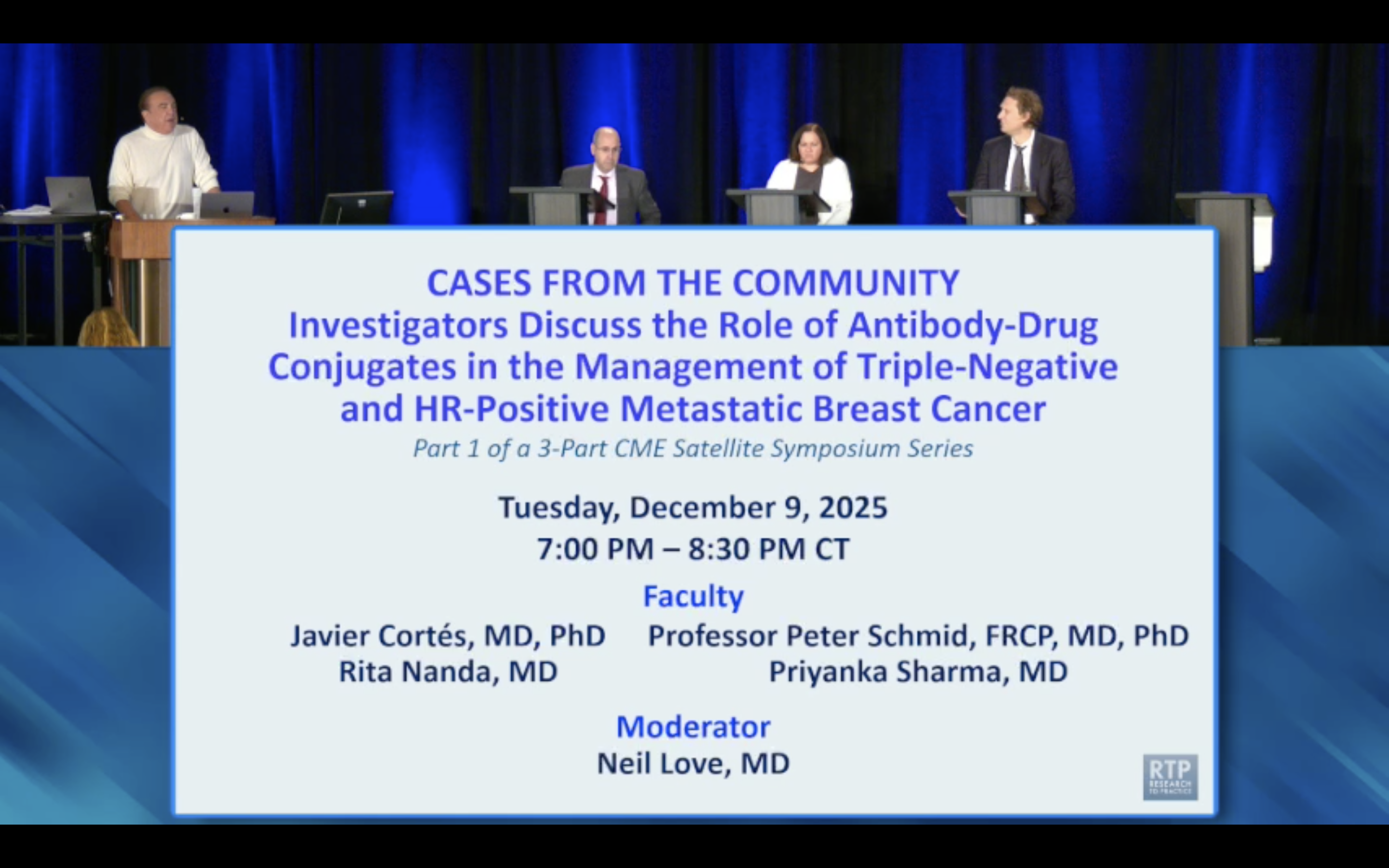
Experts question if HER2 status truly predicts ADC efficacy in urothelial cancer. The benefit seen across low-expression levels suggests HER2's main role may be simply to target the chemo payload to cancer cells, rather than indicating a specific biological dependency.
The panel suggests AKT inhibitor trials in prostate cancer have been disappointing due to suboptimal biomarker selection (e.g., PTEN IHC). A similar drug in breast cancer showed significant survival benefit when using a more precise NGS-based strategy, indicating a potential path forward if the right patient population is identified genetically.
Cellcuity's drug is effective in breast cancer patients without PIK3CA mutations (wild type). This challenges the dominant precision medicine model that requires a specific genetic marker, showing that a pathway's aberrant activity can be a sufficient therapeutic target on its own.