Get your free personalized podcast brief
We scan new podcasts and send you the top 5 insights daily.
In his lawsuit against OpenAI, Elon Musk's credibility as an AI safety champion was undermined during cross-examination. He was reportedly clueless about basic industry safety practices like "system cards" and OpenAI's own safety protocols, revealing a significant gap between his public pronouncements and his technical knowledge.

Related Insights
Private notes revealed in the lawsuit filings show the foundational split wasn't purely philosophical. Discussions about personal wealth targets ("what will take me to $1 billion?") and Elon Musk's desire for majority equity to fund Mars ambitions underscore that the battle was fundamentally about power and financial gain.

Internal notes revealed in Elon Musk's lawsuit suggest OpenAI's leadership intentionally deceived him. They allegedly took his money under the premise of an open-source non-profit while privately planning a closed, for-profit structure, creating a massive legal and reputational risk.
The lawsuit is unlikely to financially cripple OpenAI or reverse its for-profit structure. Its primary impact will be shaping the public narrative around Sam Altman and Elon Musk by revealing internal documents and testing which figure a jury finds more sympathetic. It's a battle for perception, not an existential threat.
The guest suggests Sam Altman's public declarations about AI's existential risks were a strategic play to align with Elon Musk's outspoken fears. This mirroring successfully convinced Musk to co-found and fund OpenAI, though he later felt manipulated.

With a weak legal foundation based on a verbal 'handshake deal,' Elon Musk's lawsuit against Sam Altman and OpenAI is less about winning in court and more about strategic harassment. The goal is to use the legal process to maximize public embarrassment, force damaging disclosures, and potentially delay OpenAI's IPO.

Elon Musk's lawsuit against OpenAI creates an asymmetric advantage. Even if he loses, the lengthy discovery process can damage OpenAI's reputation, slow its momentum, and distract its leadership. The potential outcomes for him range from a massive financial win to simply kneecapping a major competitor, with minimal downside.
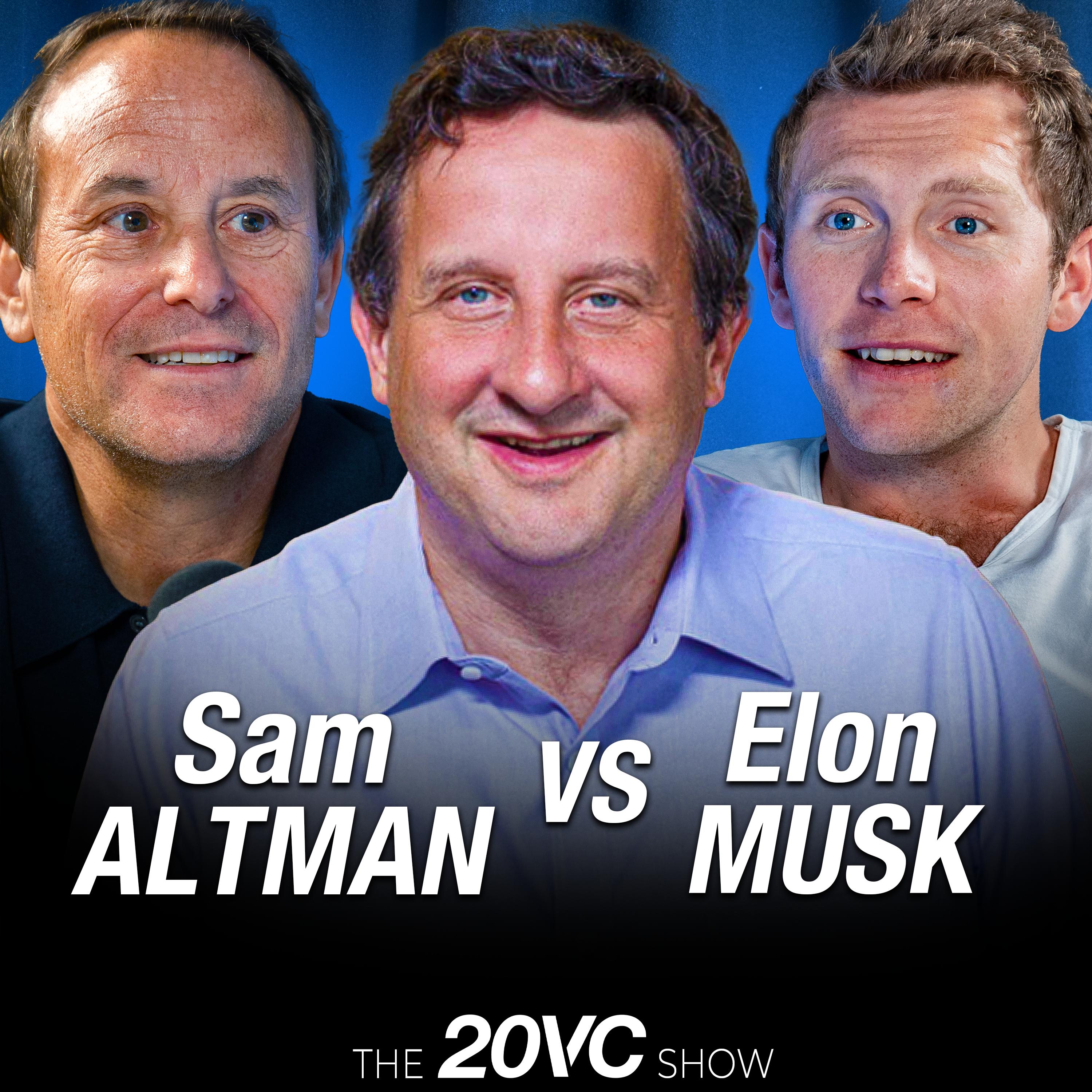
The detailed failure of the anti-Altman coup, planned for a year yet executed without a PR strategy, raises a critical question. If these leaders cannot manage a simple corporate power play, their competence to manage the far greater risks of artificial general intelligence is undermined.

Elon Musk's focus was on Mars as a backup for humanity. DeepMind CEO Demis Hassabis shifted his perspective by positing that a superintelligent AI could easily follow humans to Mars. This conversation was pivotal in focusing Musk on AI safety and was a direct catalyst for his later involvement in creating OpenAI.
The legal battle between Elon Musk and OpenAI is primarily a strategic fight for narrative dominance. Both sides compete to control their public image—Musk as "bulletproof" and OpenAI as the "untouchable leader." In the current tech landscape, this narrative dictates valuation and power more than cash flow does.

Elon Musk's lawsuit isn't primarily about winning a legal victory but about creating a "cloud" of uncertainty over OpenAI. The goal is to slow its fundraising, delay a potential IPO, and disrupt its momentum. For Musk, the prolonged public battle itself is a strategic win, regardless of the court's final verdict.
