Get your free personalized podcast brief
We scan new podcasts and send you the top 5 insights daily.
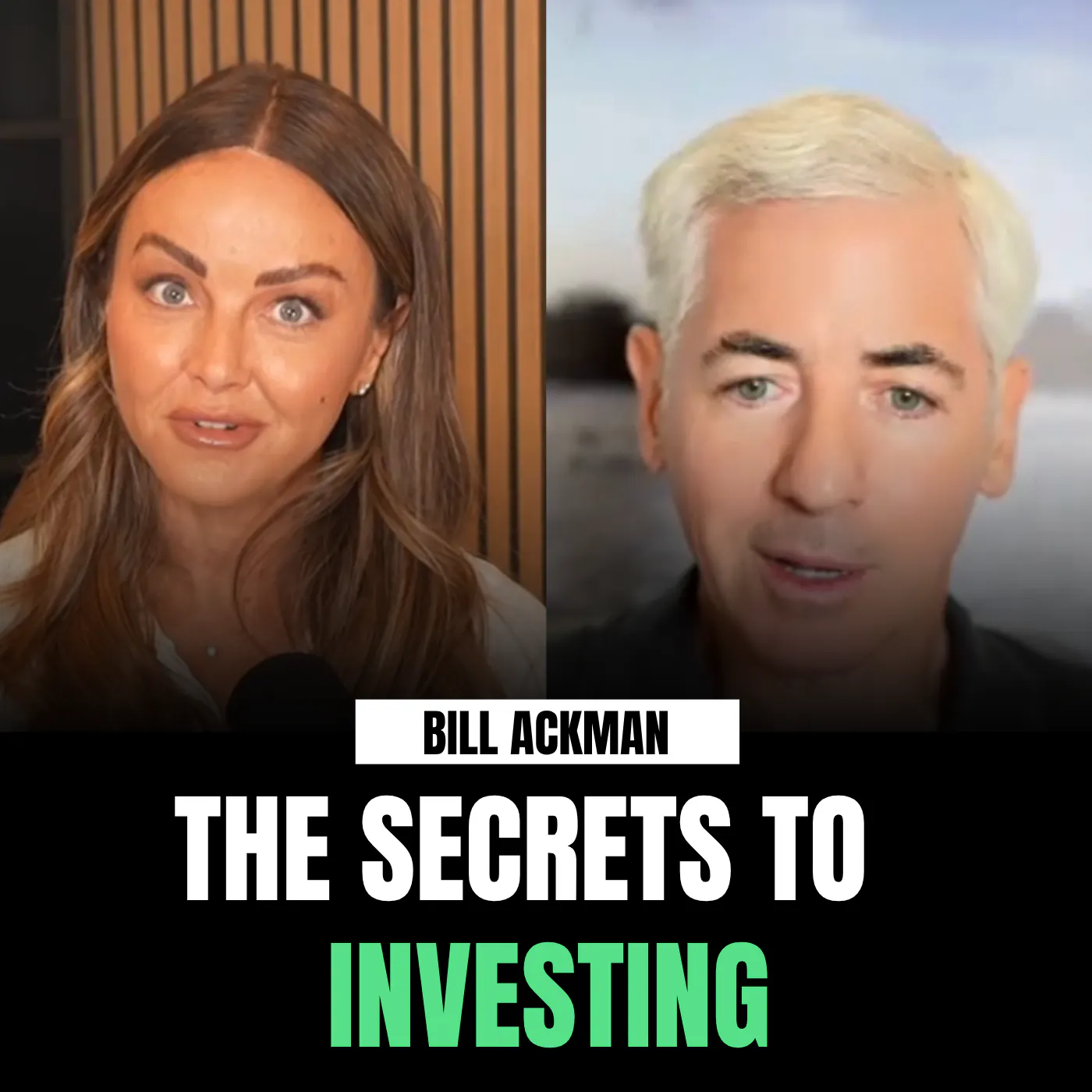
Ackman's ultimate test for an investment is its durability. He advises picking businesses so robust and predictable that an investor would feel comfortable owning them even if they couldn't sell for a decade. This filter prioritizes long-term fundamental strength over short-term market sentiment.
Related Insights
The key to emulating professional investors isn't copying their trades but understanding their underlying strategies. Ackman uses concentration, Buffett waits for fear-driven discounts, and Wood bets on long-term innovation. Individual investors should focus on developing their own repeatable framework rather than simply following the moves of others.

Following Warren Buffett, the speaker measures investment success by tracking a company's "owner's earnings" (cash from operations minus maintenance capex), not its stock price. If operating results are growing as expected, short-term price drops become irrelevant, preventing emotional decisions and reinforcing a long-term, business-focused perspective.

Ackman frames a company's earnings as the 'yield' or 'coupon' on a bond. This reframes stock analysis from chasing price appreciation to evaluating the predictability and growth potential of its underlying earnings stream, much like assessing a bond's creditworthiness.
A powerful filter for any potential acquisition is asking: 'If this were the last business we could ever buy, would we still want to own it?' This simple question forces a long-term, operational mindset and helps avoid deals that rely on future exits or financial engineering.

Instead of reacting to stock prices, track the combined "owner's earnings" growth of your portfolio companies. This creates a private-equity mindset, focusing on underlying business performance. Over decades, this metric shows strong correlation with portfolio returns and helps maintain long-term discipline.

An effective investment process reconciles data and gut feeling. Use a strict checklist (huge markets, defensible moats, strong team) to systematically filter out weak opportunities. However, for the handful that pass, the ultimate decision to invest should be an intuitive one that overwrites the checklist.

Craver uses a powerful thought experiment to filter investments: "If the stock market closed tomorrow and reopened in three years, what would you want to own?" This mental model forces a focus on durable, high-quality companies with secular tailwinds, filtering out trades based on short-term, speculative data points.

Over 58 years, Warren Buffett made ~400 investment decisions, but only 12 truly mattered—a 4% hit rate. The crucial insight is not just buying right, but holding these few exceptional businesses for decades, allowing compounding to work its magic.

Pilecki's rule of thumb—seeking stocks that can double in three years (26% IRR)—acts as a strict filter. This high hurdle prevents him from tying up capital in ideas with only marginal upside, forcing a focus on truly substantial opportunities.

Investors often chase new, exciting opportunities ("the mistress") while undervaluing solid companies they already own ("the wife"). This mental model advocates for an extremely high bar for action, preventing portfolio churn based on superficial attraction rather than deep conviction.