Get your free personalized podcast brief
We scan new podcasts and send you the top 5 insights daily.
The need for our ancestors to communicate about memories and future plans—the essence of stories—drove the evolution of simple grunts into complex language. Our brains are fundamentally story-shaped because language was built to narrate events.

Related Insights
As AI automates tasks and replicates knowledge, what remains fundamentally human is our personal narrative. The collection of experiences, memories, successes, and failures shaping who we are cannot be generated by AI, making authentic storytelling a core human differentiator.
Unlike passive data consumption from lists (like PowerPoint), stories create tension and suspense. This makes the audience actively try to predict the outcome, a process that is the foundation of human learning and engagement.

The brain doesn't strive for objective, verbatim recall. Instead, it constantly updates and modifies memories, infusing them with emotional context and takeaways. This process isn't a bug; its purpose is to create useful models to guide future decisions and ensure survival.

Thought is fundamentally non-linguistic. Evidence from babies, animals, and how we handle homophones shows that we conceptualize the world first, then translate those concepts into language for communication. Language evolved to express thought, not to be the medium of thought itself.
The most effective way to convey complex information, even in data-heavy fields, is through compelling stories. People remember narratives far longer than they remember statistics or formulas. For author Morgan Housel, this became a survival mechanism to differentiate his writing and communicate more effectively.
![[REPLAY] Morgan Housel – Same as Ever (EP.359) thumbnail](https://static.libsyn.com/p/assets/f/b/7/6/fb76e1c8bfb69e8dd959afa2a1bf1c87/CA_Square_logo_light_background_6.26.24.jpg)
People watched the movie 'Contagion' during the pandemic rather than reading scientific papers because the human brain is wired to learn through first-person stories, not lists of facts. Narratives provide a simulated, experiential perspective that taps into ancient brain mechanisms, making the information more memorable, understandable, and emotionally resonant.

The idea that language creates thought is backwards. Pre-linguistic infants already have a sophisticated understanding of the world (e.g., cause and effect). They learn language by shrewdly guessing a speaker's intent and mapping the sounds they hear onto thoughts they already possess.

When presented with direct facts, our brains use effortful reasoning, which is prone to defensive reactions. Stories transport us, engaging different, more social brain systems. This allows us to analyze a situation objectively, as if observing others, making us more receptive to the underlying message.
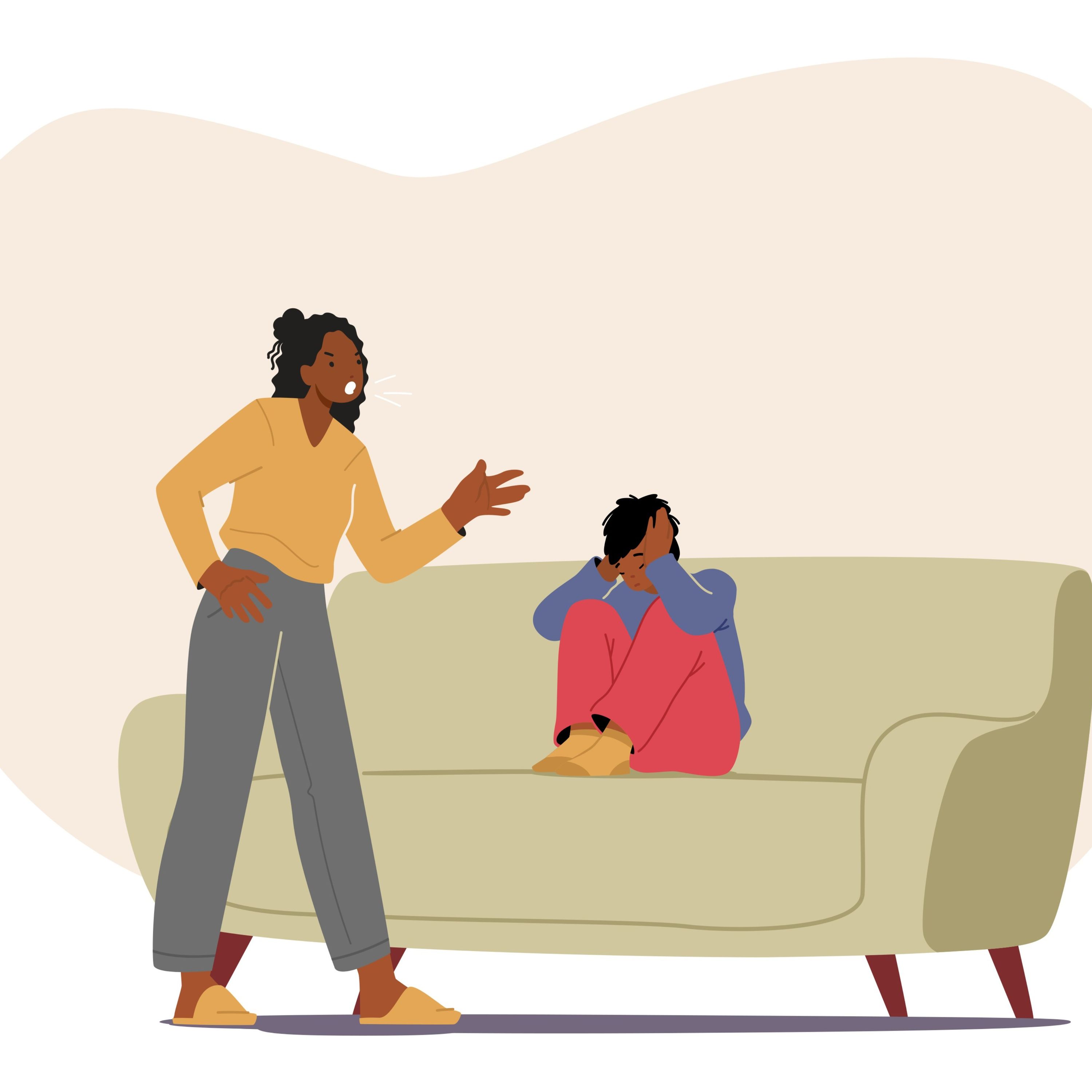
When using descriptive language, adding motion makes the imagined experience more vivid and memorable. The human brain evolved to pay special attention to movement, so describing an action (“he kicked a wall”) is more engaging than describing a static scene (“the room was dark”).

A story’s value depends on its goal. For academics, stories are data that bridge to a broader argument. For creators, they are bridges to audience connection built on vulnerability. The key is defining what the story is bridging *from* and *to* before crafting it.