Get your free personalized podcast brief
We scan new podcasts and send you the top 5 insights daily.
The focus of US chip export controls is moving downstream from individual chips to complete server systems. This makes enforcement a complex issue of customs, forged documents, and international logistics channels, as seen in the Taiwanese investigation into NVIDIA-powered server smuggling.
Related Insights
The investigation into Supermicro, a multi-billion dollar public company, marks a significant shift in U.S. export control enforcement. Previously, authorities targeted small-time smugglers. This new focus on established corporations signals a more aggressive stance, potentially leading to executive jail time rather than just corporate fines.
Reports of China building a working EUV lithography machine are misleading. The effort appears to be an assembly of smuggled components from ASML's existing supply chain, not a story of domestic innovation. This frames the primary challenge as one of export control evasion rather than a rapid technological leap by China.

The most significant sanctions loophole isn't physical chip smuggling but 'compute smuggling.' Chinese firms establish shell companies to build and operate data centers in neutral countries like Malaysia. They then access this cutting-edge compute power remotely, completely bypassing physical import restrictions on advanced hardware.
The DOJ indictment against Supermicro dates the start of the smuggling conspiracy to "in or about 2024." This timing is significant, as it immediately follows the October 2023 closure of loopholes that had allowed sales of degraded chips to China. This shows that demand for smuggled high-end chips materialized as soon as legal alternatives were eliminated.
The US government revived the name "Operation Gatekeeper," once used for a 90s border project, for a new mission: cracking down on illegal AI chip smuggling to China. This demonstrates how semiconductors have become a national security priority on par with physical border control.

The "Operation Gatekeeper" bust uncovered a massive illegal AI chip smuggling operation into China. This indicates that prior to the recent policy change, a significant black market existed to circumvent US export controls, suggesting high, unmet demand that official numbers don't capture.

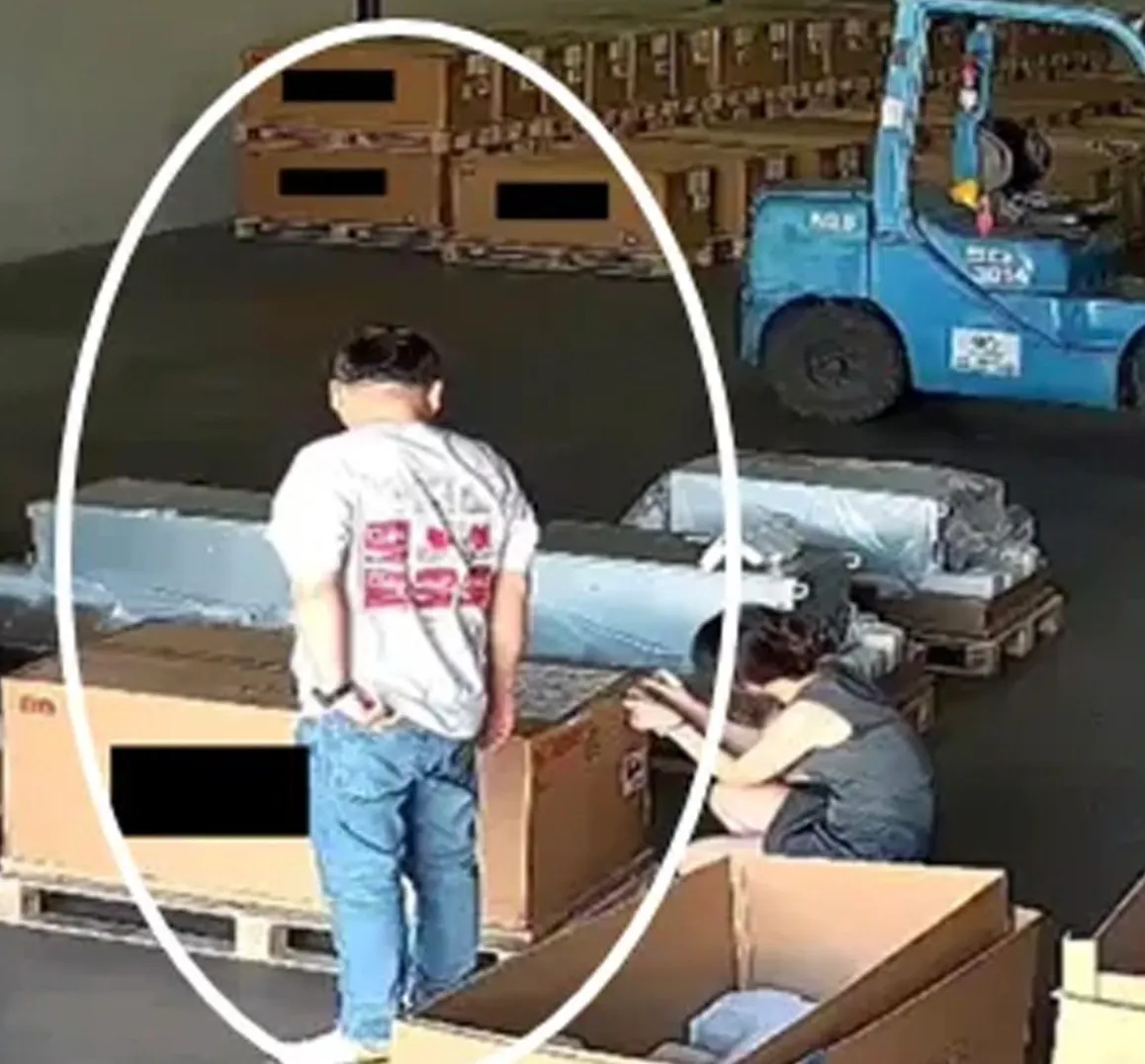
The billionaire co-founder of Super Micro was caught on camera personally using a hairdryer to swap serial numbers from real servers to dummy units to evade US export controls to China. This bizarre detail illustrates the extreme, hands-on lengths individuals will go to in the high-stakes geopolitical chip war.

To circumvent the physical challenge of smuggling enormous GPU server racks, smugglers employ deception. They create empty, dummy server racks to fill out data centers, fooling inspectors into believing they are viewing a fully equipped, legitimate operation while the real, valuable GPUs are moved elsewhere.
The US DOJ indictment against Supermicro (SMCI) reveals the extreme, hands-on measures taken to circumvent export controls. The billionaire founder was caught on camera personally using a hairdryer to swap serial number stickers from real servers to dummy units, highlighting the immense demand and profitability of smuggling AI chips to China.

TikTok's parent company, ByteDance, is circumventing U.S. export controls on advanced AI chips. It plans to access thousands of NVIDIA's powerful B200 Blackwell chips by partnering with a cloud provider in Southeast Asia, enabling AI development outside of mainland China.