Get your free personalized podcast brief
We scan new podcasts and send you the top 5 insights daily.
A study found that children who travel mostly by car draw simplistic, danger-focused "cognitive maps" of their surroundings. In contrast, kids in walkable areas create highly detailed maps with more streets, houses, and play locations, indicating a richer environmental understanding and greater independence.

Related Insights
Living closely with animals transforms them from generic creatures into unique personalities like 'Lunch the baboon.' This expands one's sense of community beyond humans to include the surrounding wildlife, fostering a deep, relational connection to the environment that is absent in modern urban life.

A 1969 UC Berkeley study by Donald Appleyard revealed a direct correlation between car traffic and social isolation. Residents on streets with heavy traffic reported almost no interaction with neighbors, while those on light-traffic streets had significantly more friends and acquaintances, quantifying how cars erode community.
Large language models are insufficient for tasks requiring real-world interaction and spatial understanding, like robotics or disaster response. World models provide this missing piece by generating interactive, reason-able 3D environments. They represent a foundational shift from language-based AI to a more holistic, spatially intelligent AI.

The mere presence of an adult shifts responsibility away from children. They come to expect adults to enforce safety and solve conflicts, which discourages them from developing their own problem-solving skills, risk assessment, and self-reliance.
Humans have two attention types: fatigable 'directed attention' for focus and effortless 'involuntary attention.' Nature's 'softly fascinating' stimuli (like waves) engage involuntary attention, allowing our directed attention to recover. This is unlike chaotic urban environments that overwhelm all attentional resources.

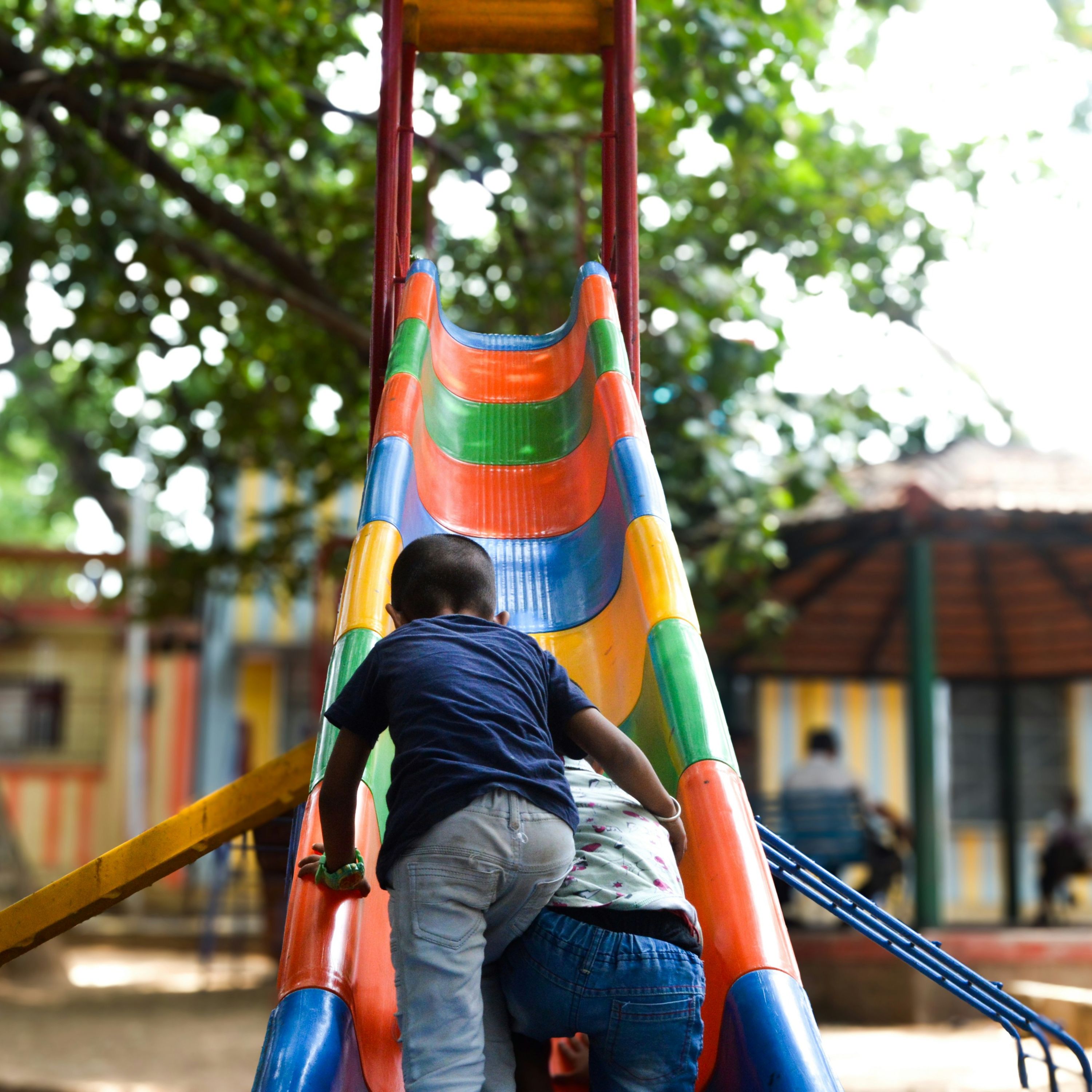
Over the same decades that children's independent play has declined, rates of youth anxiety and depression have steadily risen. Unsupervised play is crucial for developing an "internal locus of control," which allows kids to learn they can handle life’s challenges and builds resilience.
A University of Michigan study found that walks in nature improved cognitive function even during a cold January day. This suggests the restorative effects are not solely dependent on positive emotions or enjoyment, but are a more fundamental cognitive process, provided basic comfort and safety needs are met.
Coined by Jane Jacobs, the "sidewalk ballet" describes the series of casual, unplanned interactions between neighbors, shopkeepers, and strangers. This constant, informal public life, exemplified in Sesame Street's first episode, is a visible manifestation of a community's safety and social cohesion.

The show deliberately modeled a healthy, walkable, mixed-use neighborhood based on urbanist Jane Jacobs' principles. It taught millions of children to value vibrant city life during an era of white flight and anti-urban sentiment, subtly shaping their future preferences for community.
Our brains process natural scenes with high 'fluency,' compressing a complex view like a tree with thousands of leaves into a single, simple concept. In contrast, urban scenes often require us to mentally catalog distinct objects (cars, signs, buildings), creating a higher cognitive load and contributing to mental fatigue.