Get your free personalized podcast brief
We scan new podcasts and send you the top 5 insights daily.
The current landscape of third-party AI marketing tools is immature compared to sales or support. Most solutions focus narrowly on content generation and lack the sophisticated data analysis and campaign orchestration capabilities needed for a true go-to-market engine.

Related Insights
The true power of AI in marketing is not generating more content, but improving its quality and effectiveness. Marketers should focus on using AI—trained on their own historical performance data—to create content that better persuades consumers and builds the brand, rather than simply adding to the noise.

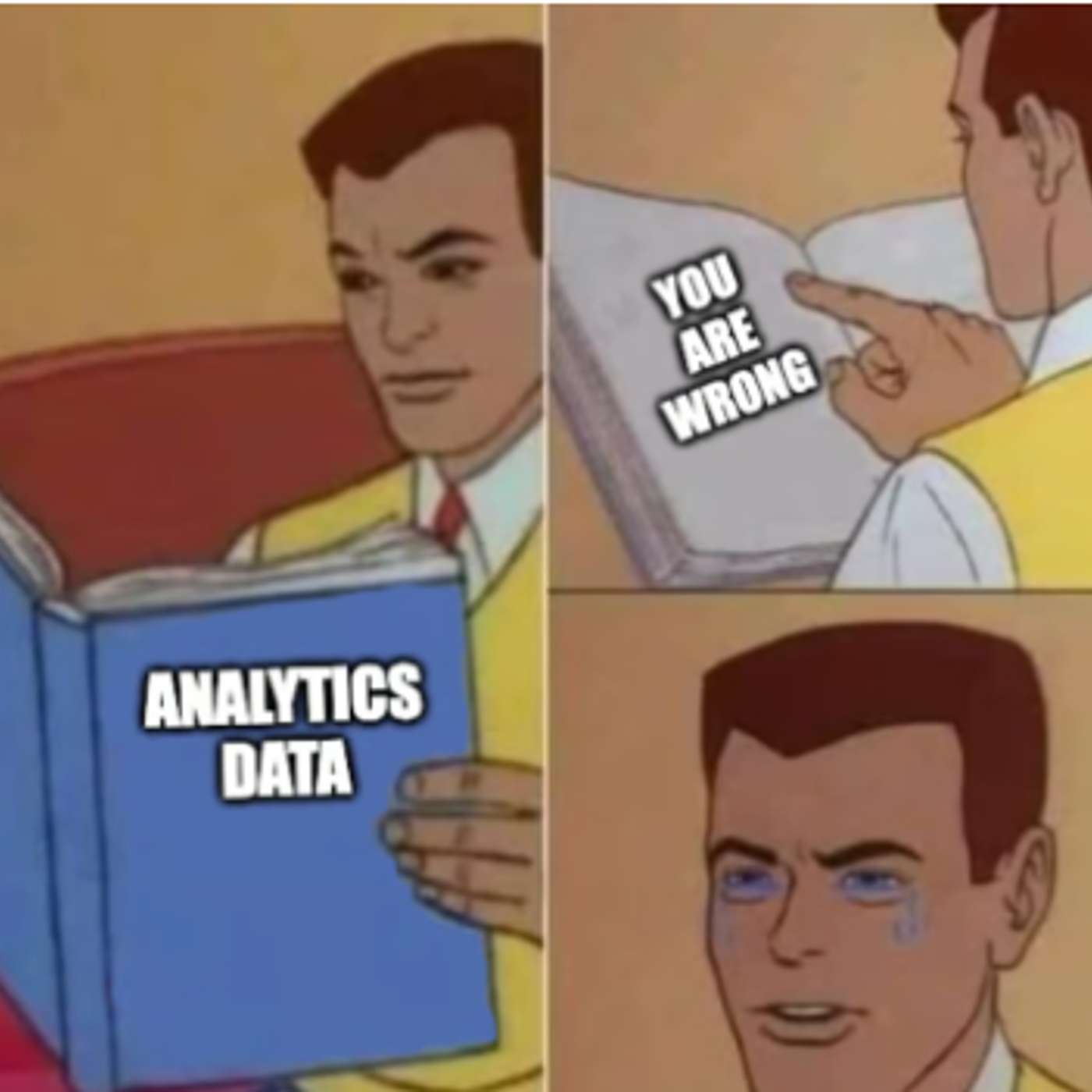
AI models for campaign creation are only as good as the data they ingest. Inaccurate or siloed data on accounts, contacts, and ad performance prevents AI from developing optimal strategies, rendering the technology ineffective for scalable, high-quality output.

While consolidating tools seems efficient, using specialized, best-in-class AI agents for each GTM function (one for outbound, one for inbound) yields superior results. The depth and focus of specialized tools enable more powerful and nuanced use cases, justifying the management overhead of multiple systems.
The primary role of AI in marketing isn't to replace creative work but to automate the complex process of understanding customer behavior. AI systems continuously analyze data to answer critical questions about conversion, value, and budget waste, freeing up humans for strategic tasks.
The evolution of AI in go-to-market moves beyond basic content generation (AI 1.0) to automating tedious coordination tasks like pulling lists and updating fields (AI 1.5). This frees human teams from low-leverage work to focus on high-level strategy and creative execution.

Stop thinking of sales, marketing, and support as separate functions with separate tools. AI agents are blurring these lines. A support interaction becomes a lead gen opportunity, and a marketing email can be sent by a 'sales' tool. Prepare for a unified go-to-market operational model.
Most AI tools focus on automation, which often produces more average, noisy content. The superior approach is augmentation—designing AI to enhance a marketer's abilities and produce exceptional, not average, work. This shifts the goal from creating "more" to creating "better."

Core GTM tactics like outbound, events, and content marketing remain highly effective for AI companies. The failure isn't in the plays themselves, but in using outdated, generic playbooks. Success comes from applying these same plays with more intelligence, scale, and AI-driven personalization.
There's a significant gap where marketers leverage AI for brainstorming and copy help, but few use autonomous AI agents to execute tasks like creating webpages, optimizing campaigns, or building reports.

AI automation doesn't create an "autopilot" for marketing. Instead of enabling laziness, it empowers skilled marketers to produce a higher volume of superior, more personalized content. The human orchestrator remains essential for quality output.