Get your free personalized podcast brief
We scan new podcasts and send you the top 5 insights daily.
Read AI's CEO predicts SaaS will move beyond chat interfaces. The dominant UX paradigms will be a TikTok-like feed that proactively serves relevant content based on user behavior and a Tinder-like swiping mechanism for rapid, simple decision-making.

Related Insights
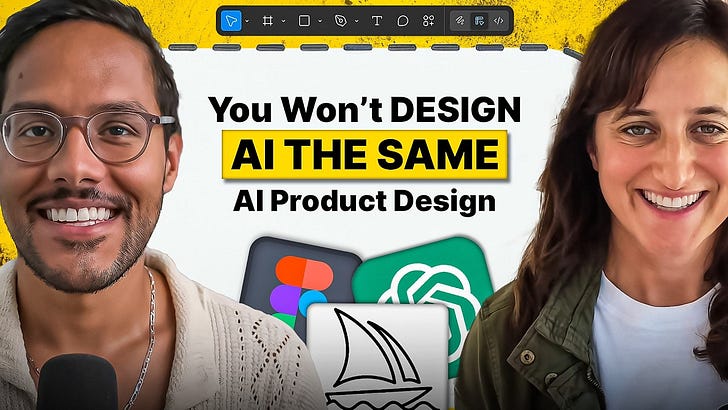
Figma CEO Dylan Field predicts we will look back at current text prompting for AI as a primitive, command-line interface, similar to MS-DOS. The next major opportunity is to create intuitive, use-case-specific interfaces—like a compass for AI's latent space—that allow for more precise control beyond text.
Pulse isn't just a feature; it's a strategic move. By proactively delivering personalized updates from chats and connected apps, OpenAI is building a deep user knowledge graph. This transforms ChatGPT from a reactive tool into a proactive assistant, laying the groundwork for autonomous agents and targeted ads.

Current text-based prompting for AI is a primitive, temporary phase, similar to MS-DOS. The future lies in more intuitive, constrained, and creative interfaces that allow for richer, more visual exploration of a model's latent space, moving beyond just natural language.

Observing that younger generations prefer consuming information via video (TikTok) and communicating via voice, Superhuman's CTO predicts a fundamental shift in user experience. Future interfaces, including email, will likely become more conversational and audio-based rather than relying on typing and reading.
The future of media is not just recommended content, but content rendered on-the-fly for each user. AI will analyze micro-behaviors like eye movement and swipe speed to generate the most engaging possible video in that exact moment. The algorithm will become the content itself.

The next frontier for conversational AI is not just better text, but "Generative UI"—the ability to respond with interactive components. Instead of describing the weather, an AI can present a weather widget, merging the flexibility of chat with the richness of a graphical interface.

AI will fundamentally change user interfaces. Instead of designers pre-building UIs, AI will generate the necessary "forms and lists" on the fly based on a user's natural language request. This means for the first time, the user, not the developer, will be the one creating the interface.

Chatbots are fundamentally linear, which is ill-suited for complex tasks like planning a trip. The next generation of AI products will use AI as a co-creation tool within a more flexible canvas-like interface, allowing users to manipulate and organize AI-generated content non-linearly.